
AI news ·
China weighs jobs, security and US rivalry as AI adoption surges among its citizens
China's government is juggling job losses, security risks, and US competition as AI adoption surges. Crowds lined up for Tencent's OpenClaw agent in March, many of them pensioners and students facing a weak job market.
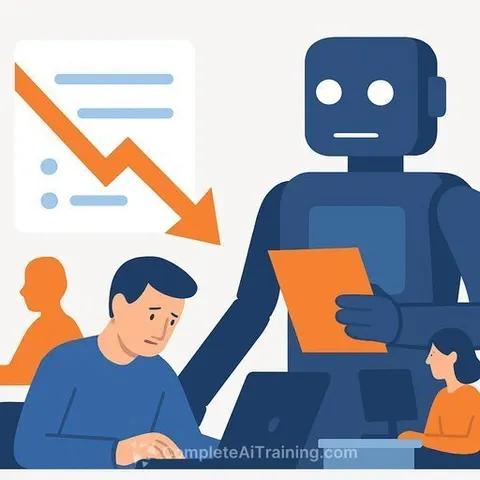
China's Government Grapples With AI's Employment and Security Risks
Hundreds of people lined up outside Tencent's Shenzhen headquarters in March to install OpenClaw, a new AI agent. Most were pensioners experimenting with the technology or students entering a weak job market. The scene repeated across Chinese cities as adoption rates surged past those in America and elsewhere.
The rapid rollout of AI systems like OpenClaw has created a policy dilemma for Beijing. China's government faces three competing pressures: managing job displacement, controlling security risks, and maintaining technological parity with the United States.
Employment concerns drive policy thinking
The pensioners and students queuing for OpenClaw signal a deeper worry for policymakers. AI adoption threatens to displace workers across sectors, with vulnerable populations - older workers and new graduates - facing the steepest adjustment costs.
China's pension system already struggles with regional inequality and insufficient funding. Widespread job losses from AI deployment could strain social safety nets that are unevenly distributed between urban and rural areas.
Security and control remain central
Beyond employment, Beijing must balance AI's benefits against national security concerns. Powerful AI systems create new vectors for data breaches, surveillance risks, and loss of control over sensitive information.
The government's regulatory approach reflects this tension. Officials have threatened action against AI applications deemed problematic - such as micro-dramas that spread rapidly on social platforms - while simultaneously promoting domestic AI development to avoid falling behind American competitors.
The competition imperative
China cannot afford to lag in AI capabilities. The technology underpins everything from military applications to economic competitiveness. This creates pressure to accelerate deployment even as employment and security concerns mount.
For government officials, the challenge is clear: foster innovation fast enough to compete globally while managing the domestic costs of disruption. OpenClaw's popularity suggests Chinese users are ready for advanced AI. Whether policy can keep pace remains uncertain.
Government professionals navigating AI policy should understand this three-way tension. AI for Government training can help officials think through these tradeoffs systematically. Learning about Generative AI and LLM systems provides the technical foundation needed for sound policy decisions.