China's 2026 employment plan: Practical guidance for HR leaders
China has put jobs at the center of its 2026 agenda. The Ministry of Human Resources and Social Security (MOHRSS) will lean on AI-driven roles, emerging industries, and stronger labor protections while supporting a record wave of new graduates.
For HR, this means clearer hiring tailwinds, access to policy incentives, and a push to upgrade job architectures and skills pipelines-fast.
Where hiring will grow
Three engines: the digital economy, high-end manufacturing, and modern services. Expect net-new roles tied to automation, data, smart factories, and service upgrades, while traditional sectors get policy support to keep headcount stable.
Stabilize + create: labor-intensive fields such as foreign trade, construction, and hospitality will see measures to preserve jobs. At the same time, industrial upgrading will open new positions in advanced manufacturing and tech-enabled services.
AI-linked occupations: scale and impact
Over the past five years, authorities recognized 72 new occupations, with 20+ tied to AI. Each newly defined occupation is expected to create 300,000-500,000 jobs in its early phase.
For HR, this is your signal to update job families and skills frameworks. Move from title-based hiring to skills-based profiles, and align learning paths to the roles that are being formalized.
2026: employment-first strategy
The government will "strengthen guidance, expand channels, and secure key priorities." Translation for HR: more coordinated services, faster job matching, and new hiring pathways for emerging roles.
Expect year-round recruitment and referral services under the principle of "non-stop recruitment and uninterrupted job referrals." Use these channels to shorten time-to-hire.
College graduates: the biggest supply pool
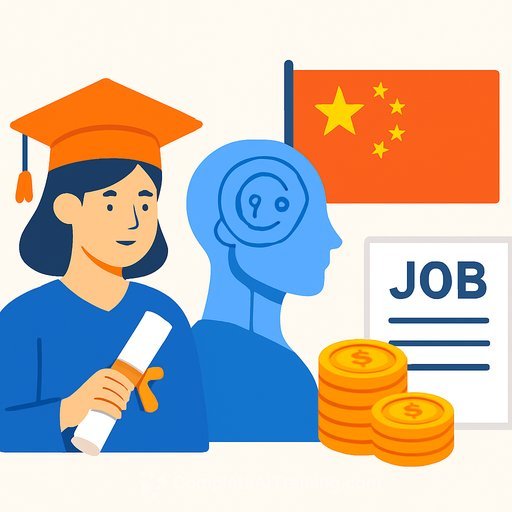
An estimated 12.7 million graduates will enter the market this year. Policies will broaden access at the community level and widen entry ramps across industries.
HR should expand campus programs, tap vocational pipelines, and build structured apprenticeships. Shift screening from pedigree to demonstrable skills and portfolio evidence to move faster on fit.
Pay, compliance, and worker protections
Authorities will adjust minimum wage mechanisms, regulate the HR market, and fully enforce wage payment security for migrant workers. Expect tighter scrutiny on payroll timeliness and vendor compliance.
Audit pay structures now, verify regional minimums by site, and harden your controls for on-time wage payments-including subcontractor oversight for construction and facilities work.
Incentives HR can use
Policy tools on the table include job-retention rebates, social security subsidies, and subsidized startup loans. These can offset hiring, training, and retention costs if you act early and document outcomes.
Work with finance to map eligibility by entity and location, then attach internal workflows so teams actually apply-before funds are exhausted.
WorldSkills 2026: a talent signal
The 48th WorldSkills Competition will be held in Shanghai from September 22-27, 2026, under the theme "Skills Change the World, Skills Illuminate the Future." This will highlight high-demand trades and technical standards that employers can hire against.
Use it to refine competency models and build partnerships with training providers and regional teams. Consider sponsorships or challenges to source talent ahead of the event.
What HR should do now
- Refresh job architecture: add AI-adjacent roles, define skills, proficiency levels, and career paths.
- Skills-first hiring: add assessments, work samples, and portfolio reviews to reduce degree bias.
- Campus and vocational pipelines: expand internships, apprenticeships, and rotational programs.
- Compliance reset: align to local minimum wages, enforce on-time wage payment, and audit vendor payrolls.
- Subsidy playbook: create a checklist for job-retention rebates and social security subsidies; track approvals to ROI.
- AI in HR operations: deploy AI for screening, job-matching, and workforce analytics with clear human oversight and bias checks.
- Upskilling at scale: fund short courses aligned to newly recognized occupations and critical plant/service roles.
Key metrics to track
- Time-to-fill and quality-of-hire for AI and advanced manufacturing roles
- Offer acceptance rate for graduates and first-year retention
- Percent of roles with defined skills profiles and assessments
- Wage compliance incidents and vendor remediation cycle time
- Subsidy utilization rate and cost-per-hire after incentives
Useful references
Policy and standards will evolve. Bookmark these for updates and talent signals:
Get practical with AI in HR
If you're building an HR tech roadmap that supports these priorities, start with structured learning and guardrails. A focused program can accelerate adoption across recruitment, workforce planning, and development.
AI Learning Path for HR Managers
Bottom line: hiring will concentrate where technology and productivity are moving, while protections and incentives tighten execution. Build skills-first systems, secure policy support, and move quickly where demand is compounding.
Your membership also unlocks: