
AI news ·
China's cybersecurity AI advances despite US model restrictions
Chinese AI firms are building their own cybersecurity tools as US export controls block access to models from OpenAI and Anthropic. The restrictions have accelerated domestic development, ending US dominance in security AI.
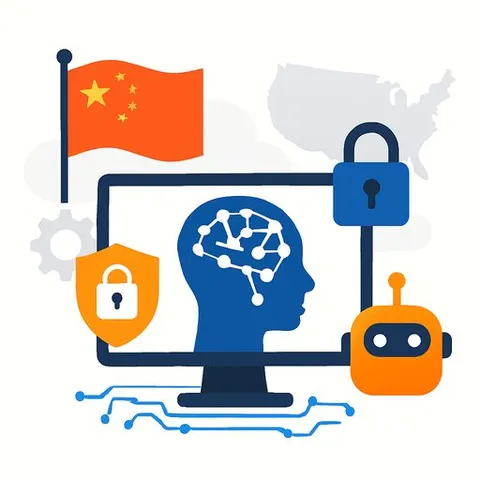
China's cybersecurity AI advances despite US restrictions on model access
Chinese AI companies are developing homegrown cybersecurity tools even as US export controls limit their access to advanced American models. The restriction has forced domestic firms to build their own capabilities rather than rely on technology from companies like OpenAI and Anthropic.
AI is reshaping cybersecurity on both offense and defense. More capable models and autonomous agents can discover vulnerabilities faster, but they also create new ways to exploit systems. The dual nature of the technology means governments and security teams must understand both threats and opportunities.
For government officials overseeing cybersecurity policy and procurement, the geopolitical split matters. US-led AI development no longer monopolizes security innovation. Chinese alternatives now exist, which affects supply chain decisions, vendor selection, and national security assessments.
The shift reflects a broader pattern: when countries restrict technology exports, they accelerate domestic innovation in target regions. Chinese firms are investing in local AI models specifically trained for security applications.
What this means for government strategy
Government agencies need updated threat assessments that account for AI-enhanced attacks. Traditional cybersecurity approaches assume human-speed threat detection and response. AI agents operate faster, requiring new defensive frameworks.
Teams should also evaluate how AI affects supply chain security. If critical cybersecurity tools come from multiple geopolitical sources, redundancy and interoperability become operational requirements rather than nice-to-haves.
Understanding AI applications in cybersecurity helps government decision-makers assess vendor claims and evaluate emerging tools. AI for government roles increasingly require technical literacy around these capabilities.
The cybersecurity AI race is no longer a US-dominated competition. Government procurement and policy must reflect that reality.