China's Hottest Jobs as AI Reworks the Labour Market: A Hiring Playbook for HR Leaders
China is moving into a decisive shift: fewer traditional roles, more digital-first work. Over the next five years, policy and industry signals point to large-scale hiring in AI, green energy, advanced manufacturing and specialised services. For HR, the mandate is clear-treat digital skills as a baseline, build new pipelines fast, and rebalance hiring across emerging city clusters.
What's Changing (and Why HR Should Care)
- New industries are scaling from pilot projects to full production, bringing "from one to 10" growth in headcount.
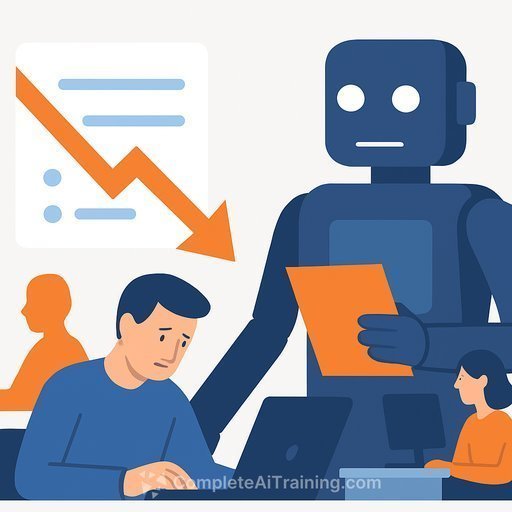
- AI is replacing repetitive tasks and creating high-value roles, with 20+ new AI-related occupations formalised by China's labour authority.
- Services remain the biggest job engine and are moving from generic roles to standardised, specialised work.
- Hiring is decentralising from Beijing/Shanghai/Shenzhen to regional clusters like the Yangtze River Delta and Chengdu-Chongqing.
1) Emerging Industries: New Energy, New Materials, Aerospace, Low-Altitude Economy
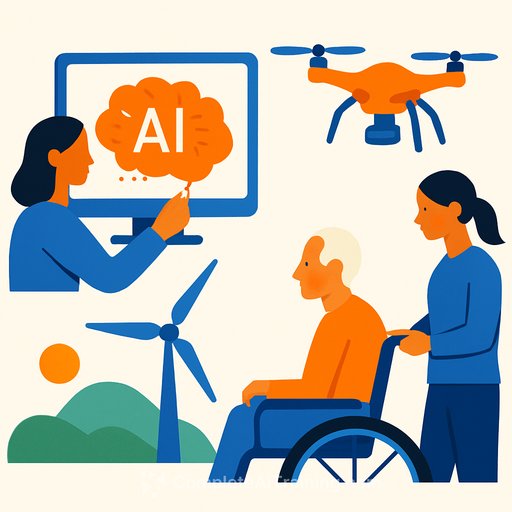
Expect large hiring waves as these sectors scale. In low-altitude aviation alone, demand for drone pilots could reach one million, with full-stack roles from flight control engineering to air-traffic algorithm design.
- Priority roles: drone pilots, avionics engineers, flight software, algorithm design, materials science, battery engineering, quality and safety.
- HR actions: build certified talent pipelines, partner with technical colleges, pre-hire interns into operator-to-engineer tracks, define safety/compliance frameworks early. For frontline and shop-floor quality roles, consider structured upskilling such as the AI Learning Path for Quality Control Specialists.
2) AI Will Cut Repetition and Expand High-Value Work
"Dark factories" and autonomous systems are trimming repetitive labour, while AI product management, data operations and model engineering surge. Over 20 of the 72 newly recognised occupations in recent years are AI-related, each projected to add 300,000-500,000 jobs. China's AI industry is set to exceed 600 billion yuan this year, and demand for AI product managers is up 178% (Zhaopin).
- Priority roles: AI product manager, model ops (MLOps), AI safety, data governance, prompt engineering, human-in-the-loop QA.
- HR actions: embed AI skills into every job family; upskill line workers from "wrench-holding to system-tuning"; create internal AI academies with sprint-based learning.
Need fast AI upskilling for hiring managers and teams? Explore role-based learning paths at AI Learning Path for Training & Development Managers.
3) Services: Still the Largest Job Engine
Services employ 48% of the workforce and could rise to 55% within five years. Healthcare, elderly care, childcare and home services are growing, with care-worker demand up 30% (Zhaopin). The shift is toward standardised, credentialed service roles.
- Priority roles: care coordinators, rehabilitation therapists, childcare specialists, clinical admin, service quality and training.
- HR actions: require certifications, set competency frameworks, run apprenticeship programs, and build retention pathways with clear wage ladders.
4) Flexible Work: Scale With Protections
Over 2 million people work in flexible roles across logistics, delivery and live-streaming. These jobs help youth, parents and retirees enter or re-enter the market, but face instability and weak safeguards. Policy is moving to improve workplace injury coverage and reduce algorithmic pressure.
- HR actions: separate contractor policy from employee policy; add platform-safe scheduling; include accident coverage; build fair-pay and transparency standards.
5) Globalisation: Cross-Border Commerce Drives New Hiring
Small firms selling internationally are becoming major job creators. Exporters need multilingual staff who understand international rules, brand strategy and supply-chain operations. Cross-border e-commerce logistics could add up to 45 million direct and indirect jobs by 2030.
- Priority roles: Spanish- and Arabic-speaking account managers, brand strategists, compliance ops, cross-border logistics, payments reconciliation.
- HR actions: campus hiring for language + operations majors, run in-house trade-compliance training, and tie incentives to overseas revenue retention.
6) Rural Entrepreneurship and Innovation
Rural revitalisation is creating viable careers beyond city limits. Over 23 million skilled rural workers and 12 million returnee entrepreneurs are building agritourism, speciality crops, wellness retreats and outdoor sports businesses.
- Priority roles: agricultural e-commerce ops, destination marketing, farm-to-table supply, outdoor activity managers, rural data analysts.
- HR actions: partner with county incubators, offer remote-first roles, design relocation packages, and recruit for owner-operator potential.
7) Cultural Industries: Creativity Meets Tech
Culture has become tech-intensive, with VR designers, AIGC animators, virtual scene builders and internet protocol engineers in short supply. Industry revenue reached 19.14 trillion yuan in 2024, and universities are adding immersive-media programs. China may need 6.8 million VR professionals by 2030.
- Priority roles: real-time 3D artists, technical art, pipeline engineering, IP operations, rights management, virtual production.
- HR actions: portfolio-first hiring, hybrid art+engineering career paths, studio-style apprenticeships, royalties or IP-linked incentives.
8) Senior Care: A Structural Hiring Gap
About 44 million elderly people need help, with a shortage of 5.5 million care workers. The sector is moving beyond basic nursing to rehabilitation, cognitive care and hospice. Over 4,000 tertiary institutions now offer elderly-care-related majors.
- Priority roles: geriatric aides, rehabilitation therapists, dementia-care specialists, hospice coordinators, case managers.
- HR actions: standardise skills credentials, support continuous training, offer shift flexibility and housing stipends to reduce attrition.
9) Green Jobs: From Policy to Payroll
China has formalised 134 green occupations across storage, hydrogen, solar, green buildings and environmental data. The 11 trillion yuan green economy is expected to double within five years-akin to building a new hi-tech sector in headcount terms.
- Priority roles: energy storage engineers, hydrogen technicians, solar process engineers, ESG data analysts, carbon accountants.
- HR actions: require accredited certifications, partner with OEMs for equipment training, and build cross-disciplinary teams (materials + software + compliance).
For reference on new occupations and standards, see the Ministry of Human Resources and Social Security (English portal) here.
10) Regional Employment: Follow the New Growth Poles
Hiring is spreading beyond Tier-1 cities. The Yangtze River Delta and the Chengdu-Chongqing cluster, plus inland tech hubs like Wuhan, Changsha and Nanjing, are absorbing hi-tech spillovers. Western manufacturing and renewable energy bases are also becoming attractive for skilled workers.
- HR actions: create a multi-hub hiring model, localise salary bands, use city-cluster internship programs, and align relocation benefits with family needs (schools, housing, transit).
Skills HR Should Prioritise Across All Functions
- AI literacy and data comfort for every role (basic prompts, evaluation, safety, governance).
- Digital operations: MES/SCADA familiarity in factories, CRM/ERP fluency in services.
- Compliance-by-design: privacy, workplace safety, platform work protections, cross-border trade rules.
- Multilingual capability tied to market entry (Spanish, Arabic, Southeast Asian languages).
- Human skills: service quality, client empathy, ethical decision-making.
To quickly upskill teams on practical AI, see curated paths and certifications at AI Learning Path for Product Managers.
Practical Next Steps for HR Leaders
- Run a role inventory: what tasks can be automated vs. augmented; redefine job descriptions with AI skills embedded.
- Launch reskilling sprints: 6-12 week cohorts for AI product basics, data quality, safety and compliance.
- Stand up university pipelines: pre-hire in AI, elderly care, green energy, VR and cross-border logistics.
- Build a contractor framework: insurance, fair-pay metrics, algorithmic transparency, and incident reporting.
- Adopt a multi-city strategy: benchmark pay by cluster, offer relocation and remote options, set internal mobility paths.
- Measure outcomes: time-to-productivity for new roles, certification rates, retention, and cost-per-hire by region.
The Bottom Line
The next hiring cycle in China will reward HR teams that upskill fast, hire for cross-disciplinary talent and localise their footprint. Treat digital skills as a requirement. Then build programs that turn today's workers into tomorrow's AI, green and service specialists-at scale.
Your membership also unlocks: