
AI news ·
Chinese court rules companies cannot use AI adoption as grounds to dismiss workers
A Chinese court ruled that deploying AI is not legal grounds to fire a worker, blocking a tech company's dismissal of a quality assurance supervisor. Western workers have no comparable protections.
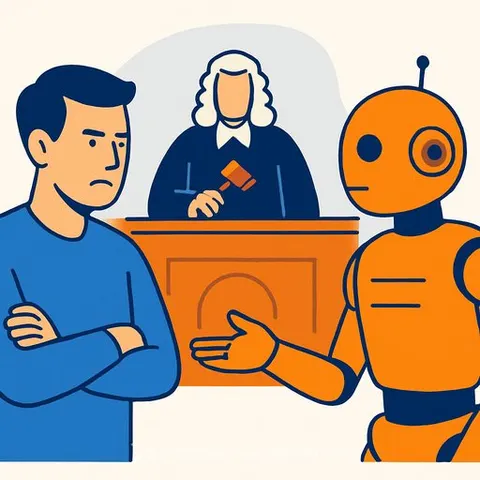
Chinese Court Rules Companies Cannot Fire Workers to Deploy AI
A Chinese court has blocked a company from dismissing an employee and replacing him with artificial intelligence, marking a legal victory that contrasts sharply with employment anxieties across Western nations.
The Hangzhou Intermediate People's Court ruled last week that introducing AI does not constitute grounds for termination under Chinese labor law. The case involved a quality assurance supervisor, identified by his surname Zhou, who was hired in 2022 to oversee AI output at a technology company.
When the company attempted to replace Zhou with a large language model in 2025, it first offered him a demotion with a 40 percent pay cut. Zhou rejected the offer, and the company fired him, providing a severance package of approximately $45,000.
Zhou challenged the dismissal through a government arbitration panel, which ruled the termination illegal. The company sued in a lower court and lost, then appealed to the municipal-level Hangzhou court, which upheld the decision.
The court stated that "technological progress may be irreversible, but it cannot exist outside a legal framework." The company had not demonstrated business downsizing, operational difficulties, or conditions making the employment contract impossible to continue-the legal requirements for dismissal under Chinese law.
Different Legal Systems, Similar Question
China operates under a civil law system, unlike the United States and United Kingdom, which follow common law. This means Chinese courts are not bound by precedent, so this ruling does not automatically influence other cases.
Still, the decision signals potential direction for Chinese lawmakers on protecting workers from automation-driven job losses. Workers in much of the Western world lack comparable legal protections against AI-related dismissals.
For government employees and policymakers, the case illustrates how different jurisdictions are beginning to address the employment implications of AI deployment. Understanding these legal frameworks matters as agencies worldwide develop their own AI policies and workforce strategies.
Learn more about AI for Legal frameworks and how AI for Government is shaping public sector policy.