
AI news ·
Democrats and Republicans find rare common ground in shared concerns about AI
Majorities in both parties say they're more concerned than excited about AI, with Pew finding roughly 50% on each side sharing that view. Data centers, job losses, and privacy rank among the top worries driving rare bipartisan agreement.
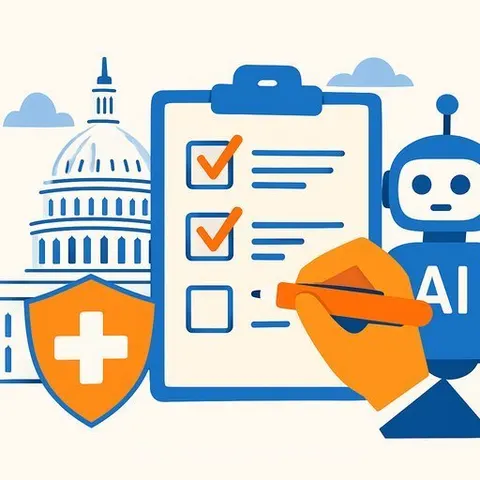
Democrats and Republicans Agree: A.I. Poses Real Risks
Artificial intelligence has become one of the few issues uniting Democrats and Republicans in an otherwise fractured political landscape. Both parties express more concern than excitement about A.I.'s expanding role in American life, according to recent polling.
A Pew Research Center survey found that 50 percent of Republicans and 51 percent of Democrats said they were more concerned than excited about increased A.I. use. Just 10 percent of voters across both parties reported being more excited than concerned. An NBC News poll released last month showed that a majority of voters believe A.I.'s risks outweigh its benefits.
The consensus is striking in a country divided on war, immigration, and nearly everything else. "It's not being divided along those partisan lines like a lot of other issues are," said Lee Miringoff, director of the Marist Institute for Public Opinion. "In 2026 it's very unusual."
Data Centers Become a Flashpoint
The massive energy demands of A.I. infrastructure have emerged as an early point of bipartisan action. Large data centers powering the industry are driving up electricity prices, prompting Democrats and Republicans to work together to block new facilities in dozens of states and municipalities.
The political response reflects genuine public anxiety. Voters worry about A.I.'s impact on jobs, energy costs, education, privacy, and mental health. The concerns cut across demographic lines, though younger voters still view A.I. more favorably than older Americans.
Industry Mobilizes Against Regulation
Tech companies are taking the political shift seriously. The industry has poured tens of millions into lobbying efforts as politicians from both parties begin drafting regulatory responses.
The skepticism toward A.I. fits into a broader erosion of trust in tech billionaires and their companies. That hostility is shaping how both parties approach regulation-though voters remain uncertain which party handles the issue better. A fifth said Republicans were better at managing A.I., a fifth said Democrats were, and a third said neither party was competent on the issue.
For government officials and policymakers, AI for Government has moved from a distant concern to an urgent priority. Understanding both the risks and the policy options is now essential for anyone in public service.