
AI news ·
Christian schools add artificial intelligence degree programs to teach ethical use
Since 2022, 76 Christian universities have added 145 AI degree programs. They aim to train students to deploy the technology ethically across business and technical fields.
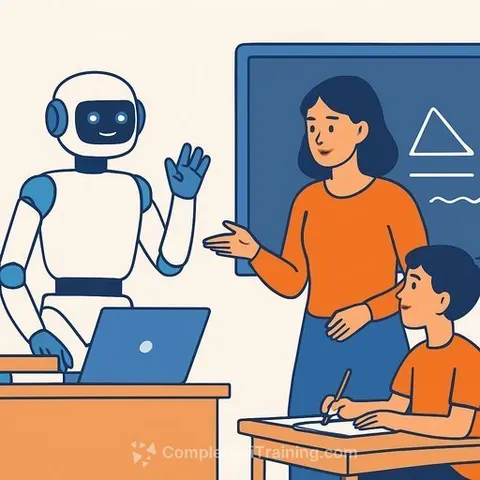
Since 2022, 76 Christian universities have added 145 artificial intelligence degree programs to prepare students for an evolving job market. These institutions view AI education as a moral imperative, aiming to train professionals who can deploy the technology ethically across business and technical fields.
Bridging the ethics gap
Christian school leaders argue that teaching AI requires more than technical instruction. Mario Migliori, an adjunct professor at Messiah University, said the school added its program to address the gap between proper and ethical AI use. "What better place to emphasize that and to teach people to use AI for good than a Christian university like Messiah?" he said. The university designed its master's program to help students understand how the technology functions while modeling those values for future employers.
Growing degree offerings
This growth extends beyond single institutions. According to data from MastersInAI.org, more than 300 U.S. schools now offer AI programs, with Roman Catholic and United Methodist schools leading the expansion. Richard Kelley, a clinical assistant professor at the Catholic University of America, noted that engineering programs must confront AI. He said schools need full degree programs, not just isolated classes, so students can apply the technology to specific fields by their junior and senior years.
Indiana Wesleyan University offers undergraduate programs with specializations in marketing, human resources and supply chain logistics. Clark Cully, the university's technology division chair, said the school wants to promote student innovation and adapt to changing technology. This shift matches the broader push for AI for Education, where institutions focus on integrating these tools into practical, industry-specific curricula.
Student demand and workforce needs
Students are actively seeking these specialized credentials over traditional computer science degrees. Brady Jones, a freshman at Harding University, switched his major after learning about the school's new AI program. He said AI experience will benefit companies because the field is newer and less saturated than traditional computer science. Joe Faith, an assistant professor at Harding, said employers want graduates with AI-specific skills who can adapt them across healthcare, defense and logistics.
Faith added that religious schools have a duty to participate in this technological shift. "As Christians, if we are not willing to jump into this arena, we are not as technologists living up to the calling we claim to have," Faith said. He argued the world needs professionals from a morally focused background to evaluate the technology and teach others how to use it responsibly.
Why this matters for educators
Academic leaders must decide how to structure AI curricula to meet both student interest and employer demand. Schools are moving past introductory courses to build full degree tracks with industry specializations. Educators can draw on resources like an AI Learning Path for Teachers to understand how to structure foundational AI concepts before students apply them to specialized disciplines. This ensures graduates enter the workforce with practical, ethically grounded technical skills.