
AI news ·
Classical education movement and AI tools gain White House attention as 700,000 students enroll nationwide
Classical school enrollment has reached 700,000 students across 1,500+ U.S. schools, up 250 schools since 2020. Many now pair traditional liberal arts with AI tools to build critical thinking alongside tech skills.
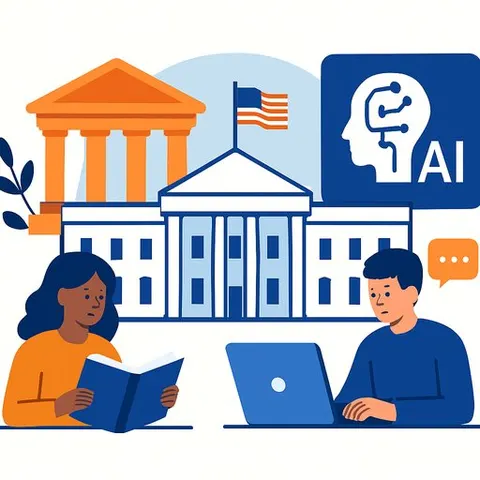
Classical Education and AI Team Up to Reshape American Schooling
Over 1,500 classical education schools now serve roughly 700,000 students across the United States, with the movement adding more than 250 schools since 2020. The approach combines traditional liberal arts curriculum with AI as a learning tool-a pairing that educators say prepares students for both critical thinking and a technology-driven future.
The White House highlighted this intersection in March when the First Lady launched the "Foster the Future" summit, focusing on how AI can expand learning opportunities rather than replace human judgment. Alpha Schools, a private network establishing schools nationwide, exemplifies the model: mornings use AI to guide deeper exploration of subjects like history and geometry, while afternoons teach practical skills from financial literacy to basic business principles.
What Classical Education Emphasizes
Classical education prioritizes grammar, logic, and rhetoric as foundations, then expands to history and great literature. The curriculum aims to teach students how to think rather than what to think, grounding instruction in established principles of reasoning and virtue.
Proponents argue this approach develops the analytical skills necessary to evaluate information critically-a capability they view as essential protection against misinformation in an AI-saturated world. The method draws from centuries of Western intellectual tradition, incorporating texts from Plato and Aristotle alongside American writers like Mark Twain and E.B. White.
Growth and Adoption
The movement spans public, private, and charter schools. Public school educators and parents have increasingly turned to classical models as an alternative to traditional district approaches, citing concerns about curriculum decisions and classroom priorities.
For educators exploring how to integrate AI responsibly into classical frameworks, resources like the AI for Education collection and the AI Learning Path for Teachers offer practical guidance on classroom implementation.
The Practical Case
Advocates see no conflict between traditional academic rigor and modern technology. Reading, writing, and reasoning skills remain foundational to learning any subject-whether students engage with texts on paper or through AI-assisted analysis of primary sources.
The classical model's emphasis on citizenship, leadership, and understanding "the good, the true and the beautiful" reflects a deliberate choice about education's purpose beyond job training. Whether that framing resonates depends on individual views about schooling's role, but the enrollment numbers suggest the approach attracts families seeking an alternative to status quo options.