
AI news ·
Clerks teach judges AI in a quiet role reversal that is modernizing the courthouse
More than 60% of federal judges now use AI tools, up sharply in 18 months. Reverse mentorship with clerks is helping courts manage heavy workloads.
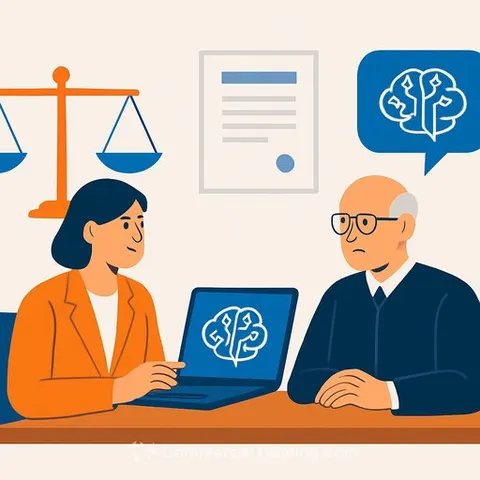
In courthouses across the United States, a quiet role reversal is underway. First-year law clerks are teaching seasoned federal judges how to use artificial intelligence tools, while judges impart the professional instinct to know when an AI-generated output is wrong. This reverse mentorship has moved more than 60% of federal judges to adopt at least one AI tool, a striking leap from the widespread skepticism just 18 months ago. The shift is helping courts manage chronic staffing shortages and heavy workloads - and offering a model for public sector institutions under similar pressure.
A shift in 18 months: From skeptics to early adopters
Court systems have historically resisted technological change at the bench, but the speed of AI acceptance has been unusual. According to the Sedona Conference Journal, use among federal judges now exceeds 60%, up from a small minority of willing adopters only a year and a half ago. The jump was driven by more than curiosity: last year more than two-thirds of courts faced staffing challenges, and nearly half of court professionals said they lacked the time to complete their work. AI tools that summarize documents, assist legal research, and handle administrative tasks are becoming common - not because they replace workers, but because they let overstretched staff reclaim time for higher-value judgments.
The judge-clerk symbiosis
The traditional judge-clerk relationship has always been a two-way exchange, but AI has made that dynamic both more explicit and more critical. Clerks who supplement their law school education with AI for Legal training bring technological fluency that many sitting judges lack. Judges, in turn, contribute a capability that AI cannot replicate - the hard-earned ability to sense that a legal argument is factually or logically wrong before they can fully articulate why. Without the clerk's technical guidance, AI outputs risk going unchecked; without the judge's seasoned instinct, the tool's limitations remain invisible. Together, they form a genuinely effective check on AI-generated content.
Making AI adoption institutional
Courts that benefit most from AI treat adoption as an institution-wide decision, not a series of individual experiments. These courts create written policies defining appropriate use, establish risk tiers to calibrate the level of human oversight each task requires, and invest in training that updates as the tools change. Without such shared frameworks, staff may use AI inappropriately, and the knowledge gained through trial and error remains trapped in individual chambers. Formalizing exchange between experienced staff and new clerks - and documenting what works - turns ad hoc learning into durable organizational strength. For public sector institutions facing similar capacity constraints, AI for Government training can help teams move from scattered experimentation to consistent, safe practice.
Why this matters for government professionals
The courtroom's quiet experiment with reverse mentorship holds a direct lesson for anyone in public service: AI adoption gains traction when institutional knowledge flows in both directions. Junior staff may be the most comfortable with new tools, but veteran professionals possess contextual judgment no algorithm can match. Courts that build policies, training, and structured knowledge-sharing are not just modernizing - they are also preparing for the next wave of AI tools without scrambling each time. Public-sector leaders in agencies far beyond the judiciary can apply the same approach: create shared frameworks, value the insight of early-career and senior staff equally, and treat AI as a team-wide capability, not a solo project.