Palantir AI Deal Puts Cleveland-Cliffs' Turnaround Plan Under Scrutiny
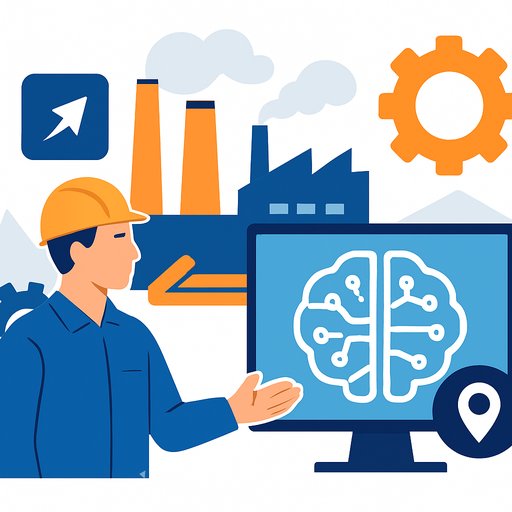
Cleveland-Cliffs announced a three-year partnership with Palantir on April 28, 2026, to embed artificial intelligence across production planning, order entry, and operational workflows. The steelmaker is betting the deal will improve costs and execution in a traditionally capital-intensive business facing cyclical pressures and trade policy risk.
The timing matters. Cleveland-Cliffs reported $4.9 billion in first-quarter 2026 sales but posted a net loss of $237 million. The company carries elevated debt and needs to convert operational improvements into sustained free cash flow and balance sheet repair.
What the AI Partnership Actually Changes
The Palantir deal could reduce planning inefficiencies and improve asset utilization in the near term. Better production forecasting and order management typically lower waste and improve on-time delivery-tangible benefits for operations teams managing blast furnace schedules and inventory.
But the partnership does not address Cleveland-Cliffs' largest structural risk: its exposure to Section 232 steel tariffs. If trade protections ease, the company's cost advantage narrows significantly. The AI improvements become secondary to policy shifts beyond management's control.
The Numbers Investors Are Watching
Cleveland-Cliffs' base case projects $22.1 billion in revenue and $606.6 million in earnings by 2029. That requires 5.3% annual revenue growth and roughly $1.8 billion in earnings improvement from current losses of $1.2 billion.
Optimistic analysts already assume $22.8 billion in revenue and $703.7 million in earnings by 2029-similar targets. The Palantir deal reinforces the cost-reduction narrative but doesn't materially change the earnings bridge needed to hit these numbers.
What Operations Leaders Should Know
For operations professionals at steel producers, the Palantir model shows how AI can optimize workflows that were historically managed through manual planning and tribal knowledge. AI for Operations projects like this typically focus on three areas: reducing planning cycle time, improving asset scheduling, and cutting unplanned downtime.
If you're responsible for production planning or supply chain at a heavy industrial company, understanding how AI can integrate into existing systems is increasingly relevant. AI Learning Path for Operations Managers covers the practical mechanics of implementing such tools without disrupting established workflows.
The Investment Decision
Investors need to separate operational gains from business model risk. AI-driven efficiencies at Cleveland-Cliffs are real but incremental-they don't eliminate the company's dependence on tariff policy or change its exposure to steel market cyclicality.
The Palantir partnership is a concrete execution step. Whether it justifies current valuations depends on your confidence in sustained tariff protection and the company's ability to convert cost savings into shareholder returns. Those assumptions remain unchanged by the announcement.
Your membership also unlocks: