
AI news ·
Clinicians use AI more but fear losing critical thinking skills, survey finds
Weekly AI use among doctors jumped from under 50% to nearly 75% in one year, per a Wolters Kluwer Health survey. But 74% of clinicians say eroding critical thinking is their top concern with the technology.
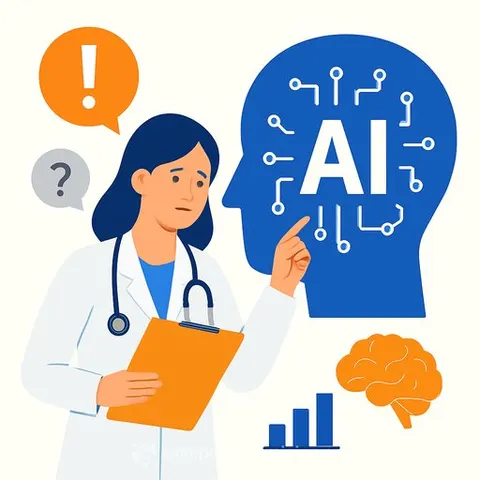
Clinicians Worry AI Adoption Will Erode Critical Thinking Skills
Nearly three-quarters of doctors and 70% of nurses now use AI at least once a week for work, a sharp jump from last year when usage was less than half that rate. The acceleration reflects both increased familiarity and AI's ability to address genuine workforce gaps, according to a survey by Wolters Kluwer Health published this week.
But clinicians have a serious concern: 74% said losing critical thinking and decision-making skills ranks among the greatest risks of relying on AI tools.
Usage Has Shifted From Occasional to Routine
The survey of more than 350 healthcare professionals found that 38% of doctors and 32% of nurses now use AI multiple times per day, compared to 10% and 16% last year. Only 9% of doctors and 18% of nurses reported never using AI tools at work.
Doctors are using AI most often to summarize medical literature and analyze data. Forty-four percent reported using AI scribes, which record conversations with patients and draft clinical notes.
Deskilling Risk Remains Understudied
Research from other fields shows that over-reliance on technology can interfere with skill development and cause workers to lose abilities they already had. Healthcare has not studied this problem extensively among clinicians, said Dr. Peter Bonis, Wolters Kluwer's Chief Medical Officer.
The deskilling risk compounds another concern: hallucinations, when AI tools generate false information. About three-quarters of clinicians cited hallucinations as a major concern, yet 73% said they were confident they could spot incorrect responses.
That confidence gap matters. One-quarter of clinicians aren't sure they could identify hallucinations, and the actual problem may be worse. AI could cite accurate studies while missing others that point to different clinical recommendations, or it could invent primary sources entirely.
Governance Policies Remain Unclear
Most clinicians don't know what their organizations are doing about AI governance. Only 27% of doctors and nurses said they understood their workplace's approach to managing the technology.
Among those aware of policies, 63% understood how privacy regulations like HIPAA applied to AI use. But just 35% knew about guidelines for checking AI accuracy, and only 22% reported their employer had policies defining clinician and AI product responsibilities.
"I think this is all in flight," Bonis said. "People are wrestling with this. It's not clear who is going to be responsible for this profound set of issues that can affect the actual delivery of care and who actually takes the risk related to that."
Patients Are Using AI Too
More than half of patients surveyed said they use AI to research medication side effects or learn about their diagnoses. Around 40% are using or would consider using AI to simplify medical jargon or interpret test results.
That patient adoption adds another layer to the governance question: clinicians need clear policies not just for their own AI use, but for understanding what information patients may be bringing into appointments.