The Agentic AI Trust Gap Is the Real Threat to Customer Experience
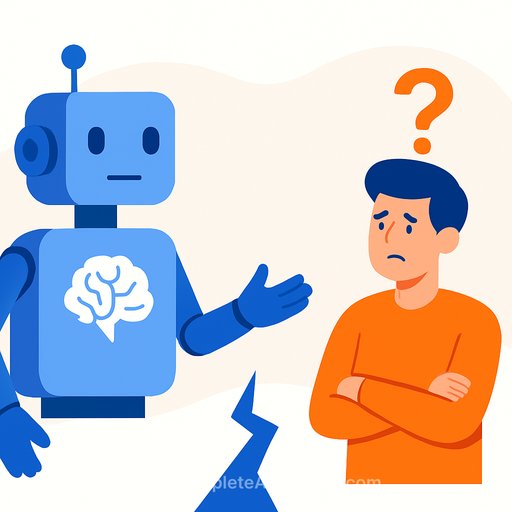
Agentic AI promises better service at scale and a huge market-forecasted to reach USD 117.8 billion by 2034. But capability doesn't equal confidence. In live customer contact, conversations branch in countless directions that no static test can fully predict. The real blocker isn't models or rollout speed. It's trust.
We've Seen This Before
Early internet era: teams shipped fast and worried about stability later. The result was outages, breaches, and a painful reset around governance and testing. We're on the same path with agentic AI. Many agents look great in demos, then falter with messy inputs, fragmented data, compliance limits, and channel handoffs.
Customers feel that pain immediately. Leaders usually see it after churn, escalations, or brand hits show up in the numbers.
Customers Have a Short Fuse for AI Mistakes
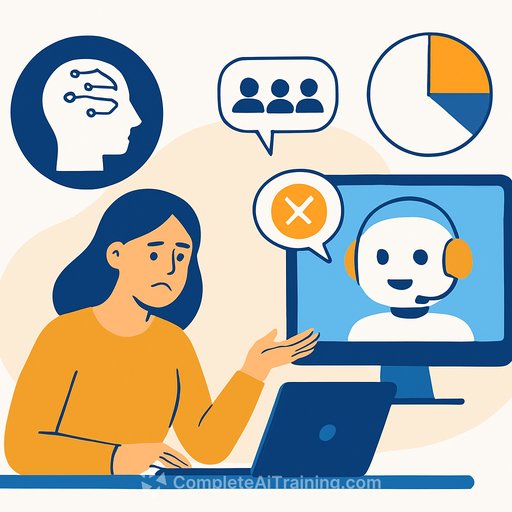
New research shows 79% of consumers escalate to a human after a bot fails once, and 61% say AI errors frustrate them more than human mistakes. People aren't anti-automation-they're anti-unreliable automation. The grace we give a human rep rarely extends to a bot.
This isn't a minor annoyance. Avoidable churn costs U.S. businesses an estimated $136 billion every year. Rework, repeated contacts, and forced escalations stack up fast.
Personalization Without Reliability Backfires
Personalization still drives investment, and leaders see it as central to growth over the next few years. AI can scale it across millions of interactions, but only if it's accurate and consistent. A confident, personalized wrong answer feels worse than a generic one-and trust drops sharply when that happens.
Speed matters too. According to HubSpot research, 90% of customers say an "immediate" response is important or very important. Bots that loop, re-authenticate, or bounce people around waste time and kill the efficiency gains you were counting on. For leaders, that's a double loss: unhappy customers and sunk investment.
Meanwhile, business leaders consistently rank personalization as a top priority. See Twilio's State of Personalization for context.
The Illusion of Control Inside Enterprises
Most agentic systems span multiple teams and vendors: intent, comms, workflows, knowledge, identity, compliance. Each team tests its piece and checks the box. The end-to-end experience-the only thing customers actually feel-often goes unproven.
These systems frequently span functions from contact centers to supply chains; leaders should equip cross-functional teams with role-specific learning paths like the AI Learning Path for Supply Chain Managers to align process, reliability, and governance.
Risk spikes in regulated spaces. In healthcare, for example, agents must respect privacy laws, enterprise policies, and real-time safety constraints. One incorrect dosage suggestion isn't just an "error." It's a legal, brand, and safety event. If you aren't validating continuously, you're trusting behavior you haven't verified. Enterprise leaders need clear frameworks for governance and digital risk management-see the AI Learning Path for CIOs for guidance on strategy, controls, and accountability.
Treat AI Like a Mission-Critical System
If it talks to customers, it's mission-critical. Treat it that way: follow proven AI for Operations practices-continuous testing, always-on monitoring, and end-to-end governance.
- Continuous testing and validation: pre-production and production, across channels and scenarios.
- Always-on monitoring: assume drift and degradation; detect and respond in real time.
- Clear ownership: defined accountabilities, change control, and approvals for prompts, tools, and policies.
Pre-launch tests aren't enough. What matters is how the system behaves under pressure, over time, and across the full customer path-especially when things go wrong.
What Support Leaders Can Do This Quarter
- Map critical intents and fail states: list your top 10 contact reasons. Document likely failure modes: low-confidence answers, missing data, policy conflicts, tool timeouts.
- Set humane fail-fast rules: after one failed turn or low confidence, offer a human handoff. Make that option obvious and single-click.
- Test the full experience, not just the bot: include voice, chat, email, IVR, and CRM/knowledge integrations. Add noise, accents, slang, and multiturn shifts in intent.
- Practice chaos: simulate downstream failures (CRM down, knowledge stale, auth fails). Confirm the agent explains the issue, protects privacy, and routes cleanly.
- Instrument what matters: track first-contact resolution, time-to-human, escalation after first failure, repeat contacts, containment with quality gates, and CSAT tied to transcripts.
- Add safety rails: PII redaction, maximum refund limits, approved knowledge sources, blocked topics, and tool permissioning.
- Create a kill switch and rollback: instant disable, prompt/version rollback, and a defined incident flow with on-call owners.
- Coach for recovery: train agents to repair trust after a bot slip: quick apology, concise recap, fast resolution, and one-and-done closure.
- Close the loop: feed real failures back into prompts, policies, and knowledge updates within 24-48 hours.
KPIs That Predict Trust
- Escalation after first bot failure: keep it below 25% with better detection and clearer handoffs.
- Containment with quality: only count resolutions that meet accuracy and policy thresholds.
- Time-to-human: under 60 seconds once assistance is requested.
- Hallucination rate: zero-tolerance for safety, compliance, and billing topics.
- Resolution lag after fixes: time from issue discovery to prompt/knowledge update and verified improvement.
Close the Gap with CX Assurance
The gap between AI promise and AI impact is trust. Customers want systems that are reliable, predictable, and respectful of their time. Employees want tools they can understand and adjust. Regulators want proof you're in control.
Trust isn't a slogan-it's a practice. Build it with continuous testing, live monitoring, and optimization across every channel. Prove the full experience, not just the model. That's CX assurance, and it's how agentic AI stops being a risk and starts returning real value.
If your team is leveling up skills for AI operations, testing, and support workflows, explore AI courses for customer support roles.
Your membership also unlocks: