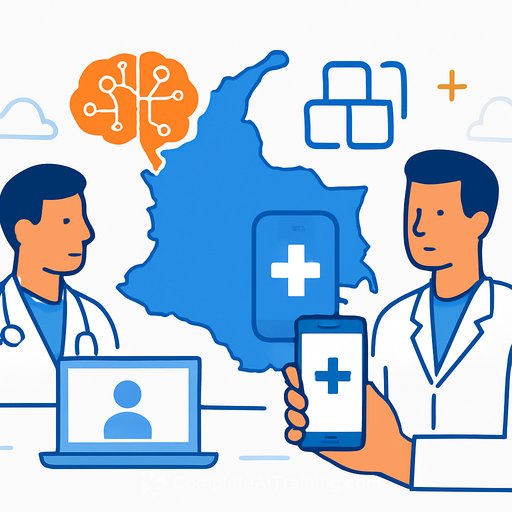
AI Health Care Digital Transformation in Colombia: Solutions from Latam HealthTech Forum 2025
Colombia hit a breaking point this year. Costs jumped, queues stretched for months, and many patients simply couldn't get seen. The Latam HealthTech Forum didn't sugarcoat it-but it did show a path forward. AI, data, and mobile-first care are moving from pilot projects to real fixes that clinicians can feel on the ground.
The pressure driving change
Colombia's system was under extreme strain heading into 2025. Dr. Carlos Felipe Escobar of HUBiEX Universidad El Bosque called it "a critical moment," pointing to delays, crowded emergency rooms, and limited specialist access outside major cities. Dr. Lina Morales Mora of HealthTech Colombia was blunt: digitalization isn't a luxury anymore. It's how you scale access and keep the system alive.
What worked: three practical models from the forum
Arkangel AI: diagnosis in remote communities
Arkangel AI showed AI-driven screening for malaria, tuberculosis, and early-stage cancers-without specialist physicians or expensive labs. Co-founder Laura Velazquez emphasized diverse training data, so models perform across Colombia's different regions and populations, including rural and indigenous communities. The mission is clear: "Free 1 billion people from preventable diseases by 2030." With mobile-based workflows, community health workers can run evaluations in minutes and escalate only what needs a specialist.
SURA Open Health: interoperability that reduces waste
Fragmented records are a tax on patients and clinicians. SURA's Open Health platform connected more than 2,000 providers so teams can access current histories, avoid redundant tests, and move patients faster to the right level of care. The platform implements strict encryption and authentication-proving that privacy and speed can coexist. The outcome: shorter waits, cleaner data, better coordination.
MIA Colsubsidio: from reactive to predictive care
MIA Colsubsidio built analytics that surface disease trends in near real time. Hospitals can forecast surges, staff appropriately, and manage supplies before a wave hits. Instead of perpetual crisis mode, operations shift to planned response. For resource-constrained facilities, that change translates directly to saved hours, beds, and lives.
Why Colombia can move fast: mobile-first advantage
With 72 million registered mobile devices-about 1.5 per person-Colombia is primed for telemedicine, remote monitoring, and community-based diagnostics. You don't need a new building to extend coverage. You need secure apps, clear protocols, and a data layer that talks to your EMR.
What health leaders can do now
- Pick one high-friction use case to digitize (e.g., TB screening, prenatal monitoring, or referral triage).
- Stand up a secure data backbone with APIs that meet FHIR standards. Pilot with one partner, then scale.
- Deploy AI where it augments-not replaces-clinician judgment: triage, risk flags, image pre-reads, and coding.
- Train frontline teams on new workflows first, then layer in dashboards for leadership.
- Set 90-day KPIs: reduced wait times, fewer repeat tests, faster referrals, and lower no-show rates.
- Create an escalation path for model errors and patient safety incidents. Measure, fix, re-measure.
Guardrails: safety, equity, and compliance
Use diverse datasets and continuous monitoring to reduce bias across regions and demographics. Validate algorithms locally before full rollout; clinical context matters. Enforce strict consent, encryption, and access controls-and log who touched what, when. Interoperability should follow open standards to avoid new silos.
Telemedicine is here to stay
Remote respiratory assessments, digital diagnostics, and follow-up via mobile aren't trends-they're practical tools when specialists are scarce. The tech exists. What decides outcomes now is workflow design and accountability. Keep it simple, measurable, and safe.
The path forward
Dr. Buelvas summarized it well: digital health is the viable path to a sustainable system. The forum made one thing clear-organizations willing to adopt AI, data sharing, and mobile care will set the pace. For patients in remote villages and dense urban neighborhoods, that means real access without the wait.
Resources
Upskilling your teams
If you're building internal capacity for AI-enabled care-clinical, operations, or data-consider structured training by job role. A focused pathway helps staff apply AI to daily work, not just theory.
Your membership also unlocks: