
AI news ·
Common Sense Media launches independent AI safety testing lab focused on risks to children
Common Sense Media is launching an independent lab to test AI tools for risks to children, backed by $20 million from OpenAI, Anthropic, and others. The Youth AI Safety Institute will publish safety benchmarks and consumer guides starting this month.
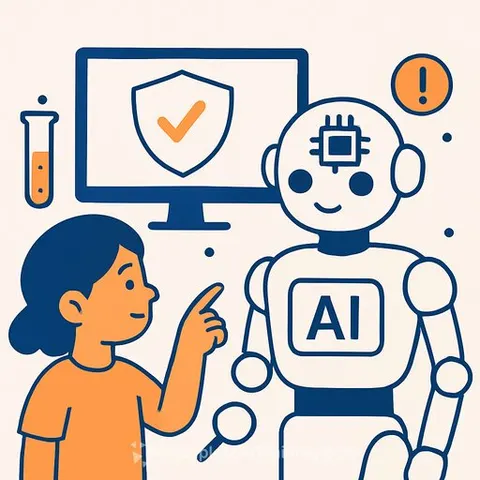
New Independent Lab Will Test AI Tools for Child Safety Risks
Common Sense Media is launching the Youth AI Safety Institute, an independent research lab backed by major AI companies and foundations to test products for risks to children and teens. The institute will publish safety benchmarks and consumer guides aimed at spurring tech firms to improve their products - similar to how vehicle crash testing has driven automotive safety improvements since the 1990s.
The move addresses a gap in AI oversight. While AI companies invest in safety research, no independent third-party standards exist to measure how safe different tools are for young users. Most existing AI safety organizations focus on societal-level risks like job displacement rather than everyday consumer safety.
The institute will operate with a $20 million annual budget, funded by the OpenAI Foundation, Anthropic, Pinterest, the Walton Family Foundation, and individual donors. Funders will have no input on the group's research or operations.
How the Institute Will Work
The lab will stress-test leading AI models and products used by young people to identify safety gaps. Researchers will then publish findings as guides for parents and families, and develop safety benchmarks that tech companies can use during product development.
The advisory board includes John Giannandrea, Apple's former AI strategy chief; Mehran Sahami, chair of Stanford's computer science department; Dr. Jenny Radesky, director of University of Michigan Medical School's developmental behavioral pediatrics division; and Dr. Nadine Burke Harris, California's first surgeon general.
Common Sense Media already reaches 150 million monthly users through its ratings of movies, video games, and online platforms. The organization has published risk assessments of ChatGPT, MetaAI, and Grok, ranking them on scales from "minimal risk" to "unacceptable" across measures including child safety and data use.
Why This Matters Now
Recent incidents have highlighted risks. AI chatbots have advised teen test accounts on committing violence. Families have sued AI companies alleging chatbots encouraged their children's suicides. Grok faced backlash for sharing sexualized images of women and children. Growing classroom adoption raises questions about whether AI could impair learning.
The speed of AI development presents a challenge. Unlike physical products released on regular schedules, AI models often gain new capabilities weekly or monthly, creating new risks faster than traditional testing can measure.
Common Sense Media CEO James Steyer said the institute aims to create a "race to the top" where public scrutiny and third-party standards incentivize safety improvements - the same dynamic that transformed vehicle safety decades ago.
The group is trying to move faster than the social media era, when it took years of whistleblower revelations and lawsuits before the full scope of harms became clear. Earlier this year, a California jury found Meta and YouTube liable for knowingly addicting and harming a young woman.
Research from the institute will begin this month. For product developers, the benchmarks will establish measurable standards for safety testing and quality assurance - metrics that are currently absent from most AI development workflows.