
AI news ·
Companies cut middle management as AI takes over coordination tasks
Meta cut 8,000 jobs this week to fund AI infrastructure and flatten management layers. But experts warn that collapsing too many tiers overloads staff and drives engagement down.
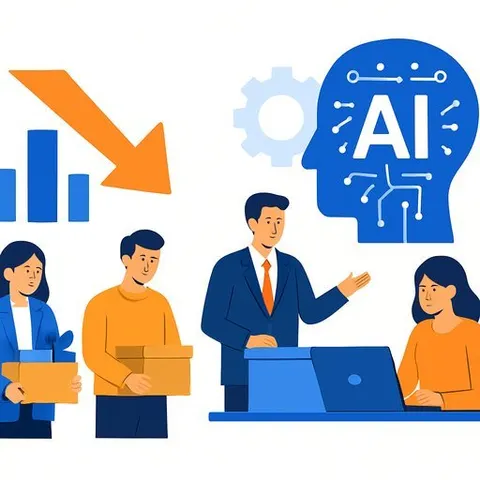
Meta cuts 8,000 jobs as companies flatten management layers
Meta eliminated about 8,000 positions this week to offset spending on AI infrastructure and "operate with a flatter structure … that can move faster," according to an internal memo. The move reflects a broader trend: tech companies are using AI to replace middle management functions.
Middle managers traditionally coordinate across departments. Tristan Botelho, an associate professor of organizational behavior at Yale School of Management, described the role simply: "The classic job is getting 12 different status updates from four different departments, and trying to understand it in one summary."
AI agents handle this type of work efficiently. An executive can request status updates at any hour - 2 a.m., 4 a.m., 7 a.m. - and get consolidated information without waiting for a manager to compile it.
Emily Rose McRae, senior director analyst at Gartner, said companies see flatter structures as a way to cut expenses and reduce approval delays. "If you have more layers of responsibility and more levels of sign-off than really allow you to be effective, if that's one of the major barriers; it could make sense to reduce that," she said.
The risks of going too flat
AI cannot fully replicate what human managers do. Companies risk overloading remaining staff when they collapse organizational layers too aggressively.
Jim Harter, Gallup's chief scientist of workplace management and wellbeing, noted that team sizes of 25 or more have become common as companies eliminate middle positions. He warned that treating restructuring as a cost-cutting transaction rather than a redesign of how people are managed can backfire.
Employee engagement has dropped to a ten-year low, Harter said, and manager relationships drive much of that decline. The relationship between an employee and their direct manager remains something AI agents cannot replace.
For managers, the shift means understanding how AI for Management and AI Agents & Automation change coordination work - and how to maintain engagement when structures change.