The Resume Is No Longer the Main Measure of Hiring
For decades, resumes have been the primary tool for evaluating job candidates. They organize experience by dates, titles, and institutions - a standardized way for companies to compare applicants and for workers to document their careers.
That system worked in a labor market defined by stable roles and linear career paths. Today's market operates differently. Roles evolve rapidly, industries transform, and many jobs that will exist in five years do not have names yet.
Companies are recognizing that experience explains what someone did in the past. Skills and adaptability better predict what they can do next.
According to research from Pandapé and Computrabajo, 36% of HR professionals now identify competency-based evaluation as a key hiring trend. The figure signals a shift in how organizations assess talent and potential.
What Changes in Competency-Based Hiring
The traditional question in recruitment - "What has this person done?" - is being replaced by a different one: How does this person think? How do they solve problems? How do they adapt when circumstances change?
Two candidates can have nearly identical resumes: same degrees, comparable titles, overlapping years in similar roles. Their approaches to decision-making, teamwork, and problem-solving may be completely different. Those differences often determine job performance but rarely appear on paper.
Competency-based evaluation addresses this gap. Instead of focusing only on credentials, it examines observable behaviors and transferable skills that emerge when people face real situations. This approach evaluates potential alongside history.
The transition is still unfolding. Research shows 65% of HR professionals continue to prioritize technical skills as their main evaluation criterion, followed by soft skills like communication and teamwork. Most hiring processes still rely on traditional filters: education, years of experience, previous job titles.
Changing this requires more than new interview questions. It demands redesigning how organizations evaluate talent, interpret behavioral signals, and make hiring decisions consistently and fairly.
Where AI Makes Skills Visible
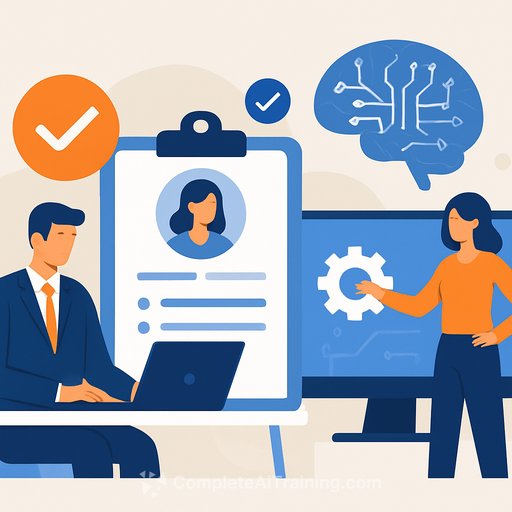
Artificial intelligence begins to address this challenge by making skills more visible. AI processes large volumes of information, identifies patterns, and evaluates cognitive abilities, behavioral tendencies, and learning capacity in ways that were not previously possible.
For the first time, companies can evaluate not just what someone knows or where they have worked, but how they think, how they react to challenges, and how they might perform in roles that do not yet exist.
This shifts recruitment from verifying credentials to understanding capability. When used responsibly, AI does not replace human judgment - it strengthens it by providing structure, consistency, and evidence. Decisions rely less on intuition alone and more on informed judgment.
AI is becoming decision-making infrastructure for the future of work, not merely an automation tool.
Gamification and Observing Talent in Action
Gamified assessments offer another approach. Through simulations, interactive challenges, and structured exercises, companies observe how candidates respond to complex situations. These reveal analytical thinking, leadership tendencies, problem-solving strategies, and collaboration styles in ways traditional interviews rarely capture.
Gamification also transforms evaluation into a more engaging experience. Many professionals, especially younger workers, expect interactive digital environments. Incorporating these dynamics into hiring aligns with those expectations while providing more accurate behavioral insights.
Instead of asking candidates to describe their abilities, companies can observe those abilities in action.
A Shift From Past to Potential
The rise of competency-based hiring reflects a broader change in how organizations understand work itself. For much of the 20th century, careers followed relatively stable paths. Professional growth depended on accumulating years of experience within a specific role or industry.
That world has changed. Technological change continuously reshapes job functions. Entire roles appear and disappear within a few years. Skills once considered permanent now require constant renewal.
In this environment, the ability to learn, adapt, and collaborate becomes a strategic asset. Experience still matters, but its meaning changes when evaluated alongside behavioral capabilities and cognitive skills. Organizations that understand how people think, learn, and operate within teams make better hiring decisions and build workforces prepared for continuous change.
The Resume's New Role
Hiring beyond the resume does not mean ignoring experience. It means putting experience into context. A resume explains where someone has worked. Skills and capabilities help explain what that person can do next.
That distinction is critical in a labor market defined by uncertainty. The real shift in hiring is philosophical, not just technological. Companies are moving from retrospective evaluation - looking at the past - to forward-looking evaluation: understanding potential.
In a world where jobs change faster than resumes, the ability to recognize potential may become the most important competitive advantage. The resume will likely remain part of recruitment, but it may no longer be central to the decision.
The question redefining hiring is no longer, "Where has this person been?" but, "What is this person capable of becoming?"
For HR professionals seeking to understand AI's role in this transformation, resources like AI for Human Resources and the AI Learning Path for CHROs offer structured guidance on implementing these changes in recruitment and talent management.
Your membership also unlocks: