
AI news ·
Congress fails to update worker safety net ahead of potential AI job losses
The U.S. unemployment system wasn't built for AI-driven job losses, and Congress hasn't updated it. Benefits cap at 26 weeks, retraining programs have lapsed, and recent cuts tightened food and health aid.
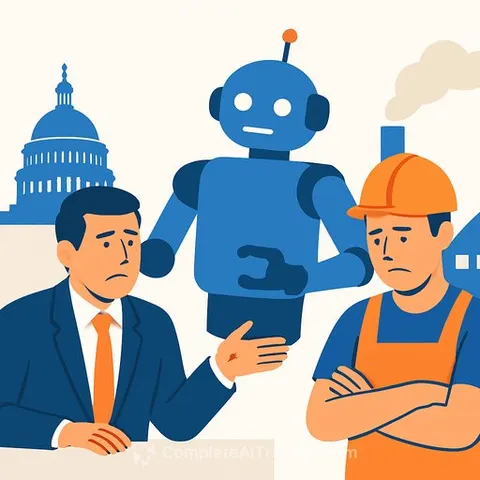
Congress Hasn't Prepared Safety Net for AI Job Losses
The federal government's system for helping unemployed workers isn't built to handle widespread job displacement from artificial intelligence, economists warn. The unemployment insurance system that has existed for nearly a century provides benefits for up to 26 weeks in most states-a structure that labor experts say won't cover many workers most vulnerable to AI disruption.
Job-retraining programs designed for earlier waves of technological displacement have either gone outdated or lapsed entirely. Meanwhile, Republicans in Congress last year tightened eligibility for food assistance and health care benefits that serve as a final safety net for struggling families.
The result: If AI causes significant job losses, displaced workers may discover they don't qualify for aid or that available benefits fall short of their needs.
Uncertainty About Scale, Agreement on Readiness
Economists disagree on whether widespread AI-driven job losses will actually occur. Unemployment remains low by historical standards despite recent layoffs at tech companies, banks, and other corporations. But worker anxiety is rising, and economists increasingly accept that AI will displace workers in specific sectors even if it doesn't trigger the economy-wide unemployment surge some predict.
The information sector-among the fastest to adopt AI tools-saw layoffs tick up notably in March, according to data released Tuesday.
What Government Officials Should Know
For government workers and policymakers, understanding AI's workforce impact requires more than monitoring headlines. The AI Learning Path for Policy Makers covers the data analysis and policy frameworks needed to assess AI's actual effects on employment and design appropriate responses.
Current federal programs weren't designed for rapid, technology-driven job losses across multiple sectors. Updating unemployment insurance eligibility, expanding retraining funding, and coordinating across agencies will require policy decisions based on clear data about where AI adoption is happening and which workers face the greatest risk.
Government agencies responsible for workforce development, labor statistics, and social services face pressure to adapt existing programs or build new ones-but Congress has yet to take significant action to prepare.