
AI news ·
Consumers accept AI for quick answers but blame brands for automation failures
Nearly 75% of consumers prefer AI for faster answers, yet companies face three times the blame when systems fail. Brands must ensure easy human handoffs to maintain trust.
A June 2026 report from Invoca shows consumers are increasingly comfortable using generative AI during the buying process, but brands are struggling to meet the resulting expectations. This creates a growing gap between buyer demands for speed and an organization's ability to deliver smooth customer experiences without damaging brand trust.
When buyers prefer AI
Chatbots were historically viewed as obstacles blocking access to information. According to Invoca's "B2C Buyers Experience Report," that dynamic has shifted. Nearly three-quarters of consumers "would rather interact with an AI agent than a human if the AI can answer questions or solve problems more quickly."
Transparency remains non-negotiable. Over 80% of consumers say it matters that a brand's AI clearly identifies itself. Marketers can deploy this disclosure as a low-cost trust builder, as buyers now evaluate AI as a practical tool to save time rather than a novelty.
Doubts persist despite this acceptance. Over 40% of consumers still feel that brands using AI to assist them value them less, a figure that has barely changed over the past year.
The cost of AI failures
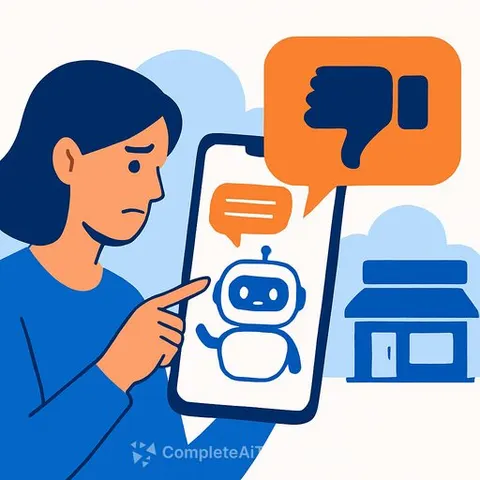
Companies rushing to automate customer interactions face a steep penalty for technical errors. Consumers do not distinguish between the AI agent and the company deploying it. Invoca found that buyers blame companies nearly three times more often than the technology itself when AI interactions provide inaccurate information or fail to resolve a problem.
What may look like an internal technical issue quickly becomes an external brand perception problem. Success requires rigorous data quality, testing, governance, and ongoing monitoring, raising the stakes for marketing and operations teams alike.
For professionals managing these tools, integrating AI for Customer Support means prioritizing smooth transitions rather than fully replacing human agents.
Rising expectations for response times
One of the most significant findings involves the aftermath of an AI interaction. As consumers grow accustomed to receiving answers in seconds, their expectations for every other channel rise accordingly.
When a prospect completes a form, they expect an immediate response. If follow-up takes hours or days, marketers risk losing the opportunity entirely. For organizations focused on demand generation, response speed is becoming just as critical as lead volume.
Consumers appear willing to forgive AI limitations under specific conditions. Most buyers understand that AI cannot solve every problem. Invoca found that 77% of consumers are more willing to use a company's AI tools if they know they can easily transition to a human representative when needed. Frustration arises when customers must repeat information or wait through multiple handoffs.
Why this matters for marketers
AI can accelerate customer acquisition and improve efficiency, but automation alone is insufficient. The brands that win will be the ones that connect AI, operations, and human support into a single experience that feels fast, helpful, and frictionless from start to finish. Marketers must treat AI as a primary customer touchpoint, making strategic investments in AI for Marketing to ensure these systems directly affect brand perception and demand generation rather than operating as standalone technology initiatives.