Contact Center AI Is Now Standard: What Support Leaders Need To Do Next
Customer expectations keep rising while interaction volume climbs. AI in the contact center has moved from pilot projects to daily operations, helping teams respond faster, improve accuracy, and stay available during peak demand.
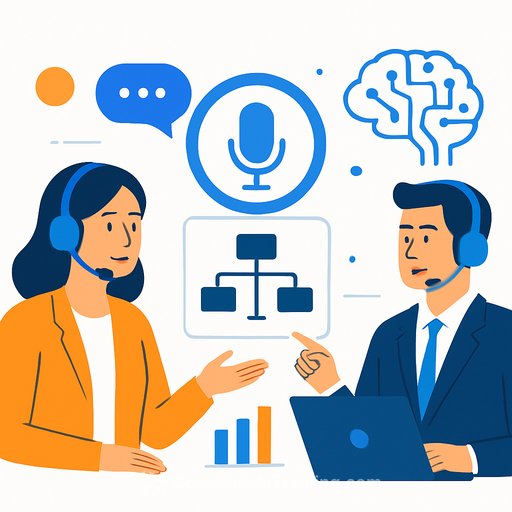
The shift is straightforward: automation handles routine work, AI agent assist supports reps in real time, and speech analytics turns conversations into actionable insight. The result is steadier service quality, lower stress on teams, and a clearer picture of what to fix next.
What's Actually Changing On The Floor
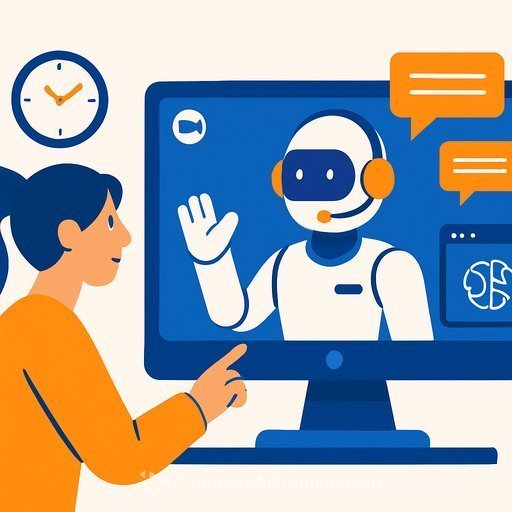
AI is embedded directly into agent desktops and telephony. Virtual agents and voice bots deflect common requests, route with better accuracy, and keep queues under control during spikes.
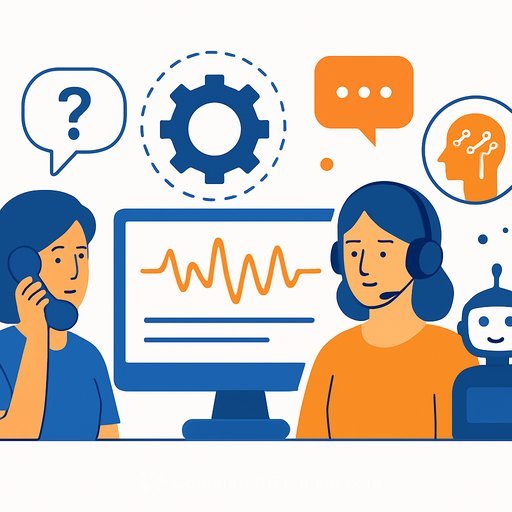
Speech analytics reviews 100% of interactions, surfacing trends, missed opportunities, and compliance gaps without manual auditing. Generative tools summarize calls, suggest next steps, and cut after-call work so agents can focus on the customer, not the paperwork.
Proven Wins You Can Expect
- Shorter wait times and fewer abandoned calls through smarter routing and voice automation
- Lower handle time via real-time suggestions, knowledge surfacing, and auto-summaries
- Faster onboarding with guided workflows and consistent prompts
- More consistent quality through standardized processes and targeted coaching
- Better forecasting and resilience as automation absorbs demand spikes
Key Components To Prioritize
- AI Agent Assist: Real-time guidance, reminders, and next-best actions that reduce errors and boost confidence.
- Speech Analytics: Automatic scoring, sentiment, and outcome tracking for every interaction, not just samples.
- Voice Bots + Conversational IVR: Natural language experiences that handle common intents and route precisely.
- Generative Capabilities: Auto-summaries, response suggestions, and knowledge retrieval to cut ACW and speed resolution.
- RPA + Workflow Automation: Background updates, follow-ups, and form fills to remove repetitive steps.
- AI as a Service (Cloud): Faster rollouts, continuous updates, and easier scaling without heavy infrastructure.
Metrics That Signal Real Impact
- Call routing accuracy
- Abandonment rate and speed of answer
- Average handle time and after-call work
- First-contact resolution and customer effort score
- QA pass rate and compliance findings
- New-hire ramp time and agent attrition
90-Day Rollout Plan
- Days 1-30: Foundation
- Map top 10 intents across voice and digital. Identify deflection-ready use cases.
- Deploy speech analytics for baseline insights and to score every call.
- Pilot agent assist with a small pod to validate prompts and playbooks.
- Days 31-60: Automate + Assist
- Launch conversational IVR/voice bot for FAQs, status, and routing.
- Enable generative summaries and knowledge suggestions to reduce ACW.
- Tie workflows to RPA for updates, case notes, and follow-ups.
- Days 61-90: Scale + Standardize
- Expand successful intents to more channels. Add multilingual support where needed.
- Embed guidance into onboarding. Update QA rubrics to reflect AI-assisted flows.
- Publish a weekly scorecard: routing accuracy, FCR, CES, AHT, QA, and abandonment.
Project managers leading these rollouts may find the AI Learning Path for Project Managers helpful for practical guidance on planning, budgeting, and program management.
Design The Agent Experience First
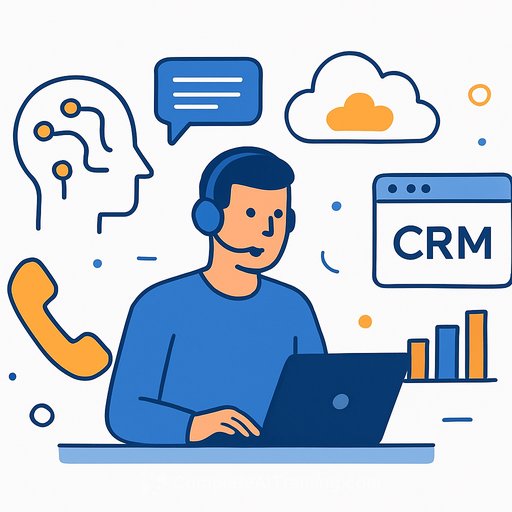
Agents juggle multiple systems. Bring comms, customer context, and guidance into one interface. Minimize screen switches. Keep prompts clear, short, and specific to the customer's goal.
Give supervisors better visibility with live dashboards and targeted coaching prompts. The simpler the tools, the faster new hires ramp and the steadier the quality.
Conversational AI Beyond Basic Chatbots
Customers want to speak naturally and get to the point. Modern conversational systems handle longer, more detailed requests, then pass full context to a human when needed.
No repeating information. No starting over across channels. Satisfaction rises when automation feels helpful, not scripted.
Governance That Builds Trust
- Define allowed use cases (assist vs. automate), escalation rules, and human-in-the-loop checkpoints.
- Review prompts, data sources, and redaction policies with Legal and Compliance.
- Audit outcomes monthly using speech analytics and QA samples.
- Train teams on responsible use and fallbacks for uncertain cases.
If you need a practical framework for risk controls, see the NIST AI Risk Management Framework here. For role-focused governance and compliance training, consider the AI Learning Path for Regulatory Affairs Specialists.
Global Rollouts: What To Watch
- Localization of intents, language models, and tone
- Regional compliance and data residency
- Consistency in QA rubrics across markets
- Shared playbooks with room for local variations
Spanish- and Asian-language deployments are accelerating, with governments and enterprises investing in local capabilities. The goal: maintain consistent service while adapting to local expectations.
Where AI And RPA Pay Off Fast
- Order status, billing questions, appointment scheduling, password resets
- Case updates, entitlement checks, and follow-up notifications
- Identity verification and data capture before escalation
Automate the steps that are repetitive, rules-based, and occur in high volume. Keep humans on complex or sensitive issues where judgment matters.
Weekly Operating Rhythm
- Review: routing accuracy, deflection rate, FCR, abandonment, AHT
- Listen: 10 flagged calls per team (sentiment swings, repeat contacts, compliance)
- Tune: top 5 intents, agent assist prompts, and knowledge gaps
- Coach: targeted feedback based on analytics-not guesswork
Budget And Procurement Notes
- Favor platforms where automation, analytics, and agent assist work together out of the box.
- Ask for measurable results: time-to-value, deflection, AHT, and QA improvements.
- Check scalability, multilingual support, and reporting depth before signing.
- Expect cloud delivery and continuous updates; avoid heavy lift implementations.
What Industry Coverage Signals
Service leaders now treat AI as a long-term operational strategy, not a side project. Modernization plans are tied to AI adoption, and standards for results are rising.
Voice remains critical. Voice bots and conversational IVR reduce wait times, while agent assist keeps escalations smooth. Over time, analytics make the entire system smarter and more predictable.
Next Steps For Support Leaders
- Pick 3 high-volume intents to automate in the next quarter.
- Turn on speech analytics and publish a weekly scorecard.
- Pilot agent assist with one team; iterate prompts for clarity and impact.
- Document governance, escalation, and audit routines from day one.
For a broader view on business impact, this overview from McKinsey is useful here.
Build Skills Across The Team
Upskilling agents, team leads, and QA analysts multiplies the impact of your tools. Focus on prompt quality, data hygiene, and coaching with analytics.
If you're organizing training paths by role, the AI Learning Path for CIOs Chief Information Officers offers strategy and governance guidance for enterprise-scale adoption.
Bottom Line
AI in the contact center is practical, measurable, and here to stay. Automation handles the repetitive load, agent assist keeps people sharp, and analytics show you exactly where to improve.
Run the playbook. Start small, measure weekly, and keep tuning. Your customers will feel the difference-and your team will, too.
Your membership also unlocks: