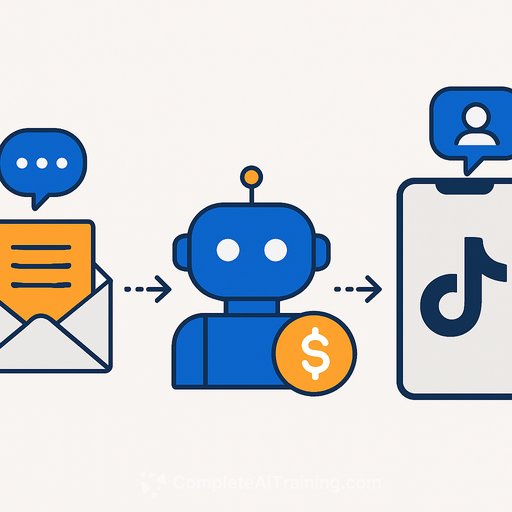
Empowering the Modern Contact Center with Agentic AI: Systems that Think, Act, and Earn
Contact centers don't need faster scripts. They need systems that pursue goals, adapt in real time, and close cases without constant hand-holding. That's the promise of agentic AI: software that perceives context, takes action, and knows when to ask for help.
The shift is simple to say and hard to implement. It moves support from reacting to issues to preventing them, while keeping humans in control of outcomes.
From Automation to Autonomy
IVR trees and rule-driven bots had one job: route and repeat. Even modern chatbots tend to answer questions but stall when decisions require tradeoffs, coordination, or foresight.
As infrastructure engineer Munesh Kumar Gupta puts it, "Automation handles what is repetitive. Intelligence handles what is changing. Agentic AI combines both." Traditional automation stops at output. Agentic systems keep moving until resolution.
The Architecture of Autonomy
Autonomy isn't a single model drop-in. It's an architecture choice. Here's the blueprint most teams need.
- Contextual memory: Persist customer history, policies, and case state across channels and sessions.
- Goal-driven reasoning: Agents that plan, execute, monitor progress, and self-correct against clear outcomes (e.g., "restore service," "verify identity," "issue refund within policy").
- Tool orchestration: Safe connections to CRM, billing, identity, order management, and workflows with granular permissions.
- Guardrails and policy: Data minimization, PII redaction, rate limits, allow/deny lists, and hard stops for regulated actions.
- Observability: Traces for every decision and API call, with replay to audit and improve reasoning.
- Feedback loops: Human review on edge cases, scorecards on outcomes, automatic fine-tuning of prompts and routines.
- Security and compliance: Role-based access, encryption, model risk reviews, and change management that can pass an audit.
- Resilience by design: Gupta led an API-driven self-replication framework that achieved near-100% uptime by auto-recovering configuration across environments. His takeaway: "Resilience is not about backup, it is about adaptation. Systems should recover as naturally as they fail."
Where Humans and Agents Collaborate
Agentic AI doesn't replace your team. It removes the busywork so they can solve the hard parts. Or as Gupta says, "Autonomous systems handle process. Humans handle empathy."
- Pre-call prep: Auto-summarize history, sentiment, and policy constraints before the agent joins.
- Proactive fixes: Detect patterns and reach out with verified steps or safe self-service flows.
- Multi-step resolution: Execute actions across systems, verify outcomes, and document the case.
- Explainable decisions: Provide reasons, sources, and policy citations for every action.
- Assisted escalation: Hand off with a clean summary, next-best-actions, and pending blockers.
- Live coaching: Suggest phrasing, policy reminders, and de-escalation tips in the moment.
Governance You Can Audit
Autonomy only works if it's accountable. Especially in finance and healthcare, every decision must be explainable, auditable, and reversible.
- Human-in-the-loop: Mandatory approval for sensitive actions, with clear override paths.
- Policy engine: Centralized rules that constrain tools, data access, and spending.
- Identity and consent: Voice biometrics and multi-factor checks tied to case risk.
- Traceability: Full logs for model prompts, tool calls, and outcomes with retention controls.
- Model risk management: Bias tests, drift monitoring, and safe rollback plans.
Gupta's recent study on GxP-compliant contact center platforms with voice biometrics shows how microservices, biometric authentication, and compliance can live together without losing speed. His rule of thumb: "You cannot remove humans from the loop. You simply redefine their role within it."
Metrics That Matter
- Issue resolution: First contact resolution (FCR), transfers per case, escalation rate.
- Speed and efficiency: Average handle time, time-to-first-action, agent assist adoption.
- Quality and trust: CSAT/NPS, deflection quality, policy violations per 1,000 actions.
- Cost and scale: Cost-to-serve, containment rate, cases per agent-hour.
- Learning velocity: Days from error to fix, playbook update frequency.
Industry forecasts point to large shifts in containment and cost. Market growth is also accelerating; for context, see this contact center software market analysis from Grand View Research.
Practical 90-Day Plan
- Days 1-30: Map top 20 intents by volume and effort. Define "safe to automate" actions. Set guardrails, logging, and redaction. Pick one channel to start.
- Days 31-60: Pilot two intents end-to-end. Connect to CRM/billing in read-only first. Measure FCR, policy hits, and agent satisfaction. Keep humans approving sensitive steps.
- Days 61-90: Expand tools, enable write actions with limits, and add proactive triggers. Stand up scorecards, incident reviews, and a prompt/change review board.
Reference Tech Checklist
- Reasoning layer: LLM with tool use/function calling and planning.
- Knowledge: RAG with policy-aware retrieval and source citations.
- Orchestration: Event bus, workflow engine, and secrets management.
- Data and memory: Vector store + case state with strict retention rules.
- Voice and channels: Telephony, STT/TTS, chat, email, and SMS with unified context.
- Observability: Tracing, analytics, red-team sandboxes, and replay.
- Security: RBAC, audit trails, approvals, and environment isolation.
From Agentic to Cognitive
The next step is anticipation. Systems will read intent from signals and act before the customer asks, escalating to a human the moment empathy is needed. Market momentum backs the shift to AI-enabled platforms that work across channels and policies without breaking trust.
Gupta sums it up clearly: "Autonomy without accountability is fragility." And the target is practical: "The goal is not to make machines independent. It is to make them dependable."
Level Up Your Team
If you're building skills for support roles, explore focused learning paths and certifications:
Your membership also unlocks: