
AI news ·
Cornell professor says generative AI should augment HR decisions rather than make them
AI can process pay data in seconds, but Cornell experts warn it must not make final hiring decisions. Relying on historical records risks amplifying past biases.
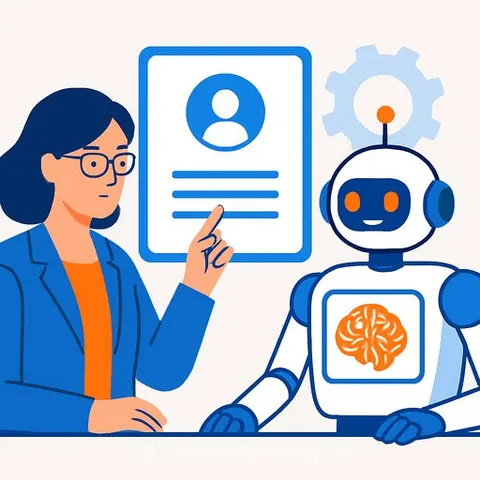
Generative AI can process compensation data and regional pay benchmarks in seconds, but it should not be trusted to make final hiring or promotion decisions, according to Chris Collins, a professor of HR studies at Cornell University's ILR School. His comments come as more HR departments adopt AI tools for tasks ranging from resume screening to workforce planning, raising questions about where the technology's role should end.
Collins, who directs the Master of Industrial and Labor Relations (MILR) program, said AI's speed and data-crunching abilities are well suited to certain administrative HR functions. "Running numbers, benchmarking compensation and aggregating regional pay data are all things AI can do extremely well," he said. "The speed and access to information it provides can be very effective for HR leaders."
Where the risk hides
The data that feeds these models carries hidden problems. AI systems learn from past decisions and performance records, which often reflect historical biases in hiring, pay, and promotions. Without careful oversight, the technology can pull those biases into current processes rather than eliminate them.
"AI is drawing on prior decisions and prior performance data," Collins said. "That means it can pull existing biases forward and, in some cases, actually amplify them. AI should be augmenting decisions, not making them. Leaving important people decisions entirely to AI is problematic."
For HR managers learning to set those boundaries, an AI Learning Path for HR Managers provides guidance on using AI as a decision-support tool without surrendering human judgment.
Where AI earns its keep
Compensation analysis is one area where AI can take on heavy lifting. Aggregating market pay data, flagging internal equity issues, and modeling salary bands are repetitive tasks that benefit from automation. The time saved lets HR teams focus on strategy and employee conversations.
Many organizations are turning to AI for Human Resources to handle these kinds of data-intensive but rule-based activities. The key is to treat AI's output as input for human review, not as a final answer.
Why this matters for HR professionals
The distinction between augmentation and automation is not academic. When AI influences pay or promotion decisions, the legal and cultural stakes are high. HR leaders need to audit the data feeding their AI tools, question the assumptions baked into models, and ensure that a human reviews every significant people decision. Speed is not a substitute for accountability.