
AI news ·
Courts move toward disclosure rules as AI filings bring fake citations and defective arguments
Courts have logged roughly 1,400 cases globally involving AI-generated fake citations since 2023, with over 955 in the U.S. New disclosure rules now require filers to verify any AI-assisted content before it enters the record.
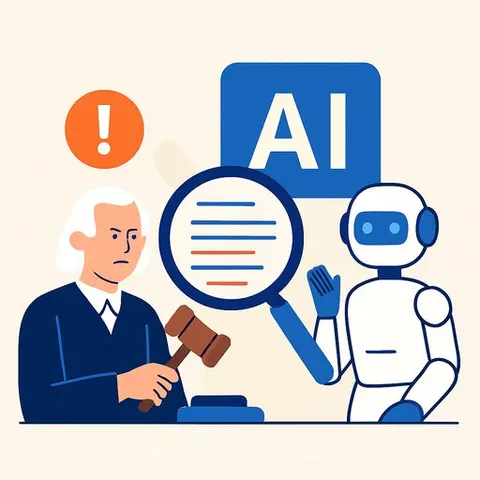
Courts are cracking down on AI-generated fake citations in legal filings
Self-represented litigants are using AI to draft court documents that look professionally written but often contain invented case citations, fabricated quotes and flawed legal arguments. Courts are responding with disclosure requirements and verification rules that shift responsibility back to the human filing the document.
The problem is measurable but still small. About 1,400 documented cases globally have included AI hallucinations since January 2023, with more than 955 in the United States. That sits inside roughly 40 million U.S. court cases filed in the same period. What matters is not the percentage - it is the cost. Each defective filing forces judges, clerks, opposing counsel and court staff to verify citations that do not exist or check arguments that collapse under scrutiny.
Illinois courts documented more than 280 filings with hallucinated citations since 2023. The 2025 count rose sharply. The Seventh Circuit warned in January that even self-represented litigants cannot rely on unverified AI output. The warning matters because courts have traditionally given procedural patience to people without lawyers. AI tests that patience by making weak arguments read formal enough to demand a full response.
Disclosure is becoming the regulatory standard
Miami-Dade and Broward courts issued coordinated requirements in May 2026. Anyone filing court documents - attorneys or self-represented parties - must now disclose generative AI use and verify the accuracy of any AI-assisted material. The Eleventh Judicial Circuit said the goal was consistency across how courts handle these submissions.
Courts do not need to know whether someone used ChatGPT for brainstorming. They need to know whether a filing contains AI-drafted legal analysis, citations, quotations or factual assertions that require verification before becoming part of the record. The certification language puts responsibility on the human filer, not the software vendor.
This is where the business stakes rise for legal-tech companies. A tool that drafts a complaint is not the same as a tool that verifies every citation against an authoritative database. A chatbot that explains civil procedure is not the same as software that understands local rules, filing limits and jurisdiction-specific standards.
The market opportunity is shifting toward verification
Vendors that build citation checking, jurisdiction controls and audit trails into their workflow can sell reliability, not just speed. That is a stronger business than giving litigants a prettier way to file defective arguments. It also aligns with where regulation is moving - toward human responsibility, disclosure and documented verification.
The better products will distinguish between drafting tools and verification tools. A product that helps someone organize facts or understand forms has real value. A product that produces court-ready language without reliable verification creates liability downstream for judges, defendants, court staff and the user who may not understand what the software actually did.
What comes next
The next phase will likely spread as a paperwork standard rather than a dramatic crackdown. Courts will ask who used AI, what it touched and who checked it. Other regulated industries will be watching, because law is becoming an early test of a larger rule: when AI performs professional work, someone still has to sign their name to the result.
For legal professionals, this means understanding both the capabilities and limits of AI tools you use or encounter. AI for Legal work is expanding, but the responsibility for accuracy remains with the person filing the document. AI Learning Path for Paralegals can help you understand how to use these tools effectively while managing the verification and disclosure requirements courts now expect.