The Age of Intelligent Experience: What It Means for Customer Support
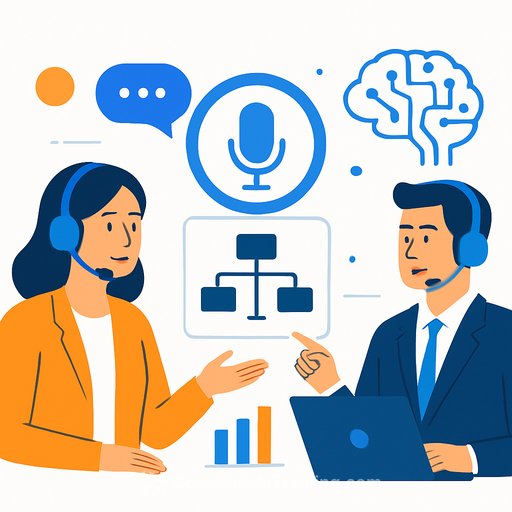
Service has hit an AI inflection point. Interactions are faster, smarter, and more personal-and the ROI is real. For support leaders, this isn't about adding another bot. It's about re-architecting service so humans and AI work as one system.
Why now
AI model performance has taken a major step forward. Agentic systems can use natural conversation plus orchestration to resolve complex cases, and they do it at scale. Nearly half of mature service organizations are already using agentic AI-48% vs. 24% of lower-maturity peers.
The business case is clear: 64% of service leaders report higher agent productivity and 39% report lower cost per contact from AI. And 43% believe they can cut contact center costs by 30% or more within three years.
Customer Service is the next big platform for enterprise AI
AI isn't just for chat deflection anymore. It spans contact centers, digital channels, field service, and in-product support-tying together interactions, workflows, and the workforce. Done right, it improves resolution speed and quality while creating growth without proportional headcount.
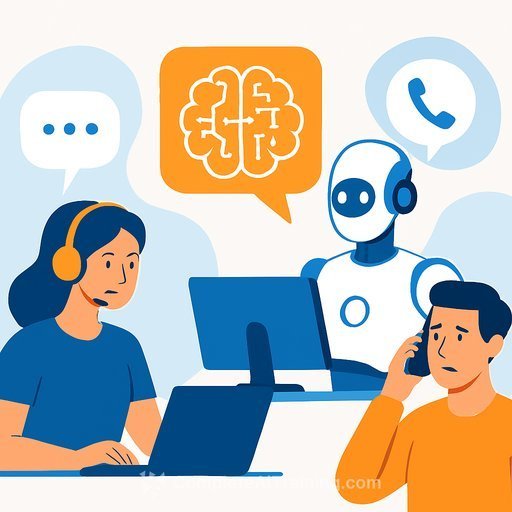
Human + AI: the new operating model
AI handles routine tasks, data crunching, and instant retrieval. Humans handle judgment, empathy, and complex edge cases. Leaders who redesign roles, metrics, and governance for this collaboration turn support from a cost sink into a trust and revenue engine. CIOs can lead this alignment; see the AI Learning Path for CIOs.
What AI-enabled service systems can do today
- Understand intent and route accurately on the first touch
- Summarize calls and chats automatically with structured disposition data
- Personalize offers and solutions in real time
- Predict issues before they escalate and trigger proactive outreach
- Support every agent with live suggestions, knowledge, and next best actions
Expected outcomes
- Higher deflection and containment rates with clean handoffs to humans
- Shorter handle times, better first-contact resolution, and more consistent quality
- Higher conversion and retention from timely, relevant offers
Field-tested execution: TrueServe
Deloitte Digital's service acceleration and orchestration platform, TrueServe, adds new agentic capabilities to help teams move from vision to execution. It has supported 100+ projects across industries like financial services, retail, consumer products, automotive, hospitality, health care, life sciences, and technology.
What stands out is the end-to-end view: integrating AI across interactions, workflows, and the workforce-so leaders can scale results, not just pilots.
Key TrueServe capabilities
- AI orchestration across virtual agents, co-pilots, workflows, and human agents
- Forward-deployed engineers experienced in multi-platform AI service transformation
- Integrated service data and real-time intelligence across channels
- Pre-built accelerators for contact centers, field service, and digital service
- Built-in governance, risk, and responsible AI guardrails
How to apply this in your support org (practical steps)
- Map your top 10 intents by volume, cost, and dissatisfaction. Pick 3 to automate end-to-end with clear success metrics (FCR, AHT, CSAT, containment).
- Stand up an agent co-pilot first. Auto-summarization, knowledge retrieval, and suggested actions are fast wins that build trust with the team.
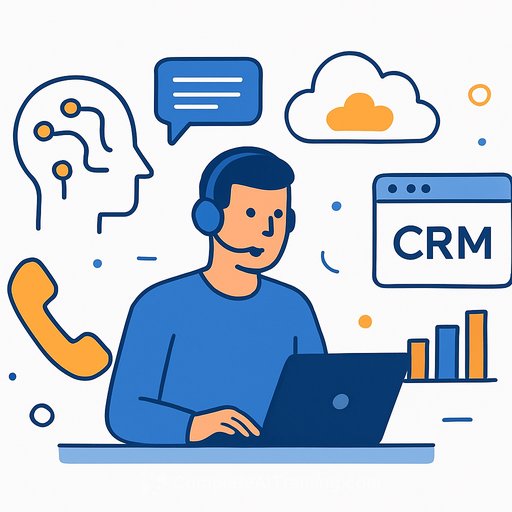
- Unify service data. Bring transcripts, tickets, CRM, and product telemetry into a single retrieval layer for consistent answers and analytics.
- Design escalation logic. Define when AI handles, when it assists, and when it hands off-plus what context must be passed every time.
- Instrument everything. Track deflection, handle time, time-to-resolution, recontact rate, and quality variance by channel and intent.
- Build a content pipeline. Treat policies, macros, and knowledge as living assets with versioning, approvals, and expiry rules.
- Put guardrails in place. Red-teaming, human-in-the-loop checks for sensitive flows, and incident paths for model errors.
- Refresh roles and incentives. Reward resolution quality, proactive saves, and coaching-not just speed.
- Train the team. Short, role-based skill paths for agents, team leads, QA, and WFM so adoption sticks.
Tech principles for an AI-first service stack
- Multi-agent orchestration that coordinates tasks, tools, and handoffs
- Low-latency retrieval over clean, permissioned knowledge
- Event-driven workflows connected to CRM, ticketing, and product signals
- Auto-summarization and tagging baked into every interaction
- Observability for prompts, models, outcomes, and drift
- Responsible AI controls aligned to policy and compliance standards
90-day quick-start plan
- Weeks 0-2: Set north-star metrics, select top 3 intents, define guardrails and escalation rules.
- Weeks 2-6: Launch agent co-pilot and one high-volume virtual-agent flow; integrate auto-summarization.
- Weeks 6-10: Add two more intents, wire up real-time data (CRM, knowledge, product events), and refine prompts.
- Weeks 10-12: Formalize QA and red-teaming, publish runbooks, and roll out team training.
Project managers running these sprints can use the AI Learning Path for Project Managers to help orchestrate delivery and scale.
Responsible AI resources
For governance and risk controls, see the NIST AI Risk Management Framework: NIST AI RMF.
Upskill your team
If you're building AI skills across support roles, explore role-based learning paths: AI Learning Path for Training & Development Managers.
The takeaway
AI has moved past pilots. Orchestrated service-across people, workflows, and channels-delivers measurable gains now. Start small, instrument everything, and scale what works.
Your membership also unlocks: