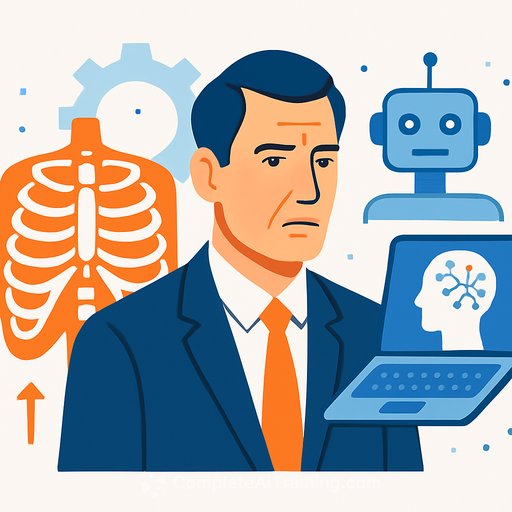
Middle Managers Are Getting Cut. That's a Mistake in the AI Era.
Companies cut costs. Layers get trimmed. And in 2025, middle managers are the first on the list.
Here's the paradox: as AI takes on routine work, the roles that turn strategy into execution matter more, not less. As one leadership expert put it, their function is "more important than ever," even as big names reduce headcount and "flatten" orgs.
Why Cuts Are Accelerating-and Why It Backfires
Delayering promises speed and savings. It also shifts budget to AI. On paper, that looks efficient.
In practice, the glue gets ripped out. Surviving managers inherit larger teams, hazy decision rights, and tech they're expected to "make work" without support. Meanwhile, executives underestimate the human oversight required to integrate AI into real workflows.
Layoffs Reshaped the Org Chart
Trackers across the industry show continued cuts after pandemic hiring surges. Middle managers-often labeled "non-revenue"-take the hit first.
Job seekers report hundreds of applications, interview no-shows, and long silences from HR. By year-end, the pattern held. Recruiters on X keep saying the quiet part: companies are prioritizing individual contributors while compressing layers between the C-suite and the front line.
AI Doesn't Replace Managers-It Changes the Job
AI automates parts of the work. It also raises the stakes on what managers do best: align strategy, people, and constraints. That's not something an algorithm runs on its own.
Experts warn that execution fails without someone to set context, guide ethics, maintain trust, and adapt processes. One researcher summed up the role well: balancing strategy with human needs and real-world limits is a hard job-and still essential.
What High-Leverage Managers Do Now
- Translate strategy into prompts, workflows, and policies AI can follow.
- Define guardrails: data access, approval paths, and escalation points for edge cases.
- Refactor processes to cut handoffs and make AI outputs usable in downstream steps.
- Coach teams on data hygiene, prompt quality, and feedback loops.
- Track quality, cost, and cycle time-and kill tools that don't move the needle.
- Protect morale: set clear expectations, reduce meeting overload, and resolve role confusion fast.
The Skill Stack Managers Need (Next 90 Days)
- Data fluency: basic SQL or dashboards, input/output quality checks, bias awareness.
- Prompt and workflow design: structure tasks, chain tools, document standards and edge cases. See practical resources: Prompt Engineering.
- Change coaching: short cycles, visible wins, and clear decision rights.
- Vendor sanity checks: pilots with real metrics, not demos.
- Translation: align AI work with KPIs, budgets, and compliance.
If you're retooling a team or your own role, browse focused paths by function here: AI Courses by Job.
For Executives: Retain the Sinew, Not the Fat
Cutting middle managers without upgrading the system invites failure. Keep the ones who can run AI-enabled execution, and give them what they need.
- Right-size spans of control. Eight to ten direct reports is a ceiling for complex work.
- Clarify decision rights: who approves what, and which calls AI can make autonomously.
- Fund upskilling tied to real projects; require output metrics within 60-90 days.
- Standardize quality checks for AI outputs across functions.
- Consolidate tooling; kill duplicate pilots.
- Protect time: fewer status meetings, more builder time.
- Incentives: reward cycle time, quality, and adoption-not headcount.
Hiring Signal: What to Look For
- Evidence they've turned a vague idea into a shipped process with measurable outcomes.
- Ability to audit AI: sample outputs, spot failure modes, and reset prompts/workflows.
- Systems thinking: simplify handoffs, instrument steps, remove approvals that add no value.
- Team trust: low turnover, clear expectations, and consistent delivery under pressure.
If You Were Laid Off: A Short, Honest Plan
- Package your wins as before/after metrics. Lead with time saved, cost avoided, or revenue protected.
- Build a public project: a small AI-enabled process demo with documentation and metrics.
- Target functions where managers are thin and pain is high: support, ops, finance, sales enablement.
- Be easy to hire: clear case studies, two references, and a 30/60/90 plan in your pocket.
The Risk of Over-Cutting
Execution gaps widen: AI pilots stall, teams burn out, and quality drops. Morale falls when spans are too wide and roles blur.
Leaders close to the work have warned for months: middle managers make or break execution. Ignore that, and you pay for it in churn and missed targets.
Your Q1 Playbook
- Map spans, decision rights, and AI use by team. Fix the obvious friction first.
- Pick three processes to modernize end-to-end with AI and automation. Set target metrics now.
- Name a manager as "process owner" for each. Give budget, authority, and weekly access to a sponsor.
- Stand up a quality review cadence for AI outputs. Sample, score, and iterate.
- Train leads on prompt and workflow basics; pair them with an analyst for four weeks.
- Sunset one low-value tool for every new tool added.
- Publish a one-page operating model: who decides, how work flows, and what gets measured.
Bottom Line
Lean is good. Hollow is not. Cut bureaucracy, keep the connective tissue.
Middle managers are the sinew that binds strategy to results. In 2025, that's the edge you can't afford to lose.
Your membership also unlocks: