
AI news ·
Dassault Systèmes explains how AI and 3D bioprinting are advancing medical device design and tissue engineering
Dassault Systèmes is integrating AI into its SOLIDWORKS platform to help medical device teams design and validate products faster. Its 3D bioprinting tools support tissue modeling for drug testing and regenerative medicine research.
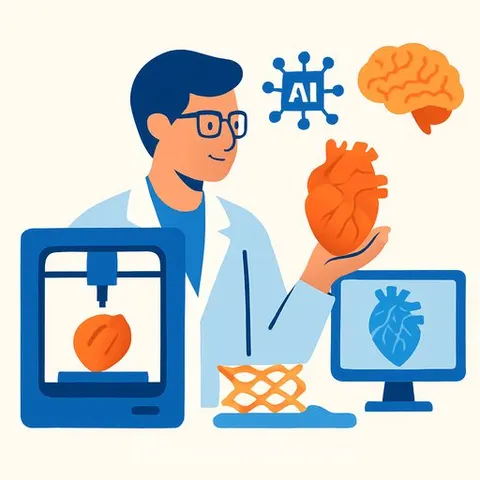
Dassault Systèmes Advances AI Bioprinting for Medical Device Design
Dassault Systèmes is positioning AI and 3D bioprinting as core tools for healthcare innovation, enabling medical device engineers and researchers to design, simulate and collaborate with greater speed and accuracy.
The company's SOLIDWORKS platform and 3DEXPERIENCE ecosystem integrate AI-assisted design features that reduce development time and catch design flaws earlier in the product cycle. Healthcare teams now validate concepts virtually before manufacturing, accelerating safer medical devices to market.
What 3D bioprinting does
3D bioprinting deposits layers of living cells-typically suspended in hydrogels-to grow human tissue. The technology operates at low temperatures, making it suitable for printing skin, cartilage and other structures.
Researchers use bioprinted tissue models to test drugs and design scaffolds safely without human trials. The technology has already advanced regenerative medicine, drug development and personalized treatments.
Emerging tools like Electrospider improve precision and consistency in bioprinting. The eventual goal is placing bioprinters in hospitals to produce patient-ready organs for transplant.
How SOLIDWORKS integrates AI into medical design
SOLIDWORKS uses three AI virtual companions to assist designers:
- Aura - Organizes project knowledge and requirements
- Leo - Provides engineering analysis for mechanics and manufacturing
- Marie - Ensures compliance with materials standards and regulations
The platform's AI features include command prediction, smart mate suggestions and automated fillet repair. These reduce time spent on drawings and catch stress hotspots before prototyping.
AI also converts images to sketches and auto-dimensions drawings, eliminating manual documentation work. When paired with advanced simulation, healthcare teams validate designs virtually and reduce time to market.
Learn more about AI Design Courses and AI for Healthcare.