
AI news ·
DeepLook Medical chief medical officer Chirag Parghi explains how artificial intelligence combines radiology data to improve treatment decisions
Advanced imaging AI combines siloed medical data to improve radiology treatment decisions. Dr. Chirag Parghi detailed the technology ahead of the June 24 HIMSS AI summit.
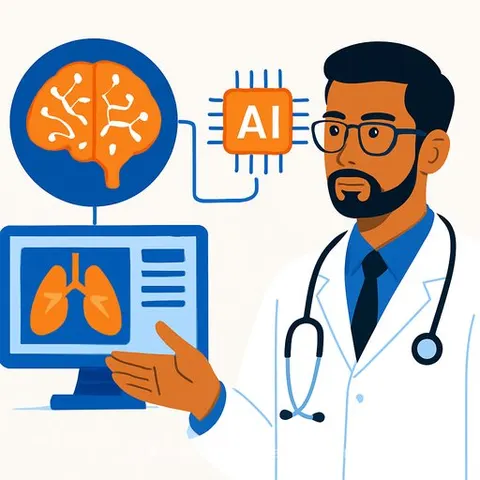
Advanced imaging AI can now pull together data from different medical information systems to answer questions that single-source tools cannot, according to Dr. Chirag Parghi, chief medical officer of DeepLook Medical. In a June 23 interview with HIMSS TV, Parghi described how the technology uses what he calls "visual intelligence" to support better treatment decisions in radiology.
The comments arrive ahead of HIMSS's AI Executive Leadership Summit in Boston on June 24, followed by the AI in Healthcare Forum running June 25-26. Both events focus on clinical applications of artificial intelligence, including imaging and quality and safety initiatives.
How visual intelligence connects siloed data
Parghi explained that conventional imaging tools often operate within narrow data channels. "Advanced artificial intelligence for radiology combines silos of information and uses 'visual intelligence' to answer challenging imaging questions that can improve treatment decisions," he said. The approach moves beyond detecting an abnormality on a single scan. It correlates findings across prior studies, lab results, and other clinical inputs that typically live in separate systems.
For radiologists and referring physicians, that means fewer manual steps to assemble a complete picture before making a call on patient management. The technology surfaces patterns that a human reader might miss when information is fragmented across different platforms.
The event lineup and clinical focus
HIMSS is hosting the one-day AI Executive Leadership Summit in Boston on June 24, 2026, followed by its AI in Healthcare Forum on June 25-26. Registration for the two events is handled separately. The programming covers artificial intelligence, clinical imaging, and quality and safety topics, with sessions designed for healthcare executives and informatics leaders.
The timing reflects a broader push across health systems to move AI from pilot projects into operational workflows. Radiology has been one of the earlier clinical specialties to adopt these tools, partly because the data is already digital and the volume of imaging studies continues to climb.
Why this matters for healthcare professionals
Radiology departments face mounting pressure to shorten report turnaround times without sacrificing accuracy. Tools that aggregate information across silos can reduce the cognitive load on radiologists, who otherwise spend time hunting down priors and lab values in separate systems. For health system leaders, the conversation is shifting from whether AI can detect a nodule to whether it can integrate enough context to change the next clinical step - a distinction that affects purchasing decisions, workflow design, and quality metrics.
Professionals tracking these developments can find structured learning paths that cover clinical AI adoption through resources like AI for Healthcare training materials. The HIMSS sessions offer a direct window into how vendors and health systems are defining the next phase of imaging AI, with an emphasis on real-world deployment rather than theoretical capability.