
AI news ·
Designer uses Claude to brainstorm and reframe problems before starting visual design
Designers now use AI chatbots like Claude to brainstorm concepts before opening visual tools. This early framing reduces rework and improves decision quality.
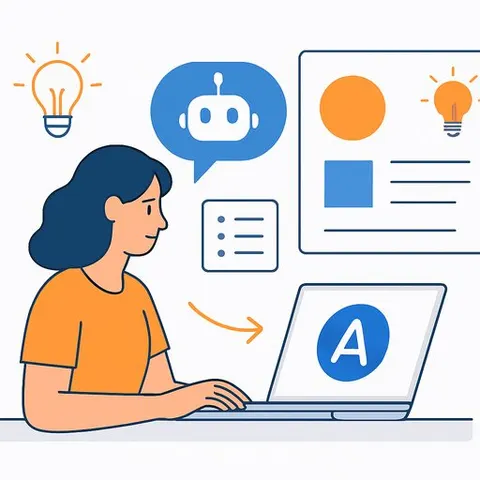
On June 20, an XDA Developers columnist detailed a shift in his creative process: he now begins design work by talking with Claude, Anthropic's large language model, rather than opening a design application. He said the change produces better design directions and cuts down on unproductive iteration. The account reflects a growing practice among designers who use generative AI for upstream exploration, not just for generating final images or copy.
The columnist explained that instead of diving into layout or prototyping tools, he uses Claude to generate multiple conceptual directions, clarify goals, and narrow options before any visual execution begins. The dialogue helps him surface ideas he might not have considered and reframe problems early in the process.
How a conversational partner changes the workflow
Practitioners treat the model as a creative partner through iterative prompting. They chain short interactions - asking for distinct options, introducing constraints, and refining loosely formed intentions - to build a structured brief that a design tool can later consume. The approach relies on prompt engineering and context management, not model fine-tuning. For those building these skills, Claude AI Courses offer guided practice in conversational prompting with the assistant.
A broader shift among design teams
The XDA column fits a pattern where product teams and designers use large language models for early problem framing. Instead of treating AI solely as a downstream content generator, they use it to define the problem space - a practice some teams formalize by documenting prompt histories and versioning intermediate outputs. As more professionals adopt this approach, AI for Creatives Training provides techniques for weaving AI into ideation and decision-making.
Why this matters for Creatives
For designers and visual thinkers, beginning with dialogue instead of a canvas shifts the focus from execution speed to decision quality. Using Claude as a reflective partner can surface assumptions, prompt alternative directions, and produce a clearer creative brief before any pixel is placed. The result is less rework and more confident design choices.