DHL adopts HappyRobot AI agents to streamline global operations
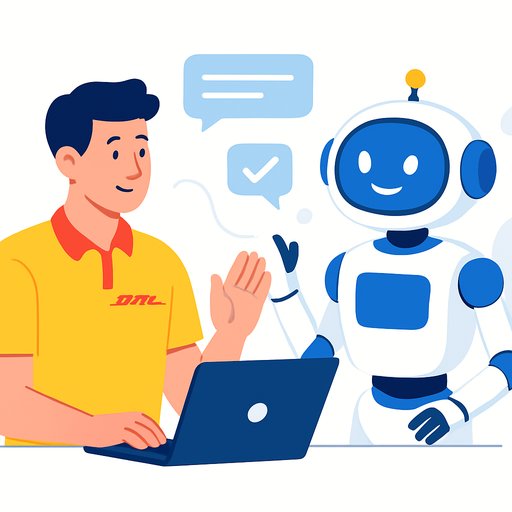
November 12, 2025 - DHL Supply Chain has partnered with startup HappyRobot to deploy AI agents across high-volume operational communications. The move supports DHL Group's enterprise AI strategy to improve efficiency and cut repetitive work across its logistics network.
HappyRobot's agents are already taking on appointment scheduling, driver follow-up calls, and warehouse coordination - handling thousands of emails and millions of voice minutes each year. The goal is simple: faster, more consistent service, with teams freed up for issues that actually require judgment.
What's live right now
According to DHL Supply Chain's CIO, the company has been testing generative and agent-based tech for more than 18 months. "We are now integrating AI agents to drive greater process efficiency for customers while making operational roles more engaging and rewarding for employees," said Sally Miller.
The early impact is clear: less manual effort and quicker responses. By automating repeat communications, sites can protect SLAs, reduce noise for supervisors, and focus people on exceptions and value-add work.
Why this matters for operations leaders
- Reduce backlog and variance in response times across sites and shifts.
- Stabilize appointment scheduling and carrier coordination during peak periods.
- Extend coverage to nights/weekends without adding shifts.
- Standardize message formats so data can flow cleanly into WMS/TMS for planning.
"AI agents help us relieve teams from repetitive tasks and give them space to focus on meaningful work. In tight labor markets, that's a win for both our people and our customers," said Lindsay Bridges, EVP Human Resources at DHL Supply Chain.
What the partner says
HappyRobot CEO Pablo Palafox called the partnership a step toward a new operating model for logistics: "DHL recognized early the potential of AI agents as a new operating layer that brings speed, visibility, and consistency to supply chain operations."
How to pilot this in your network
- Start narrow: Pick one workflow (e.g., inbound appointment setting for top carriers). Keep scripts, data sources, and SOPs tight.
- Define success: First-response time, touches per ticket, schedule accuracy, resolution without handoff, and employee time saved.
- Integrate essentials: Email, telephony, and your TMS/WMS. Add human-in-the-loop approvals for exceptions in the first 4-6 weeks.
- Stagger rollout: Begin with after-hours coverage to absorb overnight volume, then expand to business hours once stable.
- Clear escalation paths: Confidence thresholds, missing-data rules, and who owns the handoff. Publish stop conditions.
Metrics to track
- Manual minutes saved per site per week
- Response time (P50/P90) and queue depth by hour
- Schedule adherence and no-show rate deltas
- Resolution rate without human handoff
- Employee sentiment in impacted roles (pre/post)
- Exception volume and rework rate
Risk and guardrails
- Set clear service boundaries: supported use cases, languages, and compliance statements.
- Maintain full audit logs of messages and calls; sample daily for quality.
- Use confidence thresholds and deterministic checks; if uncertain, route to a human fast.
- Train on site-specific SOPs and vocabulary; avoid generic responses that create rework.
- Align with IT/Sec on data retention and vendor access before scale-up.
Bottom line for ops
This isn't a lab demo. AI agents are already moving routine communication off people's plates and stabilizing service levels. If you manage operations, the practical play is to pick a single queue, set guardrails, measure weekly, and expand based on real gains.
Want structured, role-based upskilling for your team? Explore operations-focused paths at Complete AI Training or browse automation resources here.
Your membership also unlocks: