
AI news ·
Digital behavioral health integrates AI into clinical decision support systems
After two years on documentation, behavioral health AI is shifting to decision-support systems. This helps clinicians standardize complex judgments with human oversight.
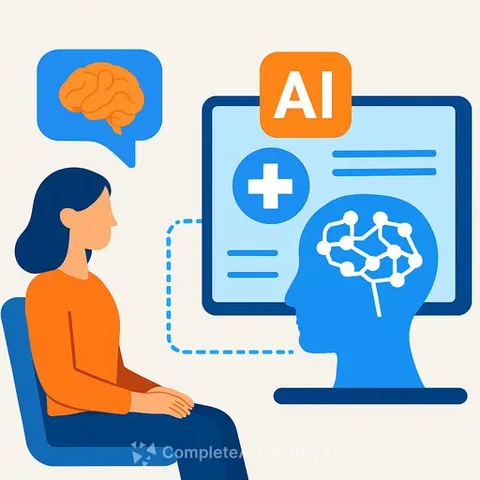
Digital behavioral health is shifting its use of artificial intelligence from basic administrative copilots to integrated decision-support systems. This transition moves AI beyond simple documentation tasks to help clinicians standardize complex judgments, such as patient intake and clinical fit, while maintaining strict human oversight.
Moving from tools to systems
For the past two years, AI in behavioral health focused heavily on reducing administrative burden. Documentation and intake workflows saw real gains, easing the late-night charting that historically drained clinicians.
The current focus targets clinical judgment. Two experienced clinicians can review the same ambiguous case and reach different conclusions. Rather than replacing human expertise, new AI models act as a pressure-testing layer to make clinical reasoning more explicit and consistent over time.
Managing clinical disagreement
Clinical fit determination illustrates this layered approach. An evaluator conducts an intake assessment, and an AI model generates structured outputs, including recommendations, confidence levels, and prompts for missing details.
When the evaluator and the AI agree, the system reinforces consistency. Disagreement, however, provides the most value. A mismatch triggers a structured escalation to a supervisor agent, which offers a second AI perspective alongside a human supervisor who retains final accountability.
The authors note that "each disagreement improves the system by helping to calibrate clinicians, refine the AI, and clarify the underlying rules." This feedback loop sharpens both the technology and the clinical criteria applied to future cases.
Defining human orchestration
The placement of human oversight dictates the safety and efficacy of AI for Healthcare applications. Data organization and question generation can rely heavily on automated processing.
Conversely, decisions affecting access to care or treatment planning require humans to remain the ultimate decision-makers. Clinicians must actively partner with AI to challenge assumptions and surface blind spots in real time.
This orchestration demands close collaboration between clinical and technical leadership. Organizations must define upfront which decisions belong to AI, which belong to humans, and which require sequential collaboration.
Why this matters for healthcare professionals
Healthcare professionals must prepare for AI workflows that prioritize clinical rigor over mere task completion. When these systems function correctly, they reduce the volume of escalations while increasing the richness of the data reviewed.
By treating AI as a collaborative layer rather than a standalone tool, providers can spend more time on the complex judgment calls that actually require human expertise. This deliberate design ensures that technology serves the patient care model, rather than dictating it.