
AI news ·
Disabled people want direct role in AI design to improve accessibility, poll finds
Two-fifths of 1,032 disabled UK adults say the best way to improve AI accessibility is involving disabled people in design and testing. One in five don't believe AI can help them at all.
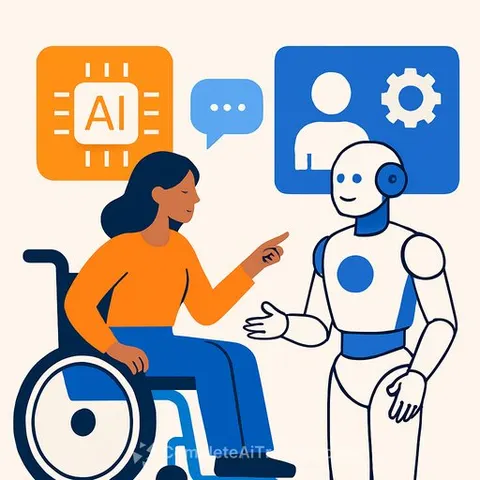
Disabled people should shape AI from the start, UK survey finds
Disabled adults in the UK say the most effective way to improve AI accessibility is straightforward: involve disabled people in designing, developing and testing it.
Two-fifths of 1,032 disabled adults surveyed by Opinium for Business Disability Forum chose direct involvement in product design and testing as the key priority. The next most common responses were user-friendly interfaces (38%), better information about AI's accessibility benefits (37%), and support to help disabled people get started with AI (36%).
Where disabled people see AI value
Respondents identified specific areas where AI could help. Communication tools ranked highest at 38%, followed by better online experiences at 34%.
Healthcare and education were close behind. A third said AI could improve access to healthcare information and communication, while 32% cited improvements to education and digital content accessibility. Support for independent living was cited by 31%, with smaller percentages pointing to customer experience (25%) and employment support (24%).
Skepticism exists. One in five disabled respondents did not think AI could help them, while 18% were unsure.
The findings largely matched a separate survey of 2,000 UK adults, where 34% said disabled people's involvement in AI design would improve accessibility.
What businesses and developers should do
Business Disability Forum set out specific recommendations for product teams. Disabled people should be consulted from the outset and throughout the AI development lifecycle, not added later as an afterthought.
Product teams should also:
- Provide clearer information on accessibility features
- Test compatibility with assistive technology
- Maintain human oversight to reduce biased outputs and new barriers
For employers using AI tools, the guidance mirrors this approach. Accessibility should be built into AI strategy from the start, with disabled workers consulted during needs definition, procurement, testing and review.
Employers should ensure AI tools work with assistive technology, keep humans in the loop for decision-making, and provide accessible training so staff understand both features and why accessibility matters.
Lara Davis, Communications Director at Business Disability Forum, said: "There is the potential for AI products and tools to make a radical and positive difference to disabled people's lives, but there is also the risk that disabled people could be left behind."
Lucy Ruck, who leads the organisation's Tech Taskforce, added: "AI has the capacity to transform lives, but only if we get inclusion right from the start. Making sure that disabled people are active participants in shaping this technology isn't just the right thing to do, it's how we build AI that genuinely serves everyone."
For product development teams, this means building accessibility checks and disabled user involvement into your standard processes. Learn more about AI Design Courses and AI for Product Development to understand how to integrate these practices into your workflow.