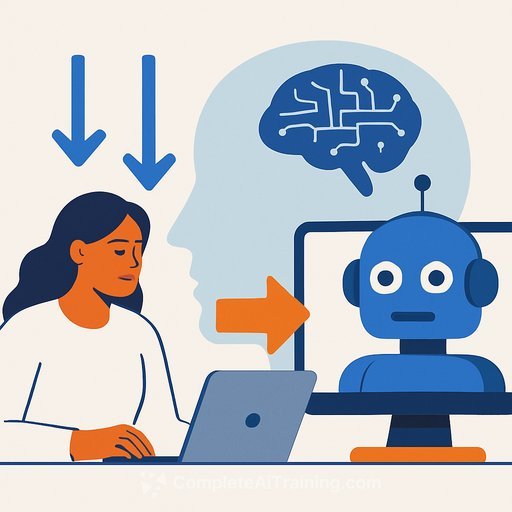
Human Recruiters May Mirror AI Biases: Revisiting the Role of AI in Hiring
AI gets blamed for bias. Fair. But here's the uncomfortable truth for HR: humans mirror the same patterns, often with less visibility and consistency.
The solution isn't to ditch algorithms. It's to build a hiring system that checks both human judgment and machine outputs, and holds them to the same standard.
Where Bias Creeps In (Humans and Models Alike)
- Proxies slip in: school prestige, zip code, names, employment gaps, and "culture fit" as a catch-all. Both recruiters and models lean on these shortcuts.
- Historical data repeats itself: if past hiring favored certain profiles, models learn it and people copy it.
- Unstructured interviews reward likability over signal. Inconsistent questions lead to inconsistent decisions.
- Labels are noisy: "top performer" can mean tenure or team popularity, not actual impact.
A Practical Hiring Stack HR Can Trust
- Define success clearly: Write the job in measurable skills and outcomes. Tie success to real work samples and post-hire performance, not resumes or pedigree.
- Clean the training signal: Drop features that are obvious proxies (schools, addresses, dates of birth). Balance your datasets so minority cohorts aren't statistically invisible.
- Mask and structure: Run blind resume screens for early stages. Use structured interviews with scoring rubrics. Add small, job-relevant work tests.
- Guardrails for AI: Block sensitive attributes and common proxies. Set fairness constraints. Require explanations for recommendations. No auto-rejects without human review.
- Measure in production: Track pass rates, interview scores, and offers by cohort. Monitor adverse impact. Trigger reviews when thresholds are crossed.
- Calibrate humans: Double-score a sample of candidates every month. Compare raters. Coach interviewers with drift or high variance.
- Compliance and privacy: Get candidate consent for assessments. Offer reasonable accommodations. Log decisions, keep an audit trail, and set retention limits.
- Vendor accountability: Ask for model cards, feature lists, adverse impact tests, and monitoring dashboards. Require opt-out, data deletion, and a kill switch.
Quick Checks You Can Run This Month
- Shadow test: have your AI score a past month of applicants; compare to human decisions and post-hire outcomes. Look for gaps by cohort.
- Blind re-score: remove school names and addresses from a resume set. See how many decisions flip.
- Interview discipline: move to a 6-8 question structured interview with a 1-5 rubric. Recalibrate every 4 weeks.
- Language audit: scan job ads for exclusionary phrases and proxies for age or background. Refresh templates.
- Performance linkage: compare early-stage scores to 90-day productivity or quality measures. Keep what predicts; drop what doesn't.
Metrics That Matter
- Selection rate and the 4/5ths check: Offers or passes by cohort should meet the four-fifths rule; investigate exceptions.
- Error gaps: Compare false negative and false positive rates across cohorts for screens and interviews.
- Calibration: Does a score of "4" mean the same thing across interviewers and teams? If not, retrain.
- Quality and speed: Time-to-fill should not trade away on-the-job performance. Watch both.
- Candidate experience: Short surveys after each stage. Track fairness perception and clarity of instructions.
Policy You Can Publish Internally
- Every automated recommendation is reviewable by a human. No final decisions by AI alone.
- Structured interviews and rubrics are mandatory for all roles. Exceptions require approval.
- All hiring data and models are audited quarterly for adverse impact and drift.
- Sensitive attributes and likely proxies are excluded from training and scoring.
- Applicants can request accommodations and an alternate assessment path.
What To Ask Your AI Vendor
- What data was the model trained on? Which features are used, and which are blocked?
- Show adverse impact tests by stage and role. How often are they re-run in production?
- How are explanations generated? Can we export logs and replicate recommendations?
- What are the privacy controls-data residency, deletion, retention, and access logging?
- How do we set fairness constraints or thresholds? Is there a kill switch?
- Do you support human-in-the-loop review and API access for our audit tooling?
Hiring Signals That Actually Predict Performance
- Work samples and job-relevant trials scored with a rubric.
- Structured interviews tied to core competencies and scenarios.
- Portfolio or code review aligned to the real tech stack or process.
- Reference checks with standardized questions mapped to outcomes.
Common Red Flags
- "Trust the score" without transparency or the ability to challenge it.
- Unstructured interviews, "gut feel," or culture fit with no defined behaviors.
- Overweighting school, previous employer brand, or years of experience.
- No ongoing monitoring for adverse impact, or audits done yearly "for compliance."
Bottom Line
AI didn't invent bias. It scales patterns that already exist.
If your process is loose, both humans and models will lean on shortcuts. If your process is structured and monitored, both become more consistent-and fairer.
Build the system. Audit the signals. Hold humans and machines to the same bar.
Helpful Resources
- EEOC guidance on AI and employment selection
- NIST AI Risk Management Framework
- Complete AI Training: AI courses by job
Get Daily AI News
Your membership also unlocks:
700+ AI Courses
700+ Certifications
Personalized AI Learning Plan
6500+ AI Tools (no Ads)
Daily AI News by job industry (no Ads)