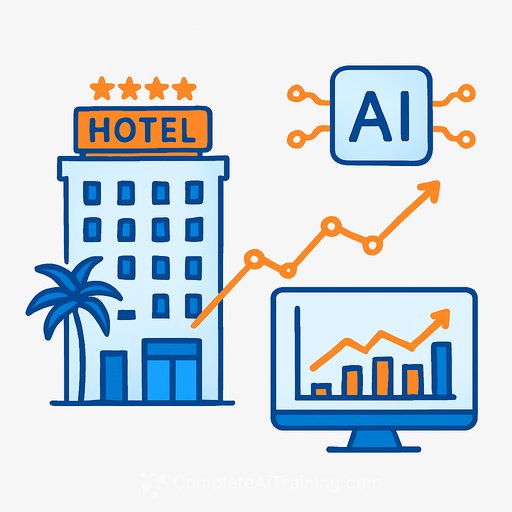
Dubai Hotels Shift to AI-Driven Operations as Demand Slowly Recovers
Dubai's hotel market is stabilising after a sharp decline earlier this year, with demand beginning to recover as airlines restore flight capacity and business travel returns. The sector fell to just 7% to 14% of pre-disruption levels between March and May, but is now projected to reach 20% to 30% of baseline levels as conditions improve.
The recovery remains uneven. Luxury hotels and properties tied to conferences and corporate events are bouncing back faster than budget and leisure-focused properties, which continue to face slower demand.
What's driving the rebound
Airline capacity is the primary factor. As international flight schedules resume, passenger volumes into Dubai are stabilising, directly supporting hotel occupancy. Short-haul and regional travel are leading the recovery, with visitors from nearby markets returning faster than long-haul travellers due to shorter booking cycles and fewer logistical barriers.
Business travel is also recovering, particularly around conferences, exhibitions, and corporate meetings. These events are reinforcing Dubai's position as a global business hub and providing mid-week occupancy and high-value bookings.
Hotels adopt AI to manage unpredictability
The market's volatility is pushing hotels toward artificial intelligence systems for pricing, demand forecasting, and operations. Traditional revenue management models relied on historical data and seasonal patterns - approaches that no longer work when demand fluctuates based on real-time factors like flight availability, geopolitical developments, and booking behaviour.
AI systems now track search trends, booking velocity, cancellation patterns, and airline seat availability to generate demand forecasts. Hotels use these insights to adjust pricing strategies in real time rather than reacting after changes occur.
This shift is structural. As demand becomes less predictable, decision-making is becoming faster, more automated, and dependent on AI Data Analysis rather than static planning cycles.
Recovery will remain volatile
Industry projections show the recovery will not be linear. Instead, expect alternating periods of growth and adjustment, influenced by changes in air travel capacity, global economic conditions, and regional stability. Even under stabilised conditions, demand in early 2026 may remain below full historical recovery thresholds.
This environment rewards hotels that can anticipate demand shifts, respond quickly, and optimise pricing in real time. Those without adaptive systems are at a competitive disadvantage.
The outlook is cautiously positive. Sustained improvements in air travel, consistent event scheduling, and global economic stability will determine the pace of continued growth. For hospitality professionals managing operations during this period, understanding AI for Hospitality & Events is becoming essential to staying competitive.
Your membership also unlocks: