
AI news ·
Educator advises Arkansas teachers on using artificial intelligence in the classroom while preventing student dependency
Arkansas educators rank AI's environmental impact as their top concern. Speaker Carl Hooker countered automation fears by citing a 90,000-job shortage for electricians.
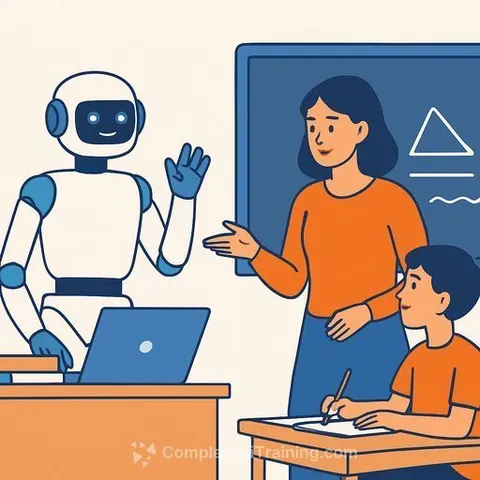
At the Arkansas Department of Education Summit 2026, keynote speaker Carl Hooker told educators that AI can work in the classroom without creating student dependency, but the teachers in the room ranked environmental harm from data centers as their top concern. Hooker, a writer, teacher, and former first-grade instructor from Austin, used live audience polls to surface what worries Arkansas educators most about AI.
Environmental impact and learning dependency top the list
The poll showed a clear split: the environmental cost of AI data centers was the chief worry, followed by fears that AI will short-circuit how students learn and create. Hooker said his own biggest fear is dependency. "My worry is that they'll skip ahead and lose the foundational skills and knowledge they need to be productive members of society," he said, drawing on his experience teaching 6-year-olds.
He told the room that losing those early building blocks-the kind built by handwriting, sounding out words, and struggling through a problem-can leave a student unable to think critically later on. The concern is not that AI is useless, but that leaning on it too early removes the friction that learning requires.
Job replacement fears and the skilled trades gap
Hooker addressed anxiety about automation replacing jobs, showing a website called willrobotstakemyjob.com that estimates risk based on market trends. For teachers, the probability was near zero. Skilled trades, however, are facing a different pressure. "We are 90,000 electrician jobs short across the country," Hooker said. He shared an example: a friend's 18-year-old son interned as a plumber over the summer for $70 an hour-more than many teachers earn.
The data point wasn't a slight against teaching. Hooker used it to highlight that while AI automation may reshape white-collar roles, jobs requiring physical presence and hands-on skill remain in high demand. That reality can shape how schools talk to students about career paths.
Teaching students to use AI without outsourcing thinking
Hooker said teachers can design assignments that make students engage with AI rather than submit to it. Some instructors ask students to "beat" AI-comparing their own writing or problem-solving to an AI's output and then improving on it. The goal is to treat the tool as a starting point, not a finished product.
He described his own daughter's experience. She was struggling with a paper on ethos and pathos due at midnight. Hooker told her to use ChatGPT, then spent the next hour having her rewrite the output in her own words and explain the concepts back to him. "Next day, she texts me and tells me she got 100%," he said. "When she came home we had a great discussion on where that balance with writing it and having it write the paper for you fell."
Teachers looking to integrate AI into their classrooms can find structured guidance through an AI Learning Path for Teachers. For a broader set of tools and strategies, the AI for Education resource hub covers common classroom use cases.
Why this matters for educators
Hooker's message is not that AI should be banned. It's that the way a teacher introduces AI changes whether students use it as a crutch or a lever. The risk of dependency is real, but so is the opportunity to teach students to evaluate AI-generated work, rewrite it in their own voice, and identify where the machine falls short. In a classroom that sets those expectations, AI becomes a tool for deepening understanding-not a shortcut around it.