
AI news ·
EDUCAUSE report finds AI straining student-faculty trust in higher education
AI is straining trust between college students and faculty as chatbots replace office hours, per the 2026 EDUCAUSE Horizon Report. Instructors now eye submissions with more suspicion while informal mentoring fades.
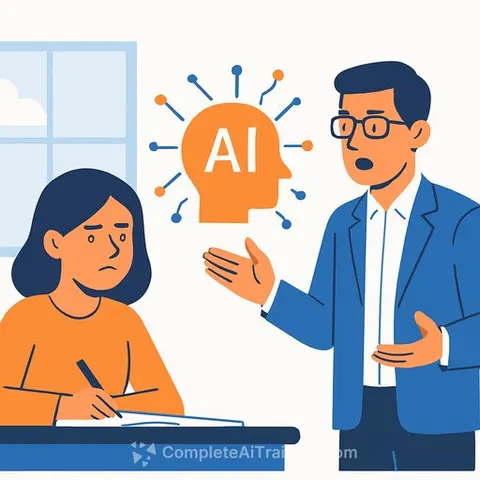
Colleges Face Growing Trust Crisis as AI Embeds Into Coursework
Higher education institutions are confronting a fundamental shift in student-faculty relationships as artificial intelligence becomes routine in academic work. The 2026 EDUCAUSE Horizon Report, released in May, found that AI is straining trust between instructors and students while forcing colleges to rethink how they evaluate learning and maintain human connection.
The report, based on input from global higher-ed experts, examined trends likely to influence colleges over the next five years. Beyond AI for Education, the analysis covered funding declines, policy reforms, and questions about degree value.
Students Turn to Chatbots Before Professors
Students increasingly rely on ChatGPT and other AI tools for tutoring and academic explanations, sometimes bypassing their instructors entirely. Many institutions are now promoting or providing these services themselves.
Faculty members, meanwhile, struggle with uncertainty about how much student work involves AI assistance. Instructors face pressure to scrutinize submissions more closely, yet humans struggle to detect AI-generated content reliably.
The result is a shift toward transactional education. Students visit office hours less often. Instructors approach student work with increased suspicion. The informal mentoring relationships that traditionally build trust erode.
EDUCAUSE said institutions need clear ethical guidelines for AI use alongside deliberate investment in what AI cannot replace: mentoring, judgment, and learning designs centered on trust and belonging.
The University of Utah hosted a student-led AI symposium last year where students shared perspectives with technology leaders. Jeb Dean, a student co-host, said the event aimed to give students a voice in institutional decision-making about AI.
Institutions Track Emerging AI Projects
EDUCAUSE added a new section this year called "Signals of Change" to monitor projects that could reshape higher education if they gain wider adoption.
Google is experimenting with AI-generated textbooks customized for individual learners. Rather than assigning identical materials to an entire class, instructors could create resources tailored to each student's interests. Questions remain about copyright, intellectual property, and whether personalized outputs maintain consistent course objectives.
Abdelmalek Essaadi University in Morocco built an AI "co-regulator" to monitor how students interact with AI systems. The tool flags potentially harmful outputs and helps educators understand student AI use. The project suggests institutions may need automated governance systems beyond human oversight alone.
Other projects focus on workforce preparation. The General Intelligence Company, a startup, uses AI agents to monitor business operations and write code to address issues. The company's co-founder said over 95 percent of its code is now written by AI.
The report included these examples to help institutions prepare for an uncertain future, not because they represent current practice. EDUCAUSE said their potential to reshape higher education warrants attention as colleges set priorities for the next five years.