
AI news ·
EFF tells Congress that government AI use requires strong civil liberties safeguards
The EFF told Congress that governments must build civil liberties protections into AI systems before deploying them. Known failures include bad legal citations and untrained DHS recruits-more errors likely exist but are classified.
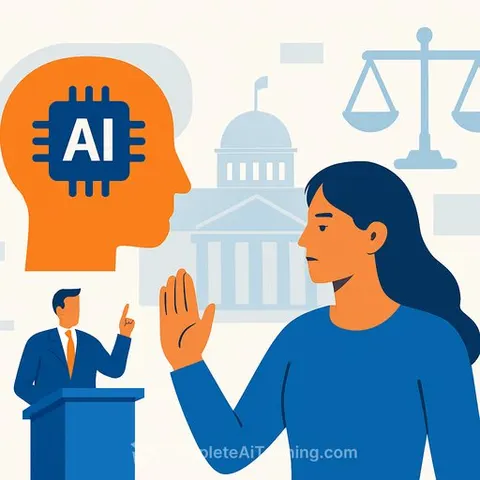
EFF Warns Government Must Add Safeguards Before Deploying AI Systems
Governments cannot adopt powerful AI technologies without establishing clear protections for constitutional rights, according to testimony delivered to the House Homeland Security Subcommittee on Cybersecurity and Infrastructure Protection.
Dr. Matthew Guariglia, a senior policy analyst, told lawmakers that using generative AI for mass surveillance would amplify violations of civil liberties. He also flagged a critical problem: government secrecy combined with proprietary technology prevents the public and lawmakers from learning when AI systems fail-including errors that affect critical infrastructure security.
AI Systems Make Costly Mistakes
Guariglia cited specific examples of AI failures. Generative AI has produced false legal citations in court briefs. The Department of Homeland Security deployed recruits to the field without proper training after an AI error. More serious mistakes likely exist but remain unknown due to classification restrictions.
"There are likely more consequential examples that we do not even know about because of classification that would prevent a more thorough accounting," he said.
The Real Problem: Agency Oversight
When asked about controlling AI, Guariglia reframed the issue. "The question is not how do we rein in AI, it's how do we rein in the agencies that would unleash AI on the American public," he said.
The hearing focused on how frontier AI models, agentic systems, and AI coding tools are changing cybersecurity and critical infrastructure resilience. For government workers implementing or overseeing these technologies, the tension is clear: capability without accountability creates risk.
Learn more about AI for Government and Generative AI and LLM systems.