
AI news ·
El Paso schools adopt AI tools and literacy lessons as district policies lag behind classroom use
El Paso teachers and students are using AI tools in classrooms while most local districts still lack clear policies. Texas is one of 16 states with no official AI guidelines for public schools.
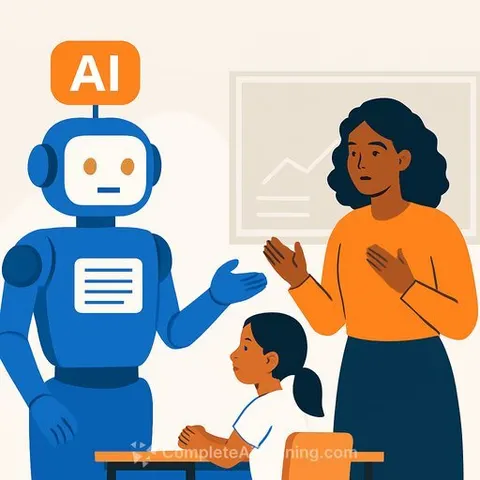
El Paso Schools Grapple With AI Implementation as Usage Outpaces Policy
Teachers and students across El Paso are using artificial intelligence tools in classrooms, but most school districts lack clear policies on how the technology should be used. The gap between adoption and guidance is creating confusion about what's permitted and what constitutes academic dishonesty.
At Hanks Middle School, sixth graders type handwritten notes into computers, then use Google's Gemini to generate presentation slides. At El Dorado High School, one English teacher fails any essay that appears more than 15% AI-generated, while a precalculus teacher uses AI to solve equations he doesn't know how to solve.
A national survey by RAND found that 54% of students and 53% of core subject teachers used AI for school in 2025, up 15 percentage points from two years prior. Yet over 80% of students have not received lessons on how to use AI responsibly for schoolwork.
Districts Moving Toward Guidelines
Socorro Independent School District adopted an AI policy in November 2025 stating that students can only use AI with teacher permission, must do their own work, and must credit sources including AI tools. The district is now creating a handbook for teachers and students on AI basics and policy compliance.
Ysleta Independent School District is developing a "framework" outlining responsible AI use and plans to require all eighth graders to take a monthly digital citizenship course next school year that includes AI instruction. The school board will vote on the framework in coming months.
Harmony Public Schools, the county's second-largest charter school system, will offer a dedicated AI literacy class to all eighth graders starting in August. The class will teach students how to use AI responsibly and recognize potential harms.
El Paso Independent School District said it has integrated AI into instruction and uses programs that provide writing feedback, but provided no details on implementation.
State Inaction Leaves Schools to Navigate Alone
Texas is one of 16 states without official guidelines on AI use in public schools and has no curriculum standards on AI literacy. That absence of direction leaves El Paso districts to develop their own approaches.
Clifton Tanabe, dean of the University of Texas at El Paso College of Education, said some districts have clear policies and approved tools while others are just beginning. UTEP is hosting the Region-Wide K-12 AI Learning Incubator, a series of workshops for district leaders to discuss AI literacy, ethics, data security, and AI models. The program will culminate in a summit in August.
The Trump administration signed an executive order last year encouraging schools to teach AI literacy starting in kindergarten and established the Artificial Intelligence Education Task Force to identify federal funding sources for AI education.
Tools in Use Today
Socorro, Ysleta, and Harmony all use Magicschool, an education-focused platform with dozens of tools including feedback generators, parent email writers, and text translators. Districts can customize the software to prevent misuse-for example, Harmony blocks teachers from using it to create lesson plans from scratch.
Kim Vandagriff, a sixth-grade teacher at Hanks Middle School, uses Gemini to translate documents for a recently arrived student and to adjust reading difficulty for individual students. Eastwood High School junior Sophia Gutierrez said she used AI to generate flashcards and get faster answers to questions.
Ysleta blocked students from accessing ChatGPT on school computers and redirects them to Securely AI, a district-approved chatbot. Gutierrez said the restriction is unclear and thinks the district should develop an AI policy focused on improving learning rather than simply blocking access.
Teaching AI Literacy
Ysleta has incorporated AI instruction into digital citizenship courses taken by all students at the start of the school year. The classes teach how to recognize AI, use it responsibly, and understand privacy and cyberbullying risks in age-appropriate ways.
Socorro teaches AI literacy as students encounter the technology throughout the year. Teachers establish routines and rules around technology use at the beginning of the year and reinforce them as the year progresses, said Miguel Moreno, Socorro's instructional technology coordinator.
Harmony takes a similar approach, teaching about AI whenever students use it. Starting in August, the dedicated eighth-grade AI class will formalize this instruction. Burak Yilmaz, Harmony's director of instruction, said the goal is to keep students as primary thinkers rather than letting them use AI as a shortcut.
"We don't want our students to fall into a trap of using AI as a shortcut to get answers or cheat because they can easily get spiraled into that habit of not doing any thinking," Yilmaz said.
Vandagriff said formal instruction on AI is necessary. "They're going to figure out how to use it anyway. So either we can teach them how to be part of the solution, or we let them grow up and be part of the problem."
For educators seeking guidance on implementing AI in the classroom, resources like AI for Education and the AI Learning Path for Teachers offer structured approaches to understanding and using these tools responsibly.