
AI news ·
Responsible AI Lab trains mentors from 22 schools to expand robotics and AI education in Ghana
Ghana's Responsible AI Lab has trained mentors from 22 schools in robotics and AI instruction. The programme prioritizes disability inclusion, with experts citing screen readers and adaptive platforms as key tools for reaching more students.
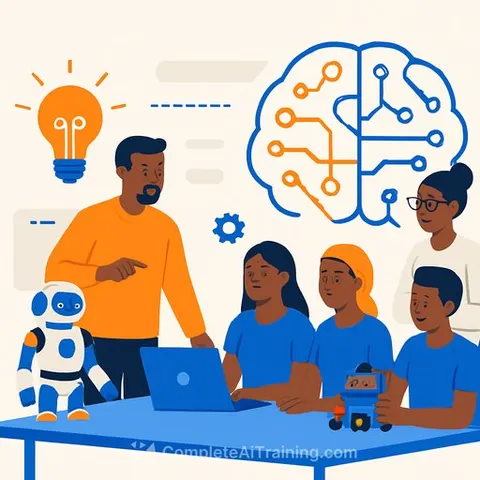
Ghana's robotics training expands to 22 schools with focus on inclusive education
The Responsible AI Lab has completed its second in-person robotics training programme for mentors across Ghana, bringing together educators from 22 schools to strengthen AI and robotics instruction in classrooms.
The training included mentors from regional schools, SHECodes trainers from Takoradi Technical University and Kumasi Technical University, and regional science and technology coordinators. The programme used a Training of Trainers model to give participants practical robotics and AI skills alongside ethical understanding.
Access and disability accommodation take priority
Prof. Mercy Badu, head of the Gender, Inclusion and Vulnerability Office at KNUST, emphasized the need to include students with disabilities in AI education initiatives. She said barriers including inaccessible learning materials, limited assistive technologies, and social exclusion affect many students with disabilities.
AI tools can address these gaps. Screen readers, adaptive learning platforms, real-time transcription systems, and remote learning technologies make education more accessible to disabled learners.
Early results show student interest in STEM
At Ayeduase Roman Catholic Primary School in Kumasi, students who had minimal exposure to robotics became motivated to pursue science subjects after using robotics technologies introduced through the RAIL Robotics Club. The club is one of several initiatives under the broader programme.
Other components include mentorship and career guidance programmes and collaborations with women-focused STEM organizations.
University backing supports long-term sustainability
Prof. Kwadwo Mensah-Darkwa, speaking on behalf of the Provost of KNUST's College of Engineering, said the education sector has an opportunity to use AI to improve teaching outcomes and close educational gaps. The college committed to supporting research collaborations and knowledge exchange to sustain the programme.
The training is part of broader efforts to promote responsible AI and digital inclusion in Ghana through partnerships between academia, educators, and technology organizations.
Related resources: Educators looking to integrate AI into their teaching can explore AI for Education resources or the AI Learning Path for Teachers.