
AI news ·
El Salvador launches AI health platform in partnership with Google
El Salvador launched DoctorSV, an AI health app built with Google Cloud that handles consultations, diagnoses, prescriptions, and medication delivery. The platform, using Google's Gemini model, rolled out in 2025 for adults aged 18-30.
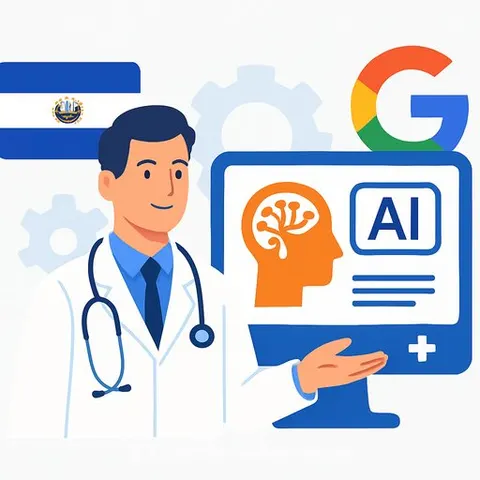
El Salvador launches AI-powered health platform in partnership with Google
President Nayib Bukele has launched DoctorSV, a mobile application that integrates artificial intelligence into El Salvador's public health system. The platform, developed with Google Cloud, consolidates patient consultations, AI-assisted diagnosis, prescriptions, lab access, and medication delivery into a single digital flow.
The initiative represents one of the largest public health system overhauls in Latin America. It aims to address structural problems in access, efficiency, and care quality by replacing a slow, bureaucratic system with a streamlined, prevention-focused model.
How DoctorSV works
Patients create a unified digital medical record through the app. The system provides initial guidance powered by AI, orders lab tests, and schedules virtual or in-person consultations when necessary. Every interaction is recorded and analyzed to improve future medical decisions.
For chronic disease management, the platform offers continuous monitoring. Patients with diabetes, hypertension, or high cholesterol receive daily monitoring, personalized alerts, and treatment recommendations based on their clinical data. This represents a shift from traditional systems where disease management depends on sporadic doctor visits.
The platform uses QR codes to simplify access to medications and lab tests at public pharmacies, reducing administrative steps. This addresses a persistent challenge in Latin American health care: fragmentation across multiple providers and services.
At its core is Google's Gemini model, adapted for clinical use. The system processes medical information, identifies patterns, and supports clinical reasoning in real time. It functions as an intelligent triage system that prioritizes cases by urgency and directs patients to appropriate care levels.
The preventive care angle
The platform analyzes population-level datasets to identify patterns and risk factors before diseases fully develop. This shift from reactive to proactive care could reshape how health policies are designed and resources allocated.
The system includes a citizen feedback mechanism. Users rate care quality at hospitals, laboratories, and pharmacies, generating real-time data that allows authorities to monitor system performance and identify improvement areas.
Rollout and expansion
Phase 1 launched in 2025, focusing on individuals aged 18 to 30 in a controlled environment. Phase 2, currently under development, will expand coverage to additional age groups and add deeper hospital integration, enhanced predictive analytics, and more personalized treatment pathways.
The phased approach allows the system to improve as more data is collected and algorithms are refined. This ongoing development requires careful management of ethical, regulatory, and technical challenges.
What experts are watching
Data privacy remains a primary concern. Centralizing sensitive medical information within a platform partially managed by a technology company raises questions about security, data ownership, and potential misuse.
The timing of the initiative adds context to public perception. El Salvador dismissed thousands of health care workers in the previous year. Some critics argue technology is replacing human resources rather than complementing them, raising broader questions about automation's role in health care.
Clinical validation is another critical issue. While officials project diagnostic accuracy rates exceeding 90%, these figures remain unconfirmed by real-world data. The model's credibility depends on measurable outcomes including patient satisfaction, treatment success rates, and system efficiency.
Regional implications
Other Latin American countries face similar health system challenges. Colombia, for example, struggles with fragmentation, delayed hospital payments, and uneven access despite having a more developed institutional framework.
Elements of El Salvador's approach could offer lessons: a unified digital medical record could reduce inefficiencies between insurers and providers. AI-assisted triage could ease pressure on overcrowded emergency rooms. Preventive monitoring tools could reduce long-term costs in systems strained by demographic pressures.
However, Colombia's scale and regulatory complexity would require a far more gradual implementation. Any adoption would need to integrate across multiple actors-public institutions, private insurers, and health care providers-while building strong data protection frameworks and clinical evidence to establish public trust.
The balance ahead
If El Salvador successfully addresses its challenges, the model could become a global reference point in digital health care. The combination of advanced technology, prevention-focused care, and citizen participation offers a preview of what future health systems might look like.
Success ultimately depends on striking a balance between innovation and responsibility, efficiency and human care. For health care professionals, the platform demonstrates how AI for Healthcare can support clinical work-but only when human oversight remains central.
The broader question extends beyond El Salvador: can artificial intelligence redefine medicine without diminishing its human core? How countries answer that question will shape health systems worldwide.