Eleos Life Launches AI Voice Agent to Deliver 24/7 Customer Support
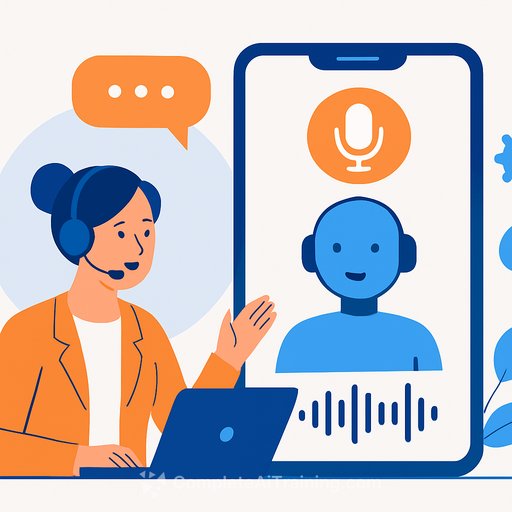
Eleos Life has introduced an AI voice agent to keep support lines open around the clock. If you run a customer support team, this matters. Always-on coverage improves speed to answer, reduces queue pressure, and gives agents room to handle the complicated work.
What this means for your team
- Always available: Calls get picked up instantly at any hour. No dead air. No after-hours backlog.
- Smart triage: The voice agent can identify intent, handle routine requests, and route complex issues to the right queue.
- Consistent answers: Policy, status, and "how-to" questions get the same answer every time.
- Lower wait times: Deflect common calls without holding the rest of your queue hostage.
- Better handoffs: When the call needs a human, the agent can pass context so customers don't repeat themselves.
Where a voice agent fits in your call flow
Think of it as a first responder. It greets, verifies, and solves the straightforward stuff. For anything nuanced, it summarizes the issue and forwards the call to the right person or team with notes attached.
This keeps agents focused on higher-effort work while protecting CSAT across peak hours, weekends, and holidays.
KPIs to track from week one
- Containment rate: Percent of calls fully handled by the voice agent.
- Average speed to answer (ASA): Should drop immediately.
- Transfer rate and reasons: Which intents fail and why.
- AHT post-handoff: Are agents faster with better call summaries?
- CSAT by path: Bot-only vs. bot-to-human vs. human-only.
- Cost per contact: Track before and after by channel.
Implementation checklist
- Pull your last 60-90 days of call logs and identify the top intents by volume and effort.
- Build flows for high-volume, low-variance tasks first (order/policy status, appointment changes, simple FAQs).
- Set guardrails: approved tone, disallowed topics, escalation triggers, and exact phrasing for sensitive content.
- Integrate with your CRM, ticketing, knowledge base, and telephony for call control, screen pop, and note passing.
- Plan a warm handoff: carry the transcript, summary, and verified data into the agent console.
- Redact or tokenize PII. Limit data retention. Confirm encryption at rest and in transit.
- Run a controlled pilot, record calls with consent, and review weekly.
Call flows to automate first
- Account or policy status lookups.
- Simple plan or coverage questions with clear answers in your knowledge base.
- Appointment scheduling, rescheduling, or cancellations with time windows.
- Document requests and email/SMS follow-ups with verification.
Save these for later phases
- Edge cases with multiple exceptions or financial risk.
- Complaints that require empathy and negotiation.
- Anything that needs judgment beyond policy.
Voice design tips that work
- Keep prompts short. One question at a time.
- Confirm intent before taking action: "You're asking about coverage for X, right?"
- Offer options, not lectures: "I can check your status or connect you to an agent. Which do you prefer?"
- Read key info back for confirmation. Summarize before handoff.
- Let customers interrupt (barge-in) without breaking the flow.
Risk, compliance, and trust
- Disclose that callers are speaking with an AI voice agent.
- Obtain consent for recording where required. Publish your privacy policy.
- Redact payment and sensitive health data. Use secure payments outside the bot if needed.
- Log actions, not just transcripts, for auditing.
Change management for your team
Agents aren't replaced; their work shifts. They handle fewer repetitive calls and more high-value cases. That means better coaching, better playbooks, and clearer escalation rules.
- Appoint a bot editor to maintain scripts, intents, and approved answers.
- Create a feedback loop from agents to improve detection and flows.
- Run weekly QA on sample calls across intents and channels.
Rollout plan that sticks
- Pilot on one queue with clear success thresholds.
- Limit to defined intents. Expand only after quality holds for two weeks.
- Announce changes to customers and offer a quick way to reach a human.
- Share results internally and keep iterating.
Technical notes worth checking
- Latency under ~500 ms keeps conversations natural.
- Accurate speech-to-text for the accents and languages you support.
- Stable integrations with your IVR, CRM, and knowledge base.
- Clear error handling and fallbacks for silence, noise, and poor connections.
What good looks like
Customers get immediate answers for simple requests. Complex issues reach the right experts faster, with context. Your team gains time back without losing quality or control.
Next steps
- Audit your top 10 call intents and mark five for automation.
- Define guardrails, handoff criteria, and success metrics.
- Train leads on reviewing AI-led calls and coaching based on transcripts and summaries.
If you want structured learning paths for support teams working with AI, see the resources here:
Your membership also unlocks: