Why AI Might Be Better at Customer Service Than We Are
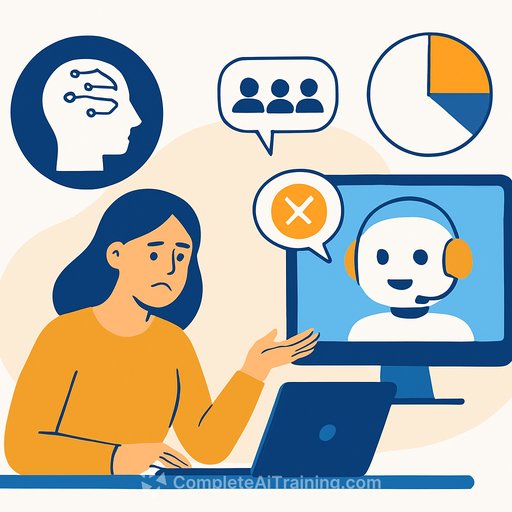
We've all heard "I'm fine" when it clearly means "I'm not." Humans miss those cues more than we like to admit. Yet we expect support teams to catch them at scale, all day, every day.
Emotionally aware AI is closing that gap. It lightens the load on agents, keeps customers calm, and moves issues to resolution faster - with fewer burned-out teams along the way.
From Logic to Empathy: The New Bar
The old Turing Test asked, "Can a machine think like a human?" That's outdated for support. The real question: Can it read emotion and respond with care?
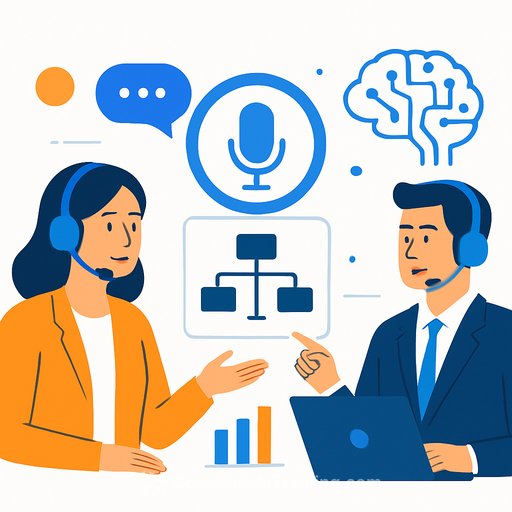
Modern systems use speech biometrics, sentiment analysis, and NLP to sense frustration, confusion, or relief. They shift tone, pace, and wording on the fly. It's more than answering questions - it's building rapport that keeps the conversation going.
How AI Learns That "I'm Fine" Isn't Fine
AI can't feel, but it can read patterns we overlook - fast and consistently.
- Voice signals: Pitch, volume spikes, tremors, sighs, and long pauses hint at stress or hesitation.
- Text patterns: Short replies, sarcasm markers ("great…"), mixed sentiment ("this is fine but…") point to hidden frustration.
- Conversation flow: Repeated questions, topic looping, interrupting, or delayed responses suggest confusion or low trust.
- Word choice: Hedging ("maybe," "sort of"), absolutes ("always," "never"), and negative qualifiers flag emotional heat.
Once detected, the system adapts: slows down, acknowledges the feeling, clarifies next steps, and offers options. That simple pause-and-validate move de-escalates more than any discount ever will.
The Emotional Turing Test: A New Standard
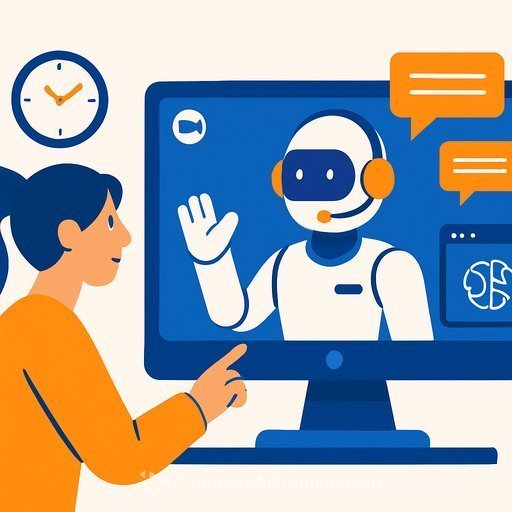
Researchers have proposed an empathy-focused benchmark: can AI respond in ways people experience as genuinely empathetic and helpful? In support, that's the bar now - especially as teams deploy chat and voice agents that can mirror tone and adjust to the customer's state. For deeper research and training, see AI Research Courses.
In mental health, tools like Woebot show how structured empathy can stabilize tense moments and guide better choices. For customer service, the same principle applies: consistency beats charisma.
Curious about the original idea behind machine imitation? See the Turing Test for context.
What This Means for Support Teams
- Lower churn and higher CSAT: People who feel heard don't leave. They also forgive small mistakes.
- Agent relief: AI handles the emotional heavy lifting on repetitive cases so humans can focus on tricky issues.
- Proactive care: Systems can spot rising frustration early and offer callbacks, credits, or escalations before things blow up.
- Cleaner ops: Digital Voice Agents (DVAs) tie into CRM, trigger workflows, and keep context across channels.
Ethics: Empathy With Guardrails
- Be transparent: Always disclose AI involvement and offer a human handoff.
- Respect consent and privacy: Clearly state how voice and text cues are used. Keep data minimal.
- Avoid manipulation: Empathy is for clarity and care - not upsells during distress.
- Bias checks: Regularly audit models for uneven responses across accents, languages, or demographics.
- Human oversight: Set escalation rules and review edge cases weekly.
Practical Playbook: Build an Emotionally Aware Support Flow
- Map your top 20 intents: Billing, password, cancellations, outages. Start where volume and sentiment are hottest.
- Define tone shifts: Create snippets for calm, neutral, and escalated states. Example: acknowledge + clarify + choice.
- Wire in signals: Use sentiment, silence thresholds, and repeat-intent detection to trigger tone changes or human transfer.
- Script empathy, don't fake it: "I can see how that's frustrating. Here's what I can do right now…" Keep it short. No clichés.
- Integrate with CRM: Pull account context, previous tickets, and delivery status to reduce back-and-forth.
- Set hard stops: Safety words and categories (billing disputes over X amount, medical claims, legal threats) go straight to humans.
- Coach your agents with AI: Real-time prompts, post-call summaries, and sentiment heatmaps for targeted training.
Measure What Matters
- Customer: CSAT/NPS by emotion segment, complaint rate, repeat contacts within 7 days.
- Ops: First contact resolution, average handle time, transfer rate, containment rate.
- People: Agent burnout/attrition, schedule adherence, coaching time per agent.
- Quality: Sentiment lift across the conversation, de-escalation rate, compliance hits.
30-Day Starter Plan
- Week 1: Pull 500 recent calls/chats. Tag top intents and moments of friction. Identify phrases and pauses that correlate with negative outcomes.
- Week 2: Draft empathy snippets for three states (calm, uncertain, escalated). Build routing rules based on signals.
- Week 3: Pilot with one channel and one intent. Add human-in-the-loop review for all escalations.
- Week 4: Compare metrics to baseline. Keep what works, cut what's noisy, and expand to the next two intents.
Skill Up Your Team
If you want structured training for support-focused AI skills, browse role-based options here: Complete AI Training - Courses by Job.
Bottom Line
Empathy is a system, not a mood. AI can apply it at scale; your team adds judgment and nuance.
Put them together and customers feel heard, agents can breathe, and problems get solved faster. That's the job.
Your membership also unlocks: