Karen Hao’s *Empire of AI* Brings Clear-Sighted Skepticism to AI Development
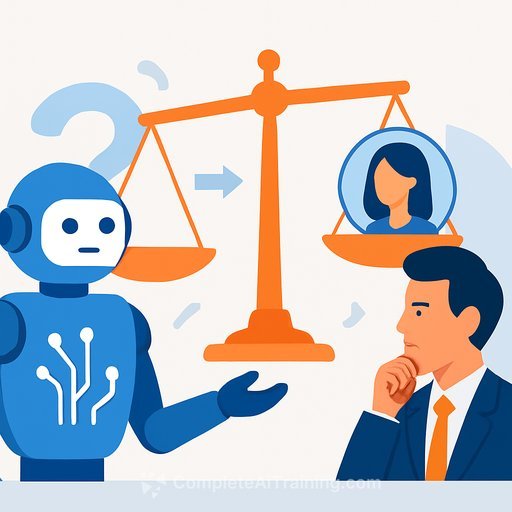
Artificial Intelligence (AI) discussions often focus on its potential to transform society and deliver breakthroughs once thought impossible. OpenAI, for instance, launched ChatGPT with the mission to create AI systems smarter than humans that benefit all humanity. However, Karen Hao cuts through this optimism to reveal a different story—one more aligned with old-style empires that promise progress while concentrating power and wealth through exploiting labor and resources.
Hao’s experience covering AI for seven years at prominent outlets like MIT Technology Review and The Atlantic brings depth and nuance to the conversation. In her debut book, Empire of AI: Inside the Reckless Race for Total Domination, she offers an insider’s view of the rise of AI, the people behind it, and the strategies driving the industry. The book moves beyond Silicon Valley hype to expose the human and economic dynamics hidden under the surface.
Data and Labor: The Hidden Foundations of AI
The AI industry today depends heavily on vast amounts of data scraped from books, articles, and nearly everything online. Hao argues this practice effectively claims people’s labor as “fair use,” raising ethical concerns about consent and compensation.
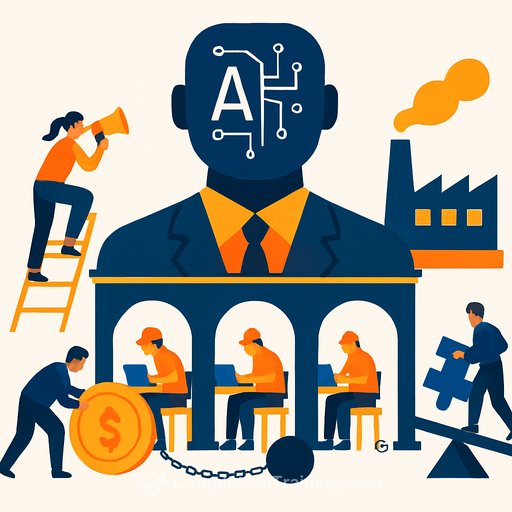
Moreover, automation powered by AI threatens workers' rights by undermining their ability to demand fair treatment. Much of the industry’s labor force is outsourced to the global South, where workers perform essential tasks like chatting with bots to guide AI responses and moderating content to prevent toxicity. This labor-intensive work is concealed to maintain the illusion of AI as a cost-free, magical technology.
The Monopoly of AI Paradigms and Its Consequences
Hao highlights how the current dominance of deep learning techniques, especially transformer-based models like those powering ChatGPT, has concentrated power and funding. This “more data, more computing power” approach has sidelined alternative AI research avenues that explored efficient training with less data.
These massive models require energy-intensive data centers, raising significant environmental costs. The focus on scaling up existing methods has created a near-monopoly on AI research directions, diverting resources away from potentially more sustainable or innovative methods.
The Influence of Profit on AI Research
Scientific inquiry in AI is no longer purely driven by curiosity or open exploration. Hao traces how researchers increasingly rely on funding from major tech companies or labs affiliated with them, tying academic work closely to corporate interests.
This shift has shaped AI knowledge foundations, aligning them with profit motives rather than broad scientific goals. The public and policymakers often misunderstand this dynamic, assuming AI research remains a neutral, purely scientific pursuit.
Why This Matters for Science and Research Professionals
Understanding the socio-economic and ethical layers behind AI development is crucial for researchers and professionals working in science and technology fields. Recognizing the labor exploitation, environmental impact, and funding biases can guide more responsible innovation and policy-making.
For those interested in deepening their practical knowledge of AI technologies and their implications, exploring specialized courses can be valuable. Resources like Complete AI Training’s latest AI courses offer structured learning paths that cover both technical skills and contextual understanding.
Key Takeaways
- AI’s rapid growth is supported by vast datasets that raise questions about labor rights and fair use.
- Automation in AI development threatens workers’ rights and relies on hidden, labor-intensive human feedback mechanisms.
- The dominance of deep learning and transformer models has narrowed research diversity and increased environmental costs.
- Corporate funding strongly influences AI research directions, blending profit motives with scientific progress.
- Awareness of these factors is essential for science and research professionals to engage critically with AI advancements.
Your membership also unlocks: