
AI news ·
Employer push for AI use backfires
Mandatory AI rollouts in 2024 are driving higher voluntary turnover as workers resist surveillance. Firms face steep attrition costs after forcing tools without proper training.
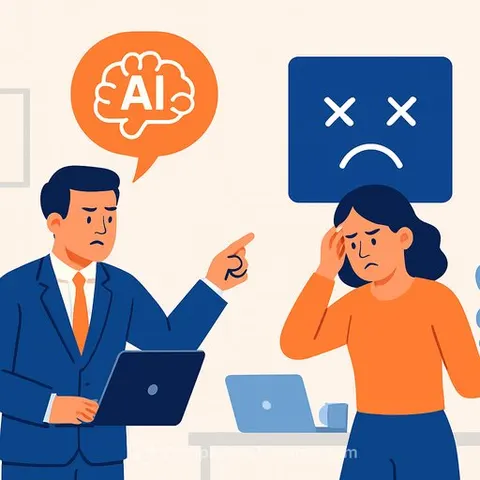
Employers who pushed staff to use artificial intelligence tools are facing a wave of employee resistance, declining morale, and higher turnover. The mandated adoption, intended to boost productivity, has instead created friction between workers and management across multiple industries.
The push began in earnest in 2024 as organizations sought to cut operational costs and stay competitive. Many set internal targets for AI usage, requiring teams to integrate tools into daily workflows. In some cases, using AI became part of performance metrics, with employees evaluated on how often they relied on automated assistants.
Where the strategy faltered
Employees often received minimal training before the rollout. A brief instructional video or a one-page guide was the extent of preparation for many, leaving workers to figure out complex systems on their own. The tools, which were meant to reduce busywork, instead added a layer of anxiety. Staff worried about making mistakes that AI would flag, and about the long-term security of their roles.
Monitoring capabilities built into some AI platforms deepened the distrust. Features that tracked activity levels, keystrokes, or idle time made employees feel surveilled rather than supported. HR leaders who gathered anonymous feedback heard recurring themes: workers felt dehumanized and less trusted.
The price of a top-down rollout
The consequences are showing up in attrition data. AI for Human Resources discussions among professionals often highlight that departments with mandatory AI adoption are seeing higher voluntary turnover than those where use is optional. Exit interviews point to frustration with technology being forced without input or adequate support.
Recruitment is also suffering. Candidates increasingly ask about a company's AI culture during interviews, and organizations known for heavy-handed implementation struggle to attract talent. The short-term efficiency gains are being offset by the long-term costs of replacing experienced staff.
Why this matters for HR professionals
HR teams are on the front line of this tension. The backlash signals that AI adoption cannot be treated as a pure technology project. It requires change management, transparent communication, and genuine employee involvement. Chief Human Resources Officers who invest in a structured AI Learning Path for CHROs are better positioned to design rollouts that preserve trust and retention. The lesson is clear: forcing tools onto people without their buy-in will cost more than it saves.