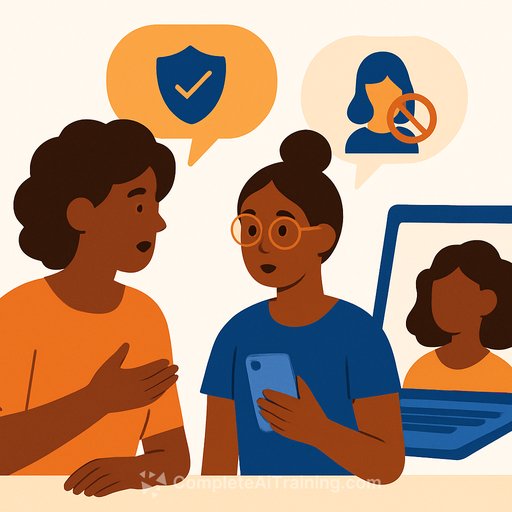
Turning to Gen-AI as an Empowerment Tool for Parents of Teenage Girls in Conversations on Online Sexual Harassment
Online sexual harassment is a growing concern, especially for teenage girls of color who engage in social media platforms daily. Parents often struggle to find the right balance between protecting their children and fostering open, honest conversations about these issues. This study looks at how generative AI tools and influencer content can support parents in addressing online safety and privacy.
Understanding the Current Landscape
Social media use has surged among all age groups, with young people embracing these platforms for self-expression. However, the risks tied to online sexual and racial harassment have increased, particularly for girls of color. Existing privacy settings often fall short, and parents frequently lack the digital literacy needed to guide their children effectively.
The online environment for teenagers is shaped not only by family but also by peers, educators, and influencers. These communities influence how young users experience privacy and safety online. Platforms equipped with generative AI have the potential to offer better support, but this potential remains underutilized.
Insights from AI Platforms and Influencer Content
This research analyzed comments on YouTube influencer videos, news articles, and AI-generated recommendations from Meta, Co-Pilot, and ChatGPT. The findings reveal a split in how parental guidance is approached:
- Meta AI tends to prioritize reactive monitoring tools that allow parents to oversee their children’s online activity.
- Co-Pilot focuses more on proactive empowerment, encouraging parents to engage in educational conversations with their teens.
Influencers generally provide practical tips but lean toward advocating for parental control rather than fostering open dialogue. This approach leaves a gap in resources aimed at nurturing meaningful discussions about online sexual harassment.
Why Balanced Safety Strategies Matter
Safety strategies that combine proactive education with reactive tools can better support parents and teens. Empowering parents with knowledge and resources enables them to create a supportive environment where teenagers feel safe discussing their online experiences.
Beyond individual families, social media platforms carry a responsibility to build educational resources that address the specific needs of teenage girls facing racialized and gendered harassment.
Recommendations for Moving Forward
- Develop digital literacy programs aimed at non-digital native parents to help them engage confidently in conversations about online safety.
- Encourage platforms to leverage generative AI to create transparent, easy-to-understand privacy tools and educational content.
- Center the experiences and voices of Black girls and other marginalized groups in digital safety initiatives, reflecting the intersections of race and gender.
Equipping parents with both conversational skills and technological tools is essential. This balanced approach supports teenage girls not only in protecting their privacy but also in reclaiming their agency in digital spaces.
For educators and parents looking to deepen their understanding of AI tools that can aid in digital safety and privacy education, exploring AI courses focused on prompt engineering and automation may offer valuable insights.
Your membership also unlocks: