Leveraging AI-Enabled Mobile Learning Platforms to Enhance English Teaching in Universities
The rise of AI and mobile learning technologies offers new possibilities to improve English teaching in higher education. Traditional approaches, often teacher-centered and lacking interactivity, fall short in engaging diverse learners, especially those studying English as a Second Language (ESL). AI-driven platforms can address these gaps by providing personalized, adaptive learning experiences that promote critical thinking and deeper engagement.
Challenges in Traditional English Teaching
Conventional English teaching methods typically do not meet the needs of all learners. They often fail to provide real-time feedback or adapt to individual progress. This is particularly problematic in ESL contexts, where learners struggle with vocabulary and language application. The recent shift to distance learning has exposed further limitations of face-to-face and traditional online instruction, such as low interactivity and limited adaptability.
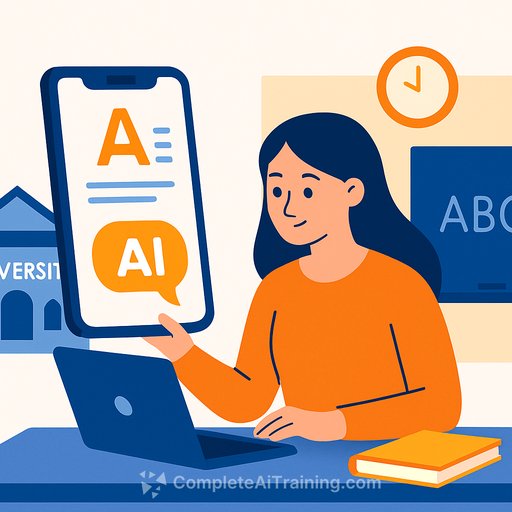
AI-enabled mobile platforms can fill these gaps by offering flexible access to content anytime and anywhere, enhancing engagement through instant feedback, and adjusting lessons to suit each learner’s pace. For example, AI-powered chatbots simulate interactive conversations, giving learners immediate assistance and practice opportunities. These features help recreate the dynamics of in-person classes in online settings, improving motivation and learning outcomes.
Integrating AI and Mobile Learning in Higher Education
This approach uses soft computing techniques to embed AI within mobile platforms, making English learning more personalized and effective. The integration involves tracking student activity in real-time and analyzing their performance to tailor content and teaching strategies. The goal is to move beyond one-size-fits-all teaching, enabling customized learning paths that accommodate diverse student needs and preferences.
Such AI platforms not only provide adaptive learning but also allow educators to monitor student engagement and comprehension closely. This supports data-driven decisions for instructional design and helps create inclusive learning environments that encourage active participation.
Data Preparation and Modeling for AI-Driven Learning
Effective AI models rely on clean, standardized data. Preprocessing steps include removing duplicates, normalizing data using Z-scores, and applying statistical techniques to ensure consistency. Feature extraction methods like Principal Component Analysis (PCA) reduce data complexity while preserving essential information.
For classification and prediction, Artificial Neural Networks (ANNs) are employed. These networks mimic brain-like processing to learn complex patterns in student data. Parameters such as learning rate, batch size, and activation functions are optimized to improve model accuracy. The training process involves multiple iterations until the model reliably predicts outcomes based on new data.
Benefits of AI in English Language Teaching
- Personalized Learning: AI adjusts content and difficulty based on individual progress, enhancing learner motivation.
- Real-Time Feedback: Instant responses help learners correct mistakes and reinforce understanding immediately.
- Accessibility: Mobile platforms enable learners to access materials anytime, supporting diverse schedules and locations.
- Teacher Support: AI analytics provide insights into student performance, guiding instructional strategies.
Performance Evaluation
A study involving 120 university students tested the AI-driven system against traditional methods over an eight-week period. Students were grouped by proficiency and engaged in vocabulary and sentence construction tasks followed by interactive activities. Results showed improved motivation and practical language skills among those using the AI platform.
Advancing Higher Education through AI
Integrating AI into mobile learning platforms supports higher education reform by making teaching more responsive and data-informed. Educators can design courses that better reflect student needs, fostering active learning and skill development. This approach prepares students to thrive in a digitally connected environment where adaptability and continuous learning are crucial.
For educators interested in expanding their knowledge of AI applications in education, exploring specialized courses can be valuable. Comprehensive resources are available at Complete AI Training, offering practical insights into AI tools and teaching strategies.
Your membership also unlocks: