From AI Pilots to Production: A Manager's Playbook for Supply Chain Results
Executive takeaways
- The AI pilot trap is real: starting with tech instead of a clear workflow problem stalls scale.
- LLMs create value where unstructured data (emails, calls, free text) blocks automation.
- Embedded agents inside ERP/TMS/WMS beat bolt-on chatbots for adoption and outcomes.
- Governance and workflow economics (cost-to-serve) determine ROI, not "time saved."
AI talk is everywhere. Production results are not. Leaders press for generative AI wins, but most organizations stall after a proof of concept. The reason is simple: they start with models, not work.
The pilot trap: stop "doing AI," start fixing workflows
Teams often frame every problem as a gen AI problem. Example: load building. In many cases, a classical optimizer already inside your platform does the job better, faster, cheaper. That's the trap-tech-first thinking instead of problem-first design.
Flip the starting point. Define the workflow, the blockers, the business rule set, and the target metric. Only then pick the method-optimizer, RPA, LLM, or a mix.
Where AI actually fits: unstructured data as the blocker
The shift from three years ago wasn't "AI got smarter." It's that models can finally understand unstructured text and communication. That unlocks the parts of your operation that live in email threads, PDFs, portals, and phone calls.
Use that lens. If a workflow is already structured and optimized, stick with your current tools. If people are reading, interpreting, and re-typing free text all day, that's where LLM-driven agents win.
Design choice: embedded agents vs. bolt-ons
Two approaches work in practice:
- Vertical: Automate a focused task (e.g., driver check calls, order entry, appointment scheduling).
- Horizontal: Orchestrate work across ERP, TMS, WMS for cross-functional outcomes.
Either way, embed the agent inside the system where work already happens. If users have to copy-paste into a separate chatbot, adoption drops. Embedded agents see higher usage, better data access, and cleaner execution.
Beyond chat: agents that read, decide, and do
Chat interfaces are useful for quick questions. Operations teams, however, don't stop at answers-they execute. Real ROI shows up when agents take action: update orders, cancel shipments, book appointments, push status updates, and close loops.
That requires deep integration into transaction systems and APIs. Reports alone don't move freight.
Guardrails first: L1 vs. L2 autonomy
- L1 autonomy: Tightly scoped task automation with guardrails and human oversight.
- L2 autonomy: Broader decision-making with higher degrees of freedom.
Start with L1. It's safer, faster to approve, and often delivers outsized ROI-teams report up to 60% returns from L1 tasks alone. Build confidence thresholds, approval points, and audit trails. Move to L2 only after governance and monitoring are stable.
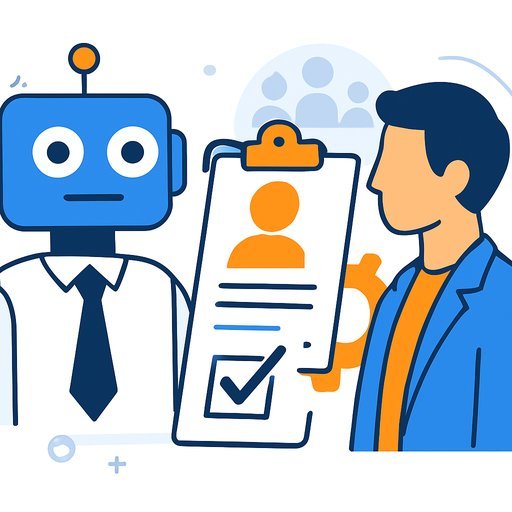
Treat agents like people you just hired: set rules, monitor performance, reinforce good behavior, and keep exceptions from becoming policy.
Scale what repeats: purposeful innovation
Every customer will bring you a new edge case. Don't build bespoke agents for each. Map workflows across accounts, find the overlap, and productize the top use cases. That Venn diagram approach compounds learning and shortens deployment times.
Measure ROI with workflow economics, not time saved
Post-deployment, the only score that matters is economics. Start at the workflow level:
- Map the current process steps.
- Count touches and rework loops.
- Multiply by salaries/hourly rates to get cost per execution.
- Compare to the AI-driven alternative (including integration and oversight).
Time saved is nice for a slide. Cost-to-serve drives decisions, especially in high-volume operations.
The human layer: change management beats model tuning
Pre-built workflow templates help non-technical teams move faster, but they don't replace change management. You still need role clarity, training, and process updates. People define guardrails, validate outputs, and raise the bar over time. Upskill first; replacement is rarely the fastest path to value.
Manager's 90-day plan to escape the pilot trap
- Weeks 1-2: Pick one high-volume workflow clogged by unstructured data (e.g., email-driven order entry).
- Weeks 3-4: Define success metrics (cost per execution, accuracy, exception rate). Document business rules and edge cases.
- Weeks 5-8: Deploy an embedded L1 agent inside your ERP/TMS/WMS. Lock guardrails. Route exceptions to humans.
- Weeks 9-12: Measure cost-to-serve vs. baseline. Tighten rules, automate the top 3 exception patterns, and prep the next workflow.
Helpful resources
- NIST AI Risk Management Framework for governance structure and controls.
- AI for Supply Chain Managers for a practical roadmap on deployment, guardrails, and ROI.
FAQs
Why are many supply chain AI initiatives stuck in pilot programs?
They start with "we need AI" instead of a specific workflow problem. Without a clear process, rules, metrics, and ownership, pilots don't integrate into production systems and stall out.
Where does generative AI provide the most value in supply chain operations?
In workflows blocked by unstructured data: emails, PDFs, call notes, and free-form coordination. That's where large language models interpret intent and move work forward.
What is the difference between L1 and L2 AI autonomy in supply chains?
L1 is tightly scoped, rules-bound task automation with human oversight. L2 grants broader decision authority. Most teams start with L1 to reduce risk and prove value before expanding autonomy.
How should companies measure ROI from AI agents in supply chain workflows?
Use workflow economics. Calculate current cost-to-serve (touches, rework, wages, error costs) and compare it to the automated path, including integration and supervision. Prioritize high-volume, high-friction workflows first.
Do standalone chatbots work for operations?
They help answer questions but struggle to drive action. Embedded agents that can read context and execute transactions inside ERP/TMS/WMS deliver higher adoption and better outcomes.
How do we manage risk as agents get closer to execution?
Bake governance into the design: guardrails, confidence thresholds, audit logs, exception routing, and human-in-the-loop checks. Improve with feedback and tighten rules before expanding scope.
Bottom line
Pick the right workflows. Embed agents where work already happens. Start with L1 autonomy. Track cost-to-serve. Treat governance as a feature, not an afterthought. That's how you move from pilots to production-one workflow at a time.
Your membership also unlocks: