
AI news ·
Estonia plans to assign national identification numbers to AI agents
Estonia will assign ID numbers to AI agents to automate tasks and double national GDP in 10 years. This grants limited, auditable permissions while keeping human owners legally liable.
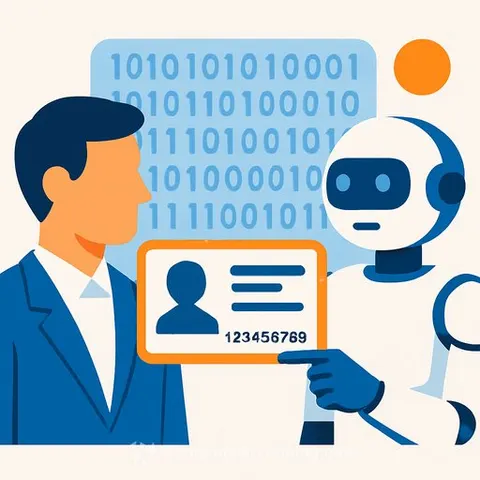
Estonia's government will soon assign official ID numbers to artificial intelligence agents, a move designed to let organizations and individuals use AI for bureaucratic tasks while keeping those actions auditable and limited in scope. The decision, reached in June by an advisory council to the prime minister, puts the small Baltic nation at the center of a debate over how to legally recognize non-human actors in administrative systems.
The plan emerged from Eesti.AI, an initiative launched at the start of 2026 to integrate AI across all sectors of the economy and government, with a target of doubling national GDP in a decade. Proponents argue that without legally recognized agents, automation can't deliver the productivity gains the state needs. "As long as AI agents cannot be attributed, delegated authority, or held accountable, they remain tools rather than participants in the administrative ecosystem," wrote e-Estonia digital transformation adviser Petra Holm in a blog post earlier this spring.
How the ID system would work
Under the new approach, an AI agent would receive its own government ID number and operate as a semi-independent entity with a defined set of permissions. Instead of handing over full personal identity and rights to an assistant, a person or business would grant the agent regulated authority to perform specific functions-such as compiling reports, preparing declarations, or communicating with information systems. Prime Minister Kristen Michal framed the need this way: "In the future, artificial intelligence will carry out digital actions on behalf of a person, company, or institution. But it must be clear who is acting, on whose behalf, with what rights, and who is responsible."
Estonia's digital infrastructure already assumes that only humans possess identity, agency, and responsibility. AI cannot authenticate, sign, or explain reasoning in ways that match legal standards. The new registration system aims to bridge that gap, but the details of implementation have not yet been released. The advisory board has not responded to requests for further comment.
Open questions on security and accountability
Several practical and legal challenges remain unresolved. Creating an AI agent takes seconds, not months, which could flood the system with new registrants. Existing laws are built around human accountability; if a registered agent violates rules, it's unclear how liability would be assigned to its human proprietor. The European Commission's AI Act provides a baseline by holding a person responsible for placing a high-risk system on the market, but it does not distinguish between AI agents and other AI systems.
Jason Soroko, senior fellow at Sectigo, said registration alone won't solve the deeper trust problem. "An AI ID code will not prove that an agent followed instructions, understood context, resisted prompt injection, used valid data, or produced lawful output," he said. He recommended pairing AI IDs with short-lived credentials, sender-constrained tokens, procurement rules, audit logging, and incident reporting. High-risk agents, he added, should disclose authority limits before acting, preserve a human override, and make logs available to regulators and affected parties.
Why this matters for government professionals
Estonia's experiment will test whether AI for Government can move beyond assistive tools and into legally meaningful automation. If the ID system works, it could become a model for other nations looking to integrate AI Agents & Automation into public services without sacrificing auditability or control. For government professionals, the key takeaway is that identity, delegation, and liability frameworks must evolve before AI can take on administrative roles at scale. Watching how Estonia handles revocation, impersonation, and cross-border trust will offer early lessons in what works and what fails.