
AI news ·
EU and White House discuss Anthropic AI access after US ban
The EU is negotiating U.S. access to Anthropic's restricted AI models for cybersecurity. Meanwhile, a study shows only 7% of euro area firms use AI intensively.
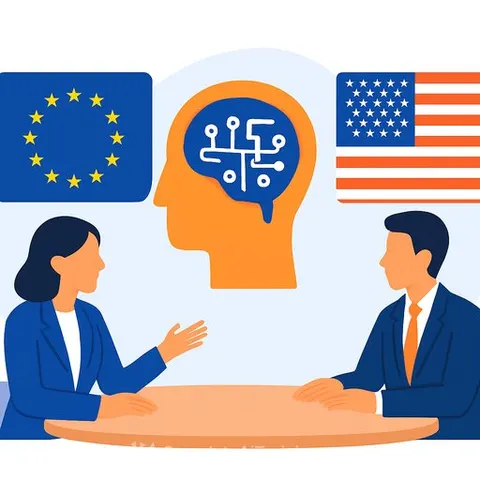
The European Union and the White House are negotiating access to Anthropic's advanced artificial intelligence models after the U.S. government restricted foreign use of the technology. The talks highlight a growing friction point in global AI policy, as European officials seek tools to secure critical infrastructure while the U.S. restricts access over security vulnerabilities.
Diplomatic talks and model restrictions
European Commission Executive Vice President Henna Virkkunen raised the issue during a visit to Washington this week. The White House recently banned foreign nationals and companies from accessing the latest versions of Anthropic's models.
"I have also addressed that myself with the Trump administration," Virkkunen said. "And also we have been speaking with Anthropic."
Jailbreak concerns and cybersecurity access
Anthropic initially granted the European Union Agency for Cybersecurity access to its Mythos model in early June. In the U.S., the company limited access to specific federal departments and a few major tech and financial firms.
The restriction on foreign access reportedly stems from the U.S. government discovering that its Fable 5 model could be jailbroken to perform cybersecurity tasks. Anthropic had restricted Fable 5 from those specific functions and is now in discussions with the government to restore broader access.
Europe's push for AI sovereignty
Speaking in Milan, Virkkunen emphasized that Europe requires access to advanced models to detect weaknesses in information and communications technology supply chains. She argued the EU must build its own AI capabilities to reduce reliance on individual companies and foreign governments.
As the EU develops its own capabilities, public sector leaders are increasingly looking at AI for Government strategies to secure critical infrastructure. Officials managing these international tech agreements can review the AI Learning Path for Policy Makers to better understand the regulatory frameworks involved.
The European Commission is finalizing an action plan on AI and cybersecurity, expected for adoption next month.
Low intensive AI adoption in the euro area
The diplomatic push coincides with a European Central Bank study showing limited intensive AI adoption across the region. While 70% of surveyed firms use AI, only 7% of euro area companies use the technology intensively.
The research found that smaller and newer businesses are more likely to be intensive users compared to larger corporations. Nearly half of the firms not using AI in 2025 plan to invest in it in 2026.
Why this matters for government professionals
Access to advanced AI models is now a security issue, not just a commercial one. When the U.S. restricts access to models like Anthropic's Fable 5 over jailbreak risks, it directly impacts allied governments' ability to secure their own supply chains. Public sector leaders must balance the immediate operational benefits of foreign AI tools with the long-term strategic necessity of building sovereign AI capabilities and strong cybersecurity protocols.