Yampa: Europe's Sovereign Alternative to American AI Customer Service Agents
European support teams want automation without handing over control. Yampa, a French startup, is pushing that forward with a sovereign, enterprise-grade agentic platform for customer care. The company has opened Y.core to enterprises and raised €3 million led by Partech to scale deployments.
Cofounders: Baptiste Saintot, Marin Huet, and Patrice Mazoyer.
What Yampa Actually Does
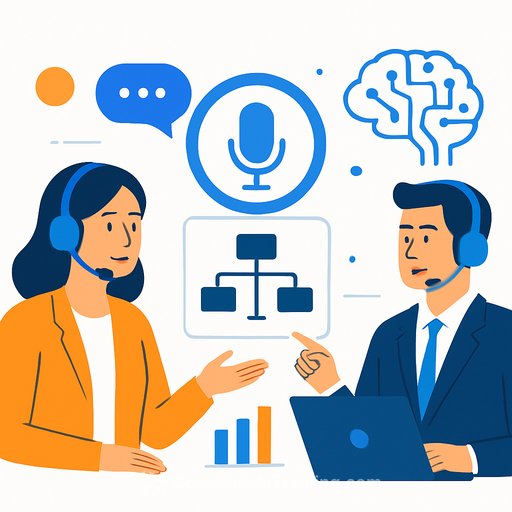
Yampa's mission is simple: give companies the ability to create, deploy, and operate their own fleet of autonomous AI agents, fully adapted to their processes and constraints. These agents don't just answer questions - they do the work: gather information, make decisions within policies, trigger actions in back-office tools, and escalate to human teams when needed.
They operate across voice, email, chat, SMS, and APIs in multiple languages. Y.core orchestrates all of it and connects to Salesforce, Zendesk, Freshdesk, Intercom, Microsoft Dynamics, GLPI, and custom APIs - the kind of Office Tools teams rely on. It's also LLM-agnostic (OpenAI, Anthropic, Mistral, or private deployments) and adds the enterprise layer you need: monitoring, versioning, access control, governance, and quality/compliance workflows.
Who It's For
Mid-market and enterprise teams with complex operations: multiple channels, legacy stacks, regulatory requirements, and mixed in-house/BPO models. This is where generic chatbots stall and a structured fleet of agents starts to pay off.
Standout use cases include IT and tech services (automating a large share of technical hotline tickets) and e-commerce/retail (multilingual email and ticket triage).
Why It's Different
Yampa doesn't sell a generic bot. It delivers a configurable agentic platform that gets industrialized for each client, combining deep AI know-how with hard-won BPO and call-center experience. It's meant to run as a real operational layer in production, not a lab project that never scales.
From "Islands of Automation" to a Fleet
Most teams run fragmented tools - a website chatbot here, an IVR there, maybe an AI assistant for agents. Each solves a slice of the problem. None owns the full journey. That shows up in KPIs: high transfers, repeated contacts, inconsistent experiences across channels.
"Moving to a fleet of AI agents means you structure automation the way you structure teams." Think specialized agents that share one platform, one set of guardrails, and one governance model.
- Email triage agent routing 100% of inbound messages in your CRM.
- Voice agent handling 24/7 calls and after-hours incidents.
- Billing agent proposing payment plans within defined policies.
What Changes for Customers and Agents
Traditional automation pushes work onto the customer - menus, forms, repeated context. It's "self-service" on paper, but often feels like abandonment.
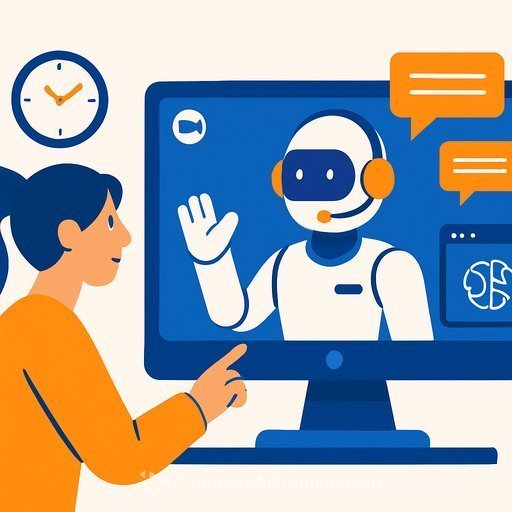
Agentics flips it. An AI agent takes ownership: understands natural language, asks clarifying questions, pulls data, fills forms, updates tickets, and follows up. The customer experience becomes, "I explain once, and it gets handled." Internally, you focus on resolution rate, time-to-resolution, and satisfaction - not channel scripts.
Scale Without Crashes (or Surprise Bills)
There's no magic algorithm. Y.core scales because of architecture. It separates three layers:
- Conversation orchestration - stateless services for dialogue turns and context retrieval, scaling horizontally.
- Business logic and workflows - deterministic flows for tools, policies, routing, and escalation.
- Integration layer - adapters for CRMs, ticketing, telephony, and internal APIs with their own resiliency rules.
On top, Y.core routes use cases to the best LLM and reduces unnecessary calls with aggressive pre/post-processing. The outcome: thousands of concurrent conversations, steady quality, and controlled costs. In emergencies and property management, teams have seen 100% of calls answered instantly, day and night.
Results You Can Expect
On mature, well-scoped use cases, Yampa reports measurable gains. Examples from live deployments:
- About 65% of after-hours calls resolved autonomously, with on-call costs cut by three and 40% fewer escalations in two months.
- 50% of technical hotline tickets resolved end-to-end by AI.
- 50% of emails automatically classified and routed in CRM, freeing teams from low-value triage.
Typical rollout pattern:
- 0-2 months: First agent live on a tightly scoped use case; 20-40% of volume handled or accelerated by AI.
- 3-6 months: Coverage expands; automation rates climb; 30-50% Productivity gains on the targeted process are common.
- 6-12 months: More agents go live across adjacent processes/channels; a large share of Tier 1 and repetitive Tier 2 work shifts to AI.
Note: the well-cited MIT/Stanford study on genAI in customer support found ~14-15% productivity gains for human agents using an AI assistant - real, but incremental for "copilot" usage. Fleet-style agents that own outcomes aim well beyond that. Source: NBER working paper.
Sovereignty and Compliance by Design
Yampa is European, founded in France, and built with EU regulatory needs in mind. Y.core is hosted in Europe so customer data doesn't need to leave the EU. The platform is LLM-agnostic: it can use American models when appropriate, integrate European providers like Mistral, or support private/on-prem deployments for strict requirements.
Security, governance, and auditability align with GDPR and the upcoming AI Act. For context on the regulation, see the European Commission's overview of the EU AI Act. Sovereignty here isn't just server location; it's control and expertise - industrial platforms that deploy AI safely at scale in critical workflows.
How Customer Support Leaders Can Start
- Pick one high-volume, rules-based case with clean data (e.g., after-hours incidents, password resets, order status, billing plans).
- Write the policies and guardrails you already expect from agents (what they can do, when they must escalate).
- Connect CRM/helpdesk, telephony, and the few internal APIs that matter for resolution.
- Define escalation paths and SLAs; make it obvious when humans step in.
- Launch in a controlled window (after-hours or a single queue), then iterate weekly on edge cases.
- Expand to adjacent channels and processes once the first agent hits target KPIs.
Track these KPIs from day one:
- Autonomous resolution rate (by intent and channel)
- Time-to-first-action and time-to-resolution
- Transfer rate and escalation quality
- Customer satisfaction and "silence time" between updates
- Per-interaction cost (LLM + infra + ops)
Level Up Your Team
If you're upskilling your support org on AI workflows and agent operations, here's a curated place to start: AI courses by job.
The Bottom Line
Yampa treats automation like a team sport. Specialized agents, one platform, clear guardrails, and outcomes you can measure. For support leaders under pressure to improve resolution and control costs - while keeping data in Europe - this is a credible path forward.
Your membership also unlocks: