A Systematic Review of AI-Driven Intelligent Tutoring Systems in K-12 Education
Abstract
Artificial intelligence in education, especially intelligent tutoring systems (ITSs), has seen significant growth over the past decade. Yet, the true impact of ITSs on student learning in K-12 settings remains unclear. This review analyzed 28 studies involving 4,597 students, using mostly quasi-experimental designs. The results show generally positive effects of ITSs on learning and performance, although these benefits are less pronounced when compared to non-intelligent tutoring systems. More research with longer durations, larger and more diverse samples is needed. Ethical considerations around AI in teaching also require attention.
Introduction
Globally, education faces major challenges, with hundreds of millions of children either out of school or not meeting basic competency levels. Digital technologies, including AI, offer potential solutions to improve education quality and accessibility. AI in education (AIEd) includes adaptive platforms, analytics, chatbots, and natural language processing tools, all aiming to support personalized learning experiences.
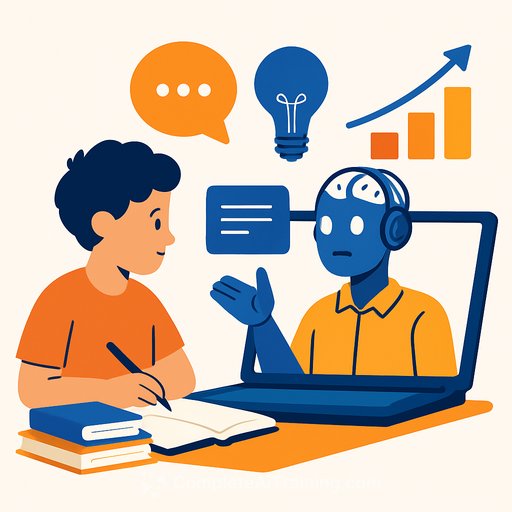
Intelligent Tutoring Systems (ITSs) are AI-powered software that monitor student progress and adapt instruction accordingly. Examples like Duolingo illustrate how ITSs personalize learning by adjusting content and difficulty. These systems are increasingly used in both traditional classrooms and alternative learning environments.
Despite the promise, there is still no clear consensus on the effectiveness of ITSs in K-12 education. Earlier reviews have shown mixed results, with some suggesting ITSs can outperform human tutors, while others point to their limitations. Research indicates that ITSs are most effective when they incorporate sound instructional features—such as immediate feedback and guided practice—and when applied in suitable contexts.
One large-scale study demonstrated that the Cognitive Tutor Algebra I system improved high school students' math proficiency notably after sustained use, suggesting that the right tools combined with appropriate conditions can lead to better outcomes.
However, other reviews found limited evidence of ITSs improving performance in school settings, highlighting the need for focused evaluations in K-12 contexts. Moreover, ethical issues like fairness, transparency, and accountability in AI applications remain largely unaddressed in existing research.
This review aims to clarify two key questions:
- What experimental designs are used to evaluate ITSs?
- What effects do ITSs have on K-12 students' learning and performance?
Results
The studies included in this review come primarily from educational science and computer science fields, with a smaller portion authored by ITS companies. This mix supports the credibility of findings related to student learning outcomes.
Research on ITSs in K-12 education is steady but modest in volume. Most studies originate from the USA and Asia, with fewer from Europe. Surprisingly, none of the studies addressed AI ethics, raising concerns about how ethical considerations are integrated into ITS deployment.
Experimental Designs
Most studies used quasi-experimental designs comparing an ITS intervention group to a control group receiving alternative instruction. Pre- and post-tests measured learning outcomes. The control groups fell into four categories:
- ITS vs Teacher: Traditional, non-digital instruction by teachers.
- ITS vs Non-intelligent Tutoring System (TS): Digital learning without AI.
- ITS vs Modified ITS: Older or altered versions of the ITS.
- ITS vs No Control: Studies without a control group, including qualitative or implementation research.
Intervention durations varied widely, with about half lasting less than a week, some as short as a single class session.
Educational Context
Most studies focused on middle and high school students, with few involving elementary grades and none in preschool. Subjects were predominantly in STEM fields, reflecting the structured nature of these disciplines, which suits ITS applications well. Language arts received less attention.
Summary
ITSs show promise in improving K-12 student learning, especially when thoughtfully designed and implemented in the right contexts. However, benefits compared to non-intelligent systems are sometimes modest. Research designs mostly involve quasi-experimental approaches with varying control groups and intervention lengths.
There is a clear need for more long-term, large-scale studies with diverse student populations. Additionally, integrating ethical frameworks into the development and deployment of ITSs is critical to ensure fairness and transparency.
For educators interested in exploring AI applications in teaching, further training on AI tools and their educational implications is available through resources like Complete AI Training.
Your membership also unlocks: