
AI news ·
Evogene partners with Blavatnik Center for Drug Discovery at Tel Aviv University on AI-powered small molecule discovery
Evogene and Tel Aviv University's Blavatnik Center partnered July 8, 2026, to combine AI and lab screening for small molecule discovery. Financial terms were not disclosed.
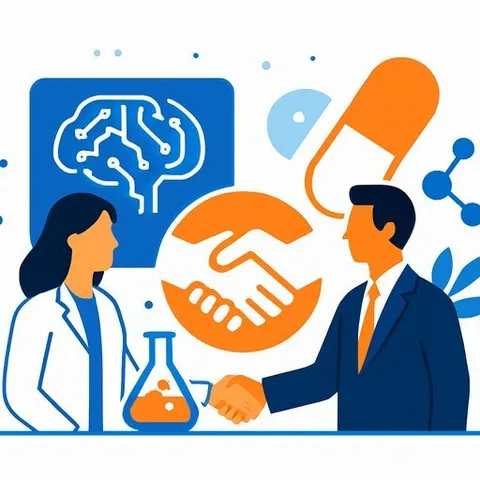
Evogene Ltd. and the Blavatnik Center for Drug Discovery at Tel Aviv University have formed a partnership focused on AI-powered small molecule discovery, the companies announced on July 8, 2026. The collaboration aims to accelerate early-stage drug development by pairing Evogene's computational platform with the center's medicinal chemistry and biological screening capabilities.
Evogene's AI engine, designed to predict molecular interactions and optimize lead compounds, will be used to screen extensive chemical libraries. The Blavatnik Center contributes its experience in assay development and target validation, creating a pipeline that spans from computational hit identification to preclinical testing. Financial terms of the deal were not disclosed.
How the collaboration works
Researchers at the Blavatnik Center will propose therapeutic targets and biological assays. Evogene's platform then generates and ranks small molecule candidates based on predicted potency, selectivity, and drug-like properties. The most promising compounds proceed to synthesis and testing at the university labs. This iterative loop allows rapid refinement of candidates without the cost and time of traditional high-throughput screening.
Strategic rationale
The partnership reflects a broader shift toward AI for Science & Research in pharmaceutical R&D. For Evogene, the deal opens a direct path to academic drug discovery programs, offering real-world validation of its algorithms. For the Blavatnik Center, access to advanced AI tools reduces the barrier to exploring novel chemical matter, particularly for targets that industry has deemed difficult to drug.
Academic-industry partnerships have become more common as AI-driven drug discovery moves from proof-of-concept to tangible assets. The collaboration also positions both parties to pursue joint grant funding and, potentially, to spin out new ventures built around jointly discovered compounds.
Why this matters for executives and strategy
Executives tracking AI's impact on AI for Healthcare should note that this partnership is not a one-off licensing deal. It embeds the technology directly into the university's research workflow, creating a sustained pipeline of lead candidates. For biotech and pharma leaders, the structure offers a model for reducing early-stage discovery costs while maintaining a lean internal team. The concrete takeaway: assess whether academic partnerships with AI-native firms can deliver a faster, cheaper path to preclinical assets compared to building or buying internal capabilities from scratch.